
Will San Francisco Demand Answers—or Stage Another Hearing?
A cooperative built to keep Black families in the Fillmore is now sending its elders eviction notices. On Thursday, City Hall must decide whether the people who hold the ledgers will answer for them.
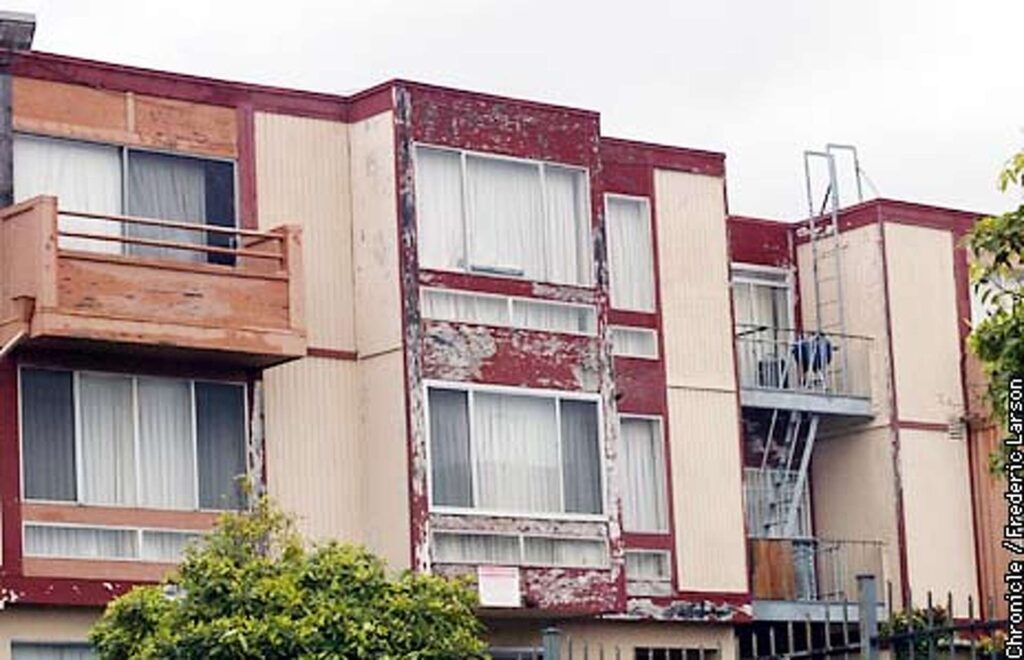
Alveries Harper came to San Francisco from Amarillo, Texas, in 1960, part of the Great Migration that carried millions of Black Southerners west. She drove for Muni. In 1978 she moved into the Martin Luther King–Marcus Garvey Square Cooperative in the Fillmore, raised four children there, and has lived in the same townhouse for more than four decades.
This spring, the co-op’s management told her she owed about $93,000. Then an eviction notice taped to her door said she owed roughly $10,000. [The San Francisco Standard]
“How are you gonna tell me today that I owe $93,000? And then you gonna send me an eviction notice for $10,000? How did you come up with that?”
— Alveries Harper, 85, King–Garvey shareholder since 1978
Nobody has yet answered her question in public. On Thursday, October 1, at 10 a.m. in Room 250 of City Hall, someone will be asked to.
Read that again.
Two numbers. Eighty-three thousand dollars apart. Attached to an 85-year-old Black woman’s home. In a cooperative created for one purpose: so that Black families pushed out of the Fillmore once would never be pushed out again.
What Is Actually on the Record
Board of Supervisors File No. 260799 is titled “Hearing – Evictions, Habitability Issues, and Other Management Irregularities in Domus Management Company Properties in the Western Addition.” Introduced by District 5 Supervisor Bilal Mahmood on July 7, it is now scheduled before the Government Audit and Oversight Committee. Its language is not timid. It calls for a hearing “to investigate the mass evictions and concerns around habitability, affordable housing recertification, payment processing, and resident safety” at King–Garvey, Thomas Paine Square Apartments, and other properties now or formerly managed by Domus. [SF Board of Supervisors, File 260799]
The file names who is requested to report. That list is the hearing’s real test, because it tells us who holds the records:
Table 1: Who File No. 260799 calls to account
| Requested to report | Why it matters |
| Domus Management Company (Cathy Metcalf, Christine Mason) | Day-to-day manager of both complexes; responsible for HUD recertification paperwork and resident ledgers |
| Attorney Mercedes Gavin | Counsel of record for the King–Garvey corporation in arrears and settlement matters |
| King–Garvey Board of Directors (Linda Yoakum, Sean Kim, Emilia Penate, Lavonne McIntosh, Quincy Collins, Martina Roland, Daniel Landry) | Hires and oversees the manager; authorizes litigation against its own shareholders |
| Allen Community Development Corporation officers (Rev. Cecil L. Williams Jr., Alice Johnson, Nicole Acker, Bobby Sisk) | Bethel AME–affiliated owner entity tied to Thomas Paine Square |
| HUD Northern California Field Office | Subsidizes carrying charges; receives—or does not receive—recertifications |
| San Francisco Human Rights Commission | The City’s civil-rights agency; attended the May 15 King–Garvey meeting |
Two precision points matter, because the people accused deserve accuracy as much as the people harmed. The company named is Domus Management Company—not “Dumas,” as it has sometimes been rendered in community conversation. And the official file does not name The John Stewart Company, Bell Properties or Plaza East. Those appear in this column as context and warning, not as subjects of Thursday’s hearing.
A Co-op Built to Stop Exactly This
In 1963, James Baldwin came to San Francisco and gave the city’s urban-renewal program the name that stuck: “Negro removal.” Beginning in the 1950s, the Redevelopment Agency’s Western Addition A-1 and A-2 projects bulldozed the neighborhood once called the Harlem of the West. Historian Rachel Brahinsky’s account in the San Francisco Public Press puts the A-1 displacement at about 4,000 people and the A-2 displacement at 10,000 to 13,000 more. [SF Public Press]
King–Garvey was part of the answer. After HUD took over the financially distressed property, it became a cooperative in 1978 with an explicit mission: give low-income Black residents ownership, equity, and something to pass on. Each household became a shareholder. HUD paid 70 percent of monthly carrying charges. Shares could be sold or inherited. [The San Francisco Standard]
Black scholars have spent decades explaining why that design mattered—and what is lost when it fails.
Dr. Mindy Thompson Fullilove, the psychiatrist whose book Root Shock studied urban renewal’s aftermath, named the “traumatic stress” that follows when a neighborhood is torn apart. She estimates federal and state renewal programs destroyed 1,600 African American districts nationwide, and in a peer-reviewed article concluded that the long-term consequence was “the social paralysis of dispossession”—above all, “a collapse of political action.” [Fullilove, Root Shock] [Journal of Urban Health]
Dr. Jessica Gordon Nembhard, author of Collective Courage: A History of African American Cooperative Economic Thought and Practice, documented how Black cooperatives were repeatedly undermined—sometimes violently, often through what she calls “financial sabotage.” Her central insight fits King–Garvey precisely: “We need co-ops to do the political activity, but we also need the economic activity to make the political activity meaningful.” [Nonprofit Quarterly]
Sociologists Christina Jackson and Nikki Jones titled their study of the neighborhood “Remember the Fillmore: The Lingering History of Urban Renewal in Black San Francisco.” The operative word is lingering. Historian Albert S. Broussard, in Black San Francisco, showed how a city outwardly civil to Black residents still closed doors to them. The pattern did not end with the bulldozers. [Gettysburg College repository]
San Francisco’s Black population fell from 11 percent in 1990 to 5.3 percent in 2020. King–Garvey’s 211 units, once filled with Black families, now house only a few dozen Black residents. Sixteen of them—all Black, most seniors, some disabled—received eviction notices on or around March 16. Two years earlier, six other Black residents were served. All six were evicted.
That is not history repeating. That is history continuing.
Lose the Paperwork. Lose the Subsidy. Lose the Home.
When I first reported on King–Garvey in April, Adrian Tirtanadi, executive director of Open Door Legal, explained the mechanism to me in a single sentence I have not been able to forget:
“In our privatized system of subsidized housing, tenants rely on property managers to submit recertifications. If that process breaks down, tenants can lose their subsidy, their rent can quadruple, and eviction follows.”
— Adrian Tirtanadi, Open Door Legal, interviewed by Destination Freedom, April 2026
Residents told The Standard that Domus had not ensured their HUD recertifications for at least two years. Some said the previous manager had not either. Lula Jackson, 78, said she had been estimating her own monthly payment. Nikki Love, Open Door Legal’s director of legal services, called the situation “a mess” and warned: “The juggernaut is moving forward no matter what. Even if this is all based on some mistake in the system.” [The San Francisco Standard]
Princeton historian Keeanga-Yamahtta Taylor, whose Race for Profit was a 2020 Pulitzer Prize finalist, gave this dynamic a name: “predatory inclusion.” After redlining ended, federal programs invited Black families in—then left them exposed to the private intermediaries who administered the system. The Pulitzer board described “close relationships between regulators and the industry” that “created incentives to ignore improprieties.” [Pulitzer Prizes]
King–Garvey is a case study in that structure. HUD subsidizes. A private manager administers. A board supervises the manager. An attorney enforces the board’s claims in court. When the paperwork fails, every institution in that chain can point to another—while the only party facing the sheriff is the elder.
The pressure is citywide. San Francisco’s Rent Board counted 1,488 eviction notices from March 2025 through February 2026—a 40 percent increase over the year before—and a 2025 city-funded fair-housing study singled out the Fillmore for a disproportionate share of evictions. Nationally, the Eviction Lab found that Black Americans were 19.9 percent of adult renters but 32.7 percent of eviction-filing defendants. [The San Francisco Standard] [Eviction Lab]
This is not a bookkeeping dispute when the consequence of an error is removal from a home, loss of community and the destruction of decades of cooperative equity. It is a civil-rights and public-accountability question.
Mahmood Has Said the Quiet Part. Now He Must Put It in the Record.
Supervisor Mahmood has been more candid than most officials. “Frankly, some of the management companies were operating in bad faith—they would tell us one thing and then do the opposite the next day,” he told The Standard. His office contacted the King–Garvey board after hearing of the threats. “They told us that no one was being evicted, and then the next day we see eviction notices the tenants brought to us.” Domus told his office it was “unaware of any eviction notices served.” The Standard confirmed the notices were authentic and that unlawful detainer suits were filed against Harper and eight other residents on May 1. [The San Francisco Standard, July 7] [The San Francisco Standard, May 7]
At the May 15 community meeting at King–Garvey, which I attended, Mahmood told Destination Freedom he intended to call hearings that could compel Attorney Gavin to appear and answer questions publicly, and that he would contact City Attorney David Chiu about residents’ allegations. File No. 260799 honors the first promise. The public has not yet been told what became of the second.
In response to Destination Freedom’s request for comment, Mahmood wrote on September 27 that invitations had gone to every party named in the file, and that none had confirmed attendance. “We intend to submit subpoenas to those who do not attend to be compelled to attend a subsequent hearing,” he said, explaining that the process only allows a subpoena for a second hearing after a witness skips the first. His legislative aide, Raynell Cooper, told residents on September 28 that the office does not expect Domus Management or the complexes’ leadership to appear. The hearing, now also covering Ammel Park Co-op, is the only item on the agenda and is expected to last 90 minutes to two hours.
So Thursday is not the finish line. It is the trigger.
If Domus, Gavin and the boards stay home, the committee must vote the subpoenas that day and set a date. The City cannot invite the people who control the records and then accept an empty chair in place of documents.
The Mayor’s Office of Housing and Community Development has already lowered expectations. “A Board hearing can gather testimony, request information, surface concerns, and help identify gaps in oversight,” spokesperson Anne Stanley told Mission Local. “But it does not give the City authority over the property.” [Mission Local]
That is precisely why the record matters.
A hearing without authority over the property still has authority over the truth. It can put ledgers, recertification logs and board resolutions into the public file—and it can hand that file to agencies that do have authority: HUD, the City Attorney, the California Attorney General and the courts.
The Lawyer in the Room: Scrutiny, Not Labels
Attorney Mercedes Gavin is listed as an active member of the State Bar of California, admitted in 1993, and her public profile shows no discipline. A redacted “Stipulation for Judgment and Settlement Agreement” published by Destination Freedom lists her as attorney for the plaintiff, “Martin Luther King-Marcus Garvey Square Apartments Inc.,” in an arrears matter against shareholder-residents that states $64,053 due. [California State Bar] [Settlement agreement (redacted)]
Her name has appeared in San Francisco housing coverage before. In 2019, she represented The John Stewart Company in its attempt to evict Shantel McClendon, a Valencia Gardens mother of five. San Francisco Superior Court Judge Richard B. Ulmer Jr. barred the eviction, finding that the company—not Gavin personally—had acted with “unclean hands.” Of one recertification document the company drafted and then used against McClendon, the judge wrote: “This was, at minimum, bad faith.” [Mission Local] [San Francisco Chronicle]
At King–Garvey, residents and board members have alleged that Gavin functions simultaneously as corporate counsel, eviction counsel and an enforcer aligned with Board President Linda Yoakum. Longtime resident Jacqueline Butler told the May 15 meeting she was first told she owed about $50,000, later about $11,000; that when her family raised the money she was directed to Gavin; that she was given an agreement her daughter, board member Martina Roland, advised her not to sign; and that an eviction notice followed two days later. [The Davis Vanguard]
Those are allegations, not adjudicated findings, and Gavin is entitled to answer them. Representing landlords is lawful work. But a recurring legal presence for institutions with enormous power over people least able to survive displacement raises a legitimate public question: who authorized this litigation, on what ledger, and with what safeguards?
The committee should request, and if necessary subpoena, Gavin’s engagement agreement and scope of representation; the board resolutions authorizing suits against shareholders; billing records charged to the cooperative; every notice served; and every communication governing recertification, debt collection and eviction strategy. It should also ask whether shareholder-owners were described as ordinary “tenants” in notices and pleadings—and whether that choice of words altered their rights.
“We’re not tenants. We’re shareholder owners.”
— DeDe Hewitt, King–Garvey resident and organizer, May 15, 2026
Thomas Paine Square: Same Manager, Same Questions
King–Garvey is not alone. Thomas Paine Square, a 98-unit complex owned through Bethel AME Church and managed by Lodi-based Domus, has produced years of complaints: mold, water intrusion, asbestos concerns, violence, and what residents describe as retaliation after they spoke to reporters. In 2022, more than 40 tenants signed a demand letter seeking repairs, inspections and access to their payment records; tenants say neither Domus nor the church responded. In December 2025, security cameras captured staff appearing to take tenants’ Christmas gifts. The Standard found that board chair Bobby Sisk owns the security company contracted at the property. Thirty-nine tenants have petitioned for the removal of Domus and of Sisk’s firm. [The San Francisco Standard] [Mission Local]
Jesica Salinas, a single mother, told Mission Local that after she spoke out, Domus sent repeated repair-access notices—mostly no-shows—while mold that aggravates her son’s asthma went unrepaired. Domus President Anthony Sandoval said he was unaware of such notices. [Mission Local]
Two properties. One manager. Overlapping patterns: opaque ledgers, delayed repairs, contested notices and residents afraid to speak. A company cannot be assessed by the condition of a lobby or a spreadsheet prepared for a hearing. It must be assessed by repair logs, DBI complaints, HUD correspondence, staff turnover, security contracts, eviction filings and how people actually live.
Plaza East: What Changing Managers Does Not Fix
Plaza East is not part of File No. 260799. It belongs in this column because it shows the cost of waiting. The San Francisco Public Press found city records of sewage complaints dating to 2012 and 90 notices of violation, including 21 for plumbing and electrical problems and 10 for fire violations. HUD scored the property 40 out of 100 on a physical inspection, down from 82. [SF Public Press] [The Davis Vanguard]
In 2025, as a lawsuit by 28 tenants alleging harassment, negligence and rent collection for uninhabitable units proceeded, The John Stewart Company gave notice it would leave as property manager. Those claims remain allegations in litigation. Bell Properties took over in August 2025. When Mission Local asked the Housing Authority for performance audits of the prior manager, the agency said it did not have them. [Mission Local, July 2025] [Mission Local, Sept. 2025]
The City did not have the audits.
That single fact is the lesson. Changing managers without public audits, tenant oversight, enforceable benchmarks and consequences simply moves the paperwork while residents remain in the same conditions.
Mayor Lurie: Tours Are Not Enforcement
Mayor Daniel Lurie has not been absent. After tenants marched into his office in the summer of 2025, he toured six low-income complexes in the Western Addition and Bayview, stood in mold-covered bathrooms, and had staff call property managers—some of whom showed up that same afternoon. He told Mission Local that at Plaza East, where the Housing Authority is an owner, “We’re able to do more.” [Mission Local]
But a phone call from the Mayor’s Office is not a system. Residents cannot depend on a mayoral visit for hot water, a working elevator or an accurate ledger. At Plaza East, the Housing Authority is now the sole owner—so the City’s claim of limited authority does not apply there.
The deeper problem is one Nikole Hannah-Jones documented for ProPublica in 2012: for four decades, administrations of both parties declined “to use the leverage of HUD’s billions” to enforce fair housing. Leverage unused is authority surrendered. [ProPublica]
So the question for Mayor Lurie is specific: what did your administration do after the tours? Publish the monitoring reports. Identify every operator placed on corrective action. Explain whether MOHCD has withheld approvals, demanded compliance plans or referred evidence to enforcement agencies. Where the City’s authority is limited, show every formal request made to HUD, every referral to DBI and Public Health, and every effort to condition City support on tenant safety. A representative of the Mayor’s Office attended the May 15 meeting. Residents deserve to know what he reported back.
Assembly Member Haney: Four Months of Silence
Matt Haney represents the Fillmore in Sacramento. He chairs the Assembly Committee on Housing and Community Development, whose published jurisdiction includes “common interest developments,” “housing discrimination” and “housing finance.” He also chairs the Legislative Renters’ Caucus. No state official is better positioned to act on King–Garvey. [Assembly Housing Committee]
So I asked him to act.
On May 17, 2026, two days after the King–Garvey community meeting, I sent an open letter to Haney’s district director, MacKenzie Ewing, titled “Demand for Legislative Hearings and Formal State Investigation Into Conditions, Governance and Alleged Civil-Rights Violations at King–Garvey Co-Op.” Copies went to reporters, community leaders, San Francisco’s Inspector General and Special Assistant Attorney General Alex Fisch. The letter set out what residents and board members had alleged publicly:
- Unsafe and potentially unlawful habitability conditions, including collapsing roofs, asbestos concerns, rodents, and electrical and plumbing failures.
- Governance irregularities, including board members denied access to records and contracts.
- Failures to provide disability accommodations to elders in inaccessible units.
- Missing shareholder equity statements and tax-interest documentation.
- Patterns of intimidation and eviction pressure aimed at Black seniors.
It named the laws those allegations may implicate: the Davis–Stirling Common Interest Development Act (Civil Code §§ 4000–6150); California’s Fair Employment and Housing Act (Gov. Code § 12900 et seq.); the federal Fair Housing Act (42 U.S.C. § 3601 et seq.); the Americans with Disabilities Act; and HUD’s “decent, safe and sanitary” housing standards. And it made five concrete requests: convene formal Assembly hearings; demand production of governance records, board minutes, contracts, management agreements, ledgers and equity records; coordinate with the Attorney General, the Civil Rights Department, HUD, DBI and the City Attorney; examine whether Black seniors face disparate treatment; and protect residents from retaliation.
“Assembly Member Haney, the Fillmore District sits inside your jurisdiction. The residents of King–Garvey are your constituents. Many are elders. Many are disabled.”
— Open letter to Assembly Member Matt Haney, May 17, 2026
Five days passed without a reply, so I wrote again on May 22. On May 29, Ewing responded. She apologized for the delay, said she understood the concerns and asked for a phone number so we could talk. That was courteous. It was not action.
Four months later, the record is plain. My reporting has found no hearing, no public statement and no public letter from Haney to HUD, the Attorney General or the Civil Rights Department about King–Garvey. The Housing Committee’s own list of 2025–26 informational and oversight hearings includes sessions on state housing-production laws and on rural and farmworker housing. It includes nothing on subsidized-housing management, HUD recertification failures or the eviction of Black cooperative shareholders. [Assembly Housing Committee hearings, 2025–26]
The Law Gives Him the Power to Hold a Hearing
Haney’s office cannot say this is a City matter beyond his reach. California law gives his committee the tools to do what the Board of Supervisors is trying to do on Thursday, and more:
Table 2: Where Haney’s power to act comes from
| Authority | What it provides |
| California Constitution, Art. IV, § 11 | Either house may create committees “to ascertain facts and make recommendations to the Legislature on a subject within the scope of legislative control.” |
| Assembly Rule 11.5 | Makes every Assembly standing committee, including Housing, an “investigating committee” authorized “to conduct oversight hearings and to ascertain, study, and analyze all facts” on assigned subjects. A subject not already assigned requires prior written approval from the Assembly Rules Committee. |
| Joint Rules 60(b) and 62(a) | A committee may “convene for an informational hearing during a period of recess,” with four days’ notice in the Daily File. |
| Joint Rule 36 | Every state department and every “county, city, or public district” must furnish investigating committees “information, records, and documents” on request. |
| Government Code §§ 9400–9401 | The chair of a committee may issue subpoenas compelling witnesses to attend, with permission from the Rules Committee. |
| Government Code § 9409 | A witness who ignores a legislative subpoena “may be arrested by the Sergeant-at-Arms” and brought before the committee. |
| Civil Code § 4190 | Defines a “stock cooperative,” including a limited-equity housing cooperative, as a common interest development. That falls squarely within the committee’s stated jurisdiction. |
Sources: [Cal. Const. Art. IV § 11] [Gov. Code § 9401] [Gov. Code § 9409] [Civil Code § 4190] [Capitol Weekly on Assembly and Joint Rules]
To be precise: a committee chair does not act alone. Subpoenas and new investigative subjects require the approval of the Assembly Rules Committee. But the chair of the Housing Committee is the person who asks for it. Haney has not asked, at least not publicly. And an informational hearing needs no subpoena at all, only four days’ notice. The Legislature adjourned its regular business on September 1. The recess is exactly when the Joint Rules allow a chair to bring a hearing home to San Francisco.
An Admonishment
Assembly Member Haney has built a statewide reputation as a champion of renters. That reputation is precisely why his silence on King–Garvey is indefensible.
A historic Black cooperative in his own district, created to undo the damage of “Negro removal,” has sent eviction notices to 16 Black residents, most of them seniors. Their balances swing by tens of thousands of dollars. A county supervisor with far less power has called a hearing and promised subpoenas. The chair of the Assembly Housing Committee has held no hearing, made no public statement and announced no request to any enforcement agency.
That is not neutrality. It is abdication.
Haney cannot delegate this to a district office inbox. He should do four things now:
- Seek Rules Committee approval and schedule an Assembly Housing Committee informational hearing in San Francisco on HUD-subsidized cooperatives and recertification-driven evictions, before this session ends on November 30.
- Send written requests, made public, to HUD, the Attorney General and the Civil Rights Department to review King–Garvey.
- Attend or submit testimony to Thursday’s Board of Supervisors hearing.
- Commit to legislation protecting cooperative shareholders and subsidized tenants from evictions caused by management’s recertification or accounting failures.
On September 27, Destination Freedom sent Haney’s press office a formal request for comment with a response deadline of noon on September 30. His answer will be published in full. If he does not answer, his silence will be reported as well.
Silence may be politically convenient. It is not an answer to an elder holding an eviction notice with an unexplained balance.
What a Real Hearing Produces
The standard for October 1 is not whether the testimony is moving. It will be. The standard is whether the hearing produces an evidentiary record and consequences. At minimum:
- A document request, backed by subpoena, for every King–Garvey shareholder ledger, recertification submission and HUD correspondence since Domus took over.
- A public request that the cooperative pause pending unlawful-detainer cases until each resident receives an audited, reconciled balance.
- An independent forensic audit of cooperative finances and shareholder equity accounts, with results released to shareholders.
- Production of attorney engagement terms, board resolutions authorizing litigation and legal fees charged to the cooperative.
- Written referrals to the City Attorney, HUD’s Office of Inspector General and the California Attorney General, made public.
- A DBI and Public Health inspection sweep of King–Garvey and Thomas Paine, with findings posted.
- A 60-day return date at which Domus, the board and City departments report compliance on the record.
- Draft legislation requiring managers of City-involved affordable housing to prove timely recertification before any eviction for arrears.
Know Their Price
Brookings scholar Dr. Andre M. Perry has shown that owner-occupied homes in Black neighborhoods are undervalued by an average of $48,000 each—$156 billion in lost equity nationwide. His book is titled Know Your Price. The argument is that America systematically undervalues Black places, and then treats the resulting harm as natural. [Brookings]
DeDe Hewitt, who has lived at King–Garvey since the 1990s, put the same idea in plainer words while sitting with Harper and Lula Jackson: [The San Francisco Standard]
“These women are like libraries. And they’re treated like they’re expendable [because they’re] African American, disabled, and elderly.”
— DeDe Hewitt
San Francisco has already lost one Fillmore. The co-op was the promise that it would not lose another.
On Thursday, the people of King–Garvey, Thomas Paine and every neglected affordable-housing community in this city do not need another promise that officials are “looking into it.” They need a record. They need deadlines. They need consequences.
They need government to act as if their homes, their health and their history are worth protecting.
Because they are.
Requests for comment: Destination Freedom Media Group requested comment from Mayor Daniel Lurie, Supervisor Bilal Mahmood and Assembly Member Matt Haney on September 27. Supervisor Mahmood responded; his comments appear above. Responses from the Mayor and Assembly Member Haney will be published in full upon receipt. Domus Management Company, Attorney Mercedes Gavin and the King–Garvey Board of Directors are invited to respond at the contact below.
HOW TO ATTEND: Government Audit and Oversight Committee, Thursday, October 1, 2026, 10:00 a.m., City Hall, Room 250, 1 Dr. Carlton B. Goodlett Place, San Francisco. File No. 260799. Written comments: bos@sfgov.org. Watch live on SFGovTV
Profile: DeDe Hewitt and the Work of Staying
DeDe Hewitt is a decades-long King–Garvey resident and organizer. The San Francisco Standard reported that she connected Alveries Harper with Open Door Legal; ABC7 described her going door-to-door to help neighbors and urge City intervention. [The San Francisco Standard] [ABC7 News]
Hewitt leads the Sharen Hewitt Empowerment Resource Organization (SHERO), named for her mother, the late organizer Sharen Hewitt, remembered as a “grandmother for social change” who built the Community Leadership Academy and Emergency Response Project. On May 6, Hewitt and Arieann Harrison of the Marie Harrison Community Foundation met with the Human Rights Commission about the 16 seniors facing eviction. At the May 15 meeting, Hewitt—a former King–Garvey board president—called for monthly accountability meetings, financial audits, transparent equity statements, habitability enforcement and timely accessibility accommodations for seniors and disabled residents. [Destination Freedom] [The Davis Vanguard]
“My vote is just as powerful as anybody in Chinatown, anybody in the Marina, anybody in any other area of San Francisco.”
— DeDe Hewitt, May 15, 2026
The Scholarship Behind This Story
Black scholars and journalists have documented, for generations, the forces now converging on the Fillmore. Readers who want to go deeper:
| Scholar / Journalist | Work | What it explains |
| Mindy Thompson Fullilove | Root Shock (2004; 2nd ed. 2016) | The collective trauma of neighborhood destruction and its political aftermath |
| Jessica Gordon Nembhard | Collective Courage (2014) | Black cooperative ownership as economic and political self-defense—and the sabotage co-ops have faced |
| Keeanga-Yamahtta Taylor | Race for Profit (2019; Pulitzer finalist, 2020) | “Predatory inclusion” in federal housing programs administered by private actors |
| Andre M. Perry | Know Your Price (2020); Brookings (2018) | The measurable devaluation of Black homes and neighborhoods |
| Christina Jackson & Nikki Jones | “Remember the Fillmore” (2012) | Urban renewal’s lingering effects on Black San Francisco |
| Albert S. Broussard | Black San Francisco (1993) | The long history of racial exclusion behind San Francisco’s civility |
| Mary Pattillo | Black on the Block (2007) | Race, class and public-housing transformation in a gentrifying Black neighborhood |
| Brandi Thompson Summers | Black in Place (2019) | How Blackness is aestheticized and valued in a gentrifying city even as Black residents are displaced |
| Destin Jenkins | The Bonds of Inequality (2021) | How San Francisco’s municipal debt shaped who got investment—and who did not |
| Nikole Hannah-Jones | “Living Apart,” ProPublica (2012) | HUD’s decades-long failure to use its leverage to enforce fair housing |
A FINAL NOTE TO MATT HANEY:
Assemblymember Matt Haney, where is your support for the renters in your own district?
You have demonstrated your ability to advance meaningful legislation in Sacramento, including AB 2017, recognizing Eid al-Fitr and Eid al-Adha as state holidays, and AB 1633, imposing a tax on private detention facility operators. You even advocated for puppies. Don’t Black elders facing eviction in your District deserve your support?
These residents warrant more than silence from their elected representative. They deserve strong and purposeful engagement, decisive action, and someone willing to stand up for their rights.
Sources
- San Francisco Board of Supervisors, File No. 260799
- The San Francisco Standard — “A Fillmore co-op was a refuge for Black families” (May 7, 2026)
- The San Francisco Standard — Mahmood calls hearing (July 7, 2026)
- Mission Local — Hearing on Thomas Paine / Domus (July 2026)
- Mission Local — Mayor Lurie’s housing tours (Aug. 2025)
- Mission Local — John Stewart Company leaves Plaza East (July 2025)
- Mission Local — Plaza East ownership transition (Sept. 2025)
- Mission Local — “Unclean hands” ruling, Valencia Gardens (Aug. 2019)
- SF Public Press — Plaza East records of disrepair
- SF Public Press — “Fillmore Revisited” (Rachel Brahinsky)
- ABC7 News — King–Garvey seniors face eviction
- California State Bar — Mercedes A. Gavin #164575
- Destination Freedom — King–Garvey settlement agreement (redacted)
- The Davis Vanguard / Malik Washington — “A Quiet Removal in the Fillmore” (April 2026)
- The Davis Vanguard / Malik Washington — King–Garvey community meeting (May 2026)
- The Davis Vanguard / Malik Washington — Price of Being Poor, Part 6 (April 2026)
- The Davis Vanguard / Malik Washington — Plaza East resident council (July 2026)
- Destination Freedom / Malik Washington — “After Mother’s Day, the Mothers Still March”
- Fullilove, “Root Shock: The Consequences of African American Dispossession,” Journal of Urban Health (2001)
- Nonprofit Quarterly — Interview with Jessica Gordon Nembhard
- Pulitzer Prizes — Keeanga-Yamahtta Taylor, Race for Profit
- Brookings — The Devaluation of Assets in Black Neighborhoods (2018)
- ProPublica — Nikole Hannah-Jones, “Living Apart” (2012)
- Eviction Lab — Racial and Gender Disparities among Evicted Americans
- Jackson & Jones, “Remember the Fillmore” (2012)
- Assembly Committee on Housing and Community Development — jurisdiction
- Assembly Housing Committee — 2025–26 informational hearings
- California Constitution, Art. IV, § 11
- Government Code § 9401 (legislative subpoenas)
- Government Code § 9409 (enforcement of subpoenas)
- Civil Code § 4190 (stock cooperatives)
- Capitol Weekly — Assembly Rule 11.5 and Joint Rules 36, 60, 62
Our song/video for this article is:
Marvin Gaye – What’s Going On (Official Video 2019)