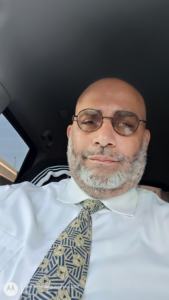
By Malik Washington – Destination Freedom Media Group | Davis Vanguard
Retaliation rarely announces itself with a raised fist.
It arrives quietly—wrapped in “process,” sanitized by bureaucracy, and justified by paperwork. It comes as an email framed as concern. A security report elevated without verification. A lease violation taped to a tenant’s door.
This is how power disciplines speech in America today.
Not always through overt force, but through manufactured violations, selective enforcement, and administrative intimidation designed to deliver a single, unmistakable message:
“Speak up, and you will pay for it.”
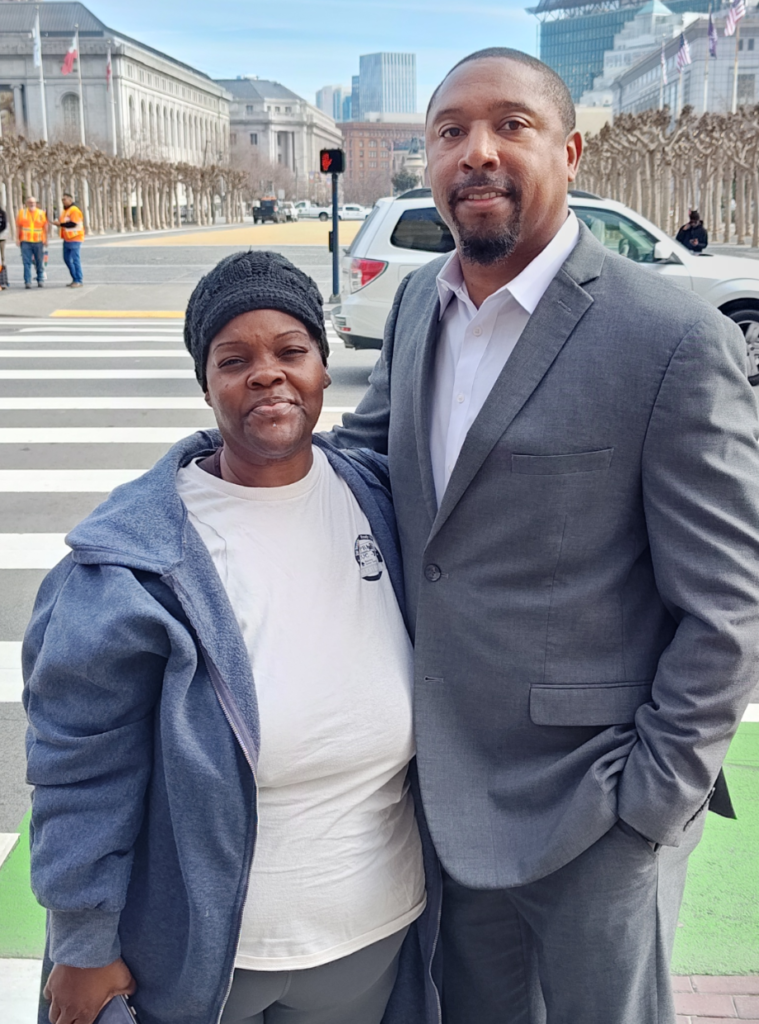
This is the story of Maika Pinkston, a tenant advocate in Bayview–Hunters Point.
It is also the story of how Related Affordable / Related California, one of the most powerful housing operators in the country, appears—based on documentary evidence—to have used its internal machinery to retaliate against a woman for speaking to the press and advocating for her community.
And it is the story of San Francisco’s silence—at the very moment the world’s eyes are on the city during Super Bowl LX.
A DOCUMENTED SEQUENCE — NOT A DISPUTE
This did not begin with a lease violation.
It began with journalism.
On January 15, 2026, I published an investigative article documenting deteriorating conditions and failed concrete work at a Related-managed property in Bayview–Hunters Point. The article included photographic evidence and a brief quote from Maika Pinkston, a known community advocate.
Within hours, Related Vice President Joe Kross emailed Pinkston.
What he included matters more than anything else:
“…please lets get the community on a positive path vs:…”
https://mailchi.mp/destination-freedom/when-power-is-protected-and-the-doors-stay-closed Management did not dispute the facts publicly
They did not request clarification.
They did not fix the conditions.
They sent the article to the tenant who spoke.
That is not routine property management.
That is monitoring speech.
PRESSURE BY EMAIL: HOW SILENCE IS SUGGESTED, NOT ORDERED
In the emails that followed, Kross relied on unverified security narratives that named individuals and tied them—without investigation—to Pinkston’s unit.
Despite acknowledging that the alleged actors did not live on the property, Kross repeatedly pressured Pinkston to:
“…positively influence your neighbors and guests.”
This was not a request for information.
It was an attempt to shift security and enforcement duties onto a tenant advocate, unpaid and unsafe.
Pinkston responded as the law allows—and protects—tenants to do. She corrected the record. She rejected hearsay. She made clear she would not endanger herself or her family. She reminded management that “observe and report” is the responsibility of security and management—not tenants.
Her response was calm.
It was factual.
It was protected speech.
And it was punished.
PUNITIVE DISENGAGEMENT: THE DOOR CLOSES
On January 18, 2026, Joe Kross changed tone:
“In the future I will not ask for your influence on the community as it appears to burden you.”
This is punitive disengagement—a recognized retaliation tactic. Access is withdrawn. Standing is revoked. The advocate is isolated.
And then came escalation.
FROM PRESSURE TO PUNISHMENT: THE LEASE VIOLATION

over Related Affordable. She has over 20 plus years of experience in property management but for some reason, she won’t address the retaliatory actions and behaviors of her subordinates in the Hunters Point community in San Francisco.
THE CITY OF SAN FRANCISCO HAS ESTABLISHED A PATTERN OF MISTREATING AND ATTACKING BLACK WOMEN WHO HAVE BEEN WRONGED BY INDIVIDUALS IN QUASI-POSITIONS OF POWER
On January 27, 2026—the same day my Open Letter to California Attorney General Rob Bonta was published—Related Regional Manager Christopher Jones issued a formal HUD lease-violation notice against Maika Pinkston.
The notice relied on the same disputed security claims Pinkston had already corrected.
No new evidence was presented.
No investigation findings were shared.
But the threat was explicit:
“Failure… may result in further enforcement action, including issuance of a Notice of Termination.”
Under California law and HUD regulations, formal violation notices and threats of termination constitute adverse action, particularly when they follow protected speech and media engagement. Boilerplate disclaimers do not erase retaliatory conduct. Investigators examine timing, targeting, and effect.
Here, the effect is unmistakable.
A tenant advocate spoke.
A journalist published.
Management responded.
And the advocate was formally disciplined.
All of this is unfolding during Super Bowl LX, as San Francisco presents itself to the nation and the world as a city of values, equity, and justice.
WHEN JOURNALISM IS TREATED AS A CRIME
This is not an isolated moment. It is part of a widening national pattern.
Across the country, journalists are increasingly detained, arrested, cited, or threatened for doing the very thing the First Amendment was written to protect: observing power, asking questions, documenting reality, and publishing the truth.
Georgia Fort was arrested while reporting.
Don Lemon was arrested while reporting.
Different cities. Different circumstances. Same constitutional issue.
In both cases, the act being punished was not violence or vandalism—it was journalism. The message is becoming dangerously familiar: the press is tolerated only when it is quiet, deferential, and convenient.
That message does not stop at police lines or protest zones. It seeps into housing offices, security reports, lease notices, and “compliance” letters. It appears when sources are pressured. When advocates are isolated. When truth becomes a liability.
What happened to Maika Pinkston fits squarely within this modern pattern.
This is how journalism is criminalized today:
Not always with handcuffs, but with housing insecurity.
Not always with charges, but with bureaucratic punishment.
Not always in the open, but behind closed doors—until the record is forced open.
And make no mistake: San Francisco is not immune—especially not during Super Bowl LX.
WHERE IS SAN FRANCISCO ON THIS SUBJECT?
At this point, silence from City leadership is no longer neutral.
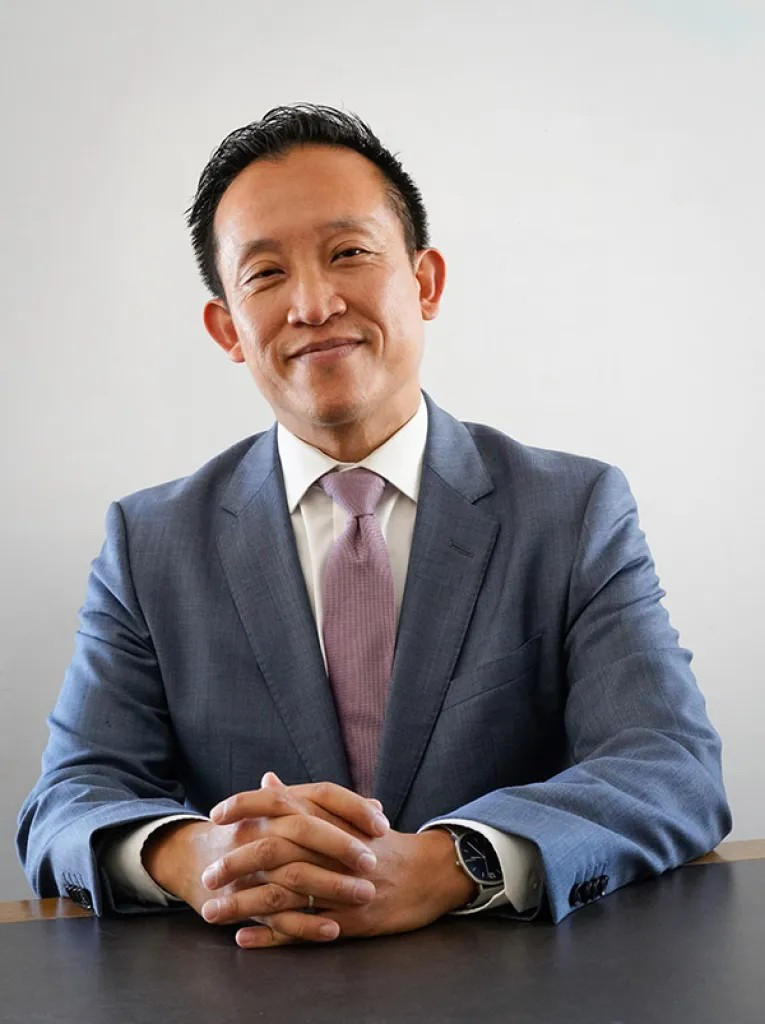
“Homelessness, housing, these are the moral questions of the day…This crisis is a crisis of our own making. We certainly have enough land in California to build the housing that we need. We can do it, and the reason we haven’t is we have made choices, some active choices and many passive choices, over the years to simply not build enough housing. And that’s gotta change.” — David Chiu
Housing, Homelessness Crises Are ‘Of Our Own Making,’ Says David Chiu
https://www.sfpublicpress.org/housing-homelessness-crises-are-of-our-own-making-says-david-chiu/
City Attorney, David Chiu, has the authority to investigate retaliation and enforce tenant protections.
Here’s a link to the letter Destination Freedom & Destination Freedom Media Group sent to David Chiu via Priority Mail:
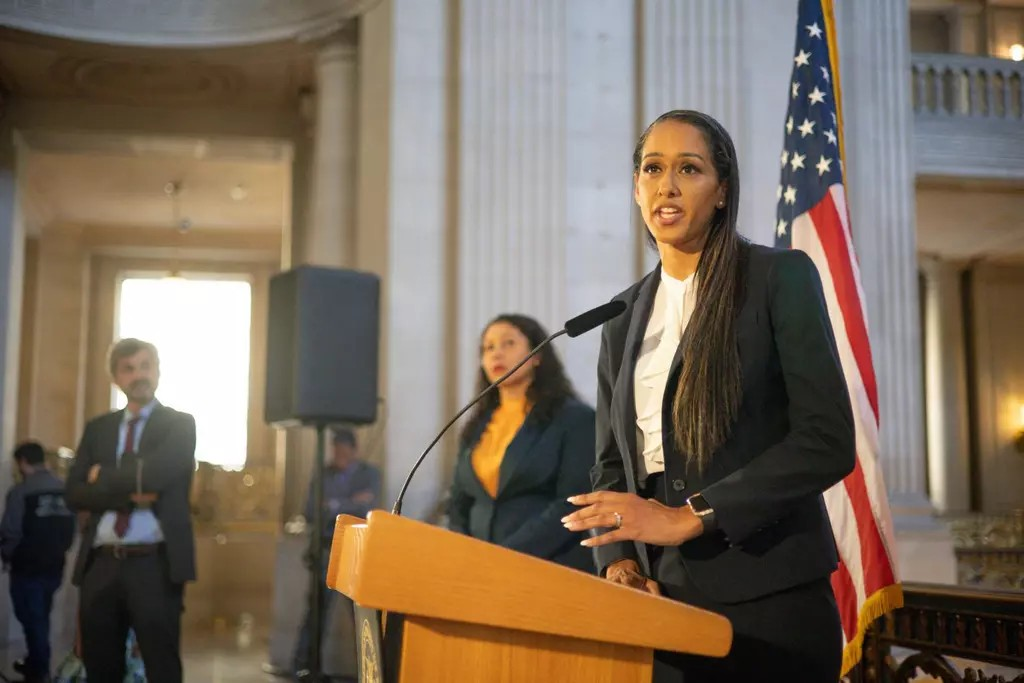
“Hours after her swearing in Friday, Jenkins made time for a brief phone call with The Standard. She talked not only about how she planned to hold drug dealers accountable, but also about how San Franciscans can hold her accountable as the city’s top cop.”
The Q&A: Brooke Jenkins talks about balancing reform with safety and how SF can hold her accountable
https://sfstandard.com/2022/07/08/the-qa-brooke-jenkins-talks-about-balancing-reform-with-safety-and-how-sf-can-hold-her-accountable-as-the-citys-new-top-prosecutor/
District Attorney Brooke Jenkins has the authority to assess whether intimidation and coercive practices cross legal lines.
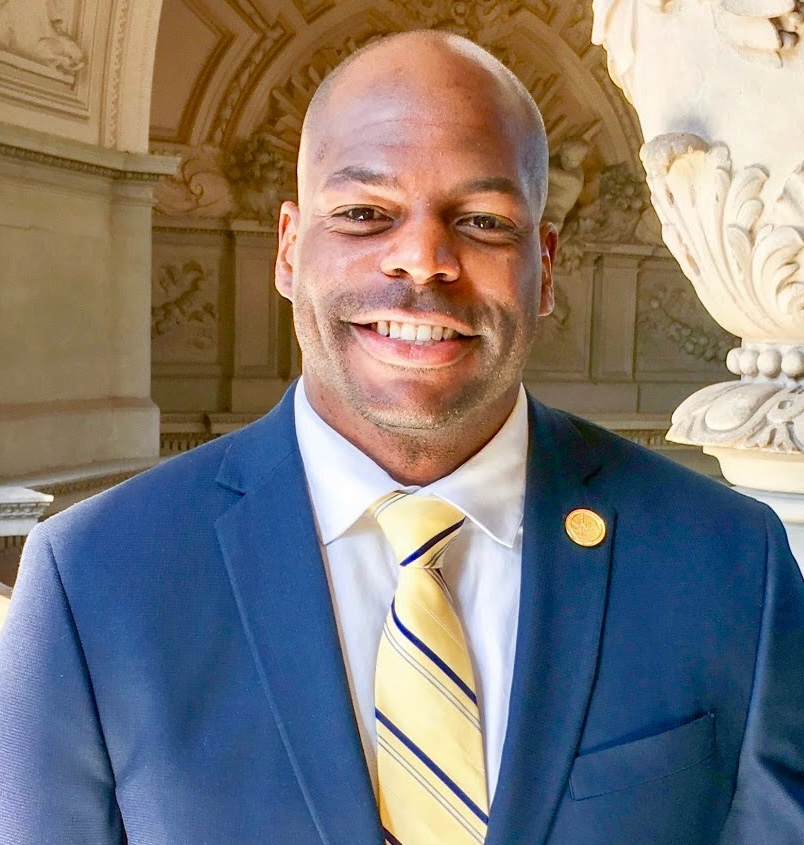
Tugbenyoh has crafted legislation to address homelessness and quality of life issues in the City and has worked to improve housing opportunities for San Francisco’s residents.
“I am dedicated to upholding the highest standards of integrity as we advance the department’s mission,” said Tugbenyoh….“My focus will be on rebuilding the community’s trust through transparent, accountable actions that allow us to advance the transformative work of the Human Rights Commission.”
Journalist’s Note: As of this writing, I have made MULTIPLE attempts to contact Mr. Tugbenyoh, even including him on letters I’ve sent to the Board of Supervisors, Mayor Lurie, Rob Bonta, and others. Sadly, it’s been crickets! This is not what happens when someone is “upholding the highest standards of integrity.”
Mayor Breed Taps New SF Human Rights Director as Misspending Scrutiny Intensifies
https://www.kqed.org/news/12004687/mayor-breed-taps-new-sf-human-rights-director-as-misspending-scrutiny-intensifies
Mawuli Tugbenyoh, Executive Director of the San Francisco Human Rights Commission, has jurisdiction over retaliation that chills protected activity, particularly in communities of color.
Their inaction is now part of the record.
So is the silence of Related Affordable Senior Vice President Angela Cisneros, whose portfolio includes San Francisco and who has not publicly addressed the conduct of her employees.
Here’s the letter Destination Freedom & Destination Freedom Media Group sent to the San Francisco Board of Supervisors and Mayor Daniel Lurie via Priority Mail:
Ltr to SF BOS & Lurie 2026 01 27.pdf http://”C:\Users\gsand\OneDrive\Destination Freedom\DF Media Group\Shared Files\Ltr to SF BOS & Lurie 2026 01 27.pdf”
And so is the silence of Mayor Daniel Lurie.
Why is the Mayor—who toured these properties and saw the conditions firsthand—ignoring behavior by Related employees that appears designed to silence advocacy?
Why is this happening during Super Bowl LX, when San Francisco is actively curating its global image?
And why has no senior city official demanded answers?
A PLEA TO SAN FRANCISCO’S ACTIVIST COMMUNITY
This is the moment where movements are tested.
San Francisco’s activist community has never been defined by comfort. It has been defined by refusal—the refusal to accept silence as normal, retaliation as routine, or corporate power as inevitable.
This case is not just about Maika Pinkston.
It is about whether tenant advocates can speak without fear.
It is about whether journalists can report without their sources being punished.
It is about whether the City’s values mean anything when enforcement becomes inconvenient—especially while the city hosts Super Bowl LX.
Do not look away.
Do not wait for this to become someone else’s eviction notice, someone else’s warning, someone else’s silence.
Demand answers.
Demand investigations.
Demand that Mayor Daniel Lurie respond publicly—now, not after the cameras leave.
Because if a tenant advocate can be pressured, isolated, and threatened with housing loss for speaking to a journalist, then tenant protections in San Francisco are not rights.
They are suggestions.
THE QUESTION THAT REMAINS
Why is a multibillion-dollar housing operator allowed to discipline speech instead of fixing conditions?
Why are tenant advocates treated as liabilities while corporate partners remain untouchable?
And why—in the middle of Super Bowl LX, under national scrutiny—does the City remain silent?
When speaking becomes the violation, democracy is already in trouble.
Journalism exists to make sure that trouble is seen.
The record is now open.
SOURCES & DOCUMENTATION
(Chronological Record of the Related Retaliation Incident)
I. PRIMARY REPORTING — ORIGIN OF THE INCIDENT
- Washington, Malik.
“Hunters Point Renovation Failures.” Davis Vanguard, January 16, 2026.
This investigative article documents deteriorating concrete work and habitability concerns at a Related-managed property in Bayview–Hunters Point. The article includes photographic evidence and a quoted statement from tenant advocate Maika Pinkston. Publication of this article directly precedes management’s first retaliatory communication.
II. MANAGEMENT RESPONSE — MONITORING AND PRESSURE - Kross, Joe (Vice President, Related Companies) → Pinkston, Maika.
Email correspondence, January 16, 2026, 2:53 PM.
Sent within hours of the article’s publication. This email explicitly embeds a hyperlink to the Davis Vanguard article and frames it as something the community should move away from (“positive path vs: [article link]”). This communication establishes monitoring of protected speech and media engagement.
III. SECURITY & CONTRACTOR CLAIMS — UNVERIFIED ALLEGATIONS - Dabney, Frank (Project Manager, Regency General Contractors) → Kross, Joe.
Email correspondence, January 16, 2026.
Contractor report alleging damage to fresh concrete at Commer Court, accompanied by photos. The email triggers escalation despite no tenant interview and no verified identification of responsible individuals. - Slocum, LaDale (Chief, Resolute Protection Services) → Related Management.
Email correspondence, January 16, 2026.
Security contractor acknowledges lack of on-site officer coverage and reliance on secondhand information. Requests identification of “heads of household” rather than conducting a verified investigation. This email undermines the factual reliability of later claims.
IV. TENANT RESPONSE — PROTECTED ACTIVITY - Pinkston, Maika → Kross, Joe (with management CCs).
Email correspondence, January 16–17, 2026.
Pinkston formally disputes the security narrative, denies responsibility, corrects inaccuracies, and asserts that enforcement and safety are the responsibility of security and management—not tenants. She cites personal safety concerns and rejects role coercion. This constitutes protected tenant speech.
V. ESCALATION — ROLE COERCION AND DISENGAGEMENT - Kross, Joe → Pinkston, Maika.
Email correspondence, January 17, 2026.
Kross pressures Pinkston to “positively influence your neighbors and guests” despite acknowledging that alleged actors are non-residents. This email attempts to shift enforcement responsibility onto a tenant advocate. - Kross, Joe → Pinkston, Maika.
Email correspondence, January 18, 2026, 8:43 AM.
Kross withdraws engagement, stating: “In the future I will not ask for your influence on the community as it appears to burden you.” This punitive disengagement follows Pinkston’s assertion of rights and correction of false claims.
VI. CONTEXTUAL INVESTIGATIVE REPORTING - Washington, Malik.
“When Power Is Protected and the Doors Stay Closed.” Davis Vanguard, January 20, 2026.
This article situates the incident within a broader pattern of City knowledge, continued contracting with corporate landlords, and enforcement failures in Bayview–Hunters Point.
VII. STATE-LEVEL ESCALATION - Washington, Malik.
“Open Letter to California Attorney General Rob Bonta.” Davis Vanguard, January 27, 2026.
Public request for state intervention addressing systemic habitability failures and retaliation against tenant advocates. Publication date coincides with issuance of the lease-violation notice.
VIII. FORMAL ADVERSE ACTION — RETALIATION - Jones, Christopher (Regional Manager, Related Companies).
Notice of Lease Violation, Issued January 27, 2026.
Formal HUD lease-violation notice delivered to Maika Pinkston, relying on previously disputed and unverified security claims. The notice threatens termination of tenancy and constitutes adverse action under tenant-protection standards.
IX. TENANT DUE PROCESS RESPONSE - Pinkston, Maika → Jones, Christopher.
Formal Dispute and HUD Grievance Request, January 2026.
Pinkston formally denies the allegations, requests a HUD grievance hearing, demands evidence, and preserves all rights under federal, state, and local law.
X. LEGAL & REGULATORY FRAMEWORK - U.S. Department of Housing and Urban Development (HUD).
Tenant Grievance Procedures and Anti-Retaliation Protections.
Federal regulations governing subsidized housing prohibit retaliation for tenant organizing, advocacy, and media engagement. - California Civil Code § 1942.5.
California’s anti-retaliation statute protecting tenants who exercise lawful rights, including complaints about habitability and participation in public discourse.
XI. NATIONAL CONTEXT — CRIMINALIZATION OF JOURNALISM - Arrest of Georgia Fort.
Public reporting and court records documenting the arrest of a journalist while exercising First Amendment rights during reporting activities. - Arrest of Don Lemon.
Public reporting and court records documenting the arrest of a journalist while engaged in newsgathering. Illustrates the national rise in overt and covert retaliation against journalism.
XII. LOCAL ACCOUNTABILITY REPORTING - San Francisco Bay View National Black Newspaper.
Multiple articles (2025) documenting habitability failures, tenant complaints, and Mayor Daniel Lurie’s tours of Bayview–Hunters Point properties. - Mission Local; San Francisco Chronicle.
Ongoing reporting on corporate landlords, redevelopment projects, and tenant conditions in San Francisco, providing independent corroboration of systemic issues.
As always, here’s our song/video for this article: INSPIRATION by Jo’de Boy
ABOUT THE AUTHOR
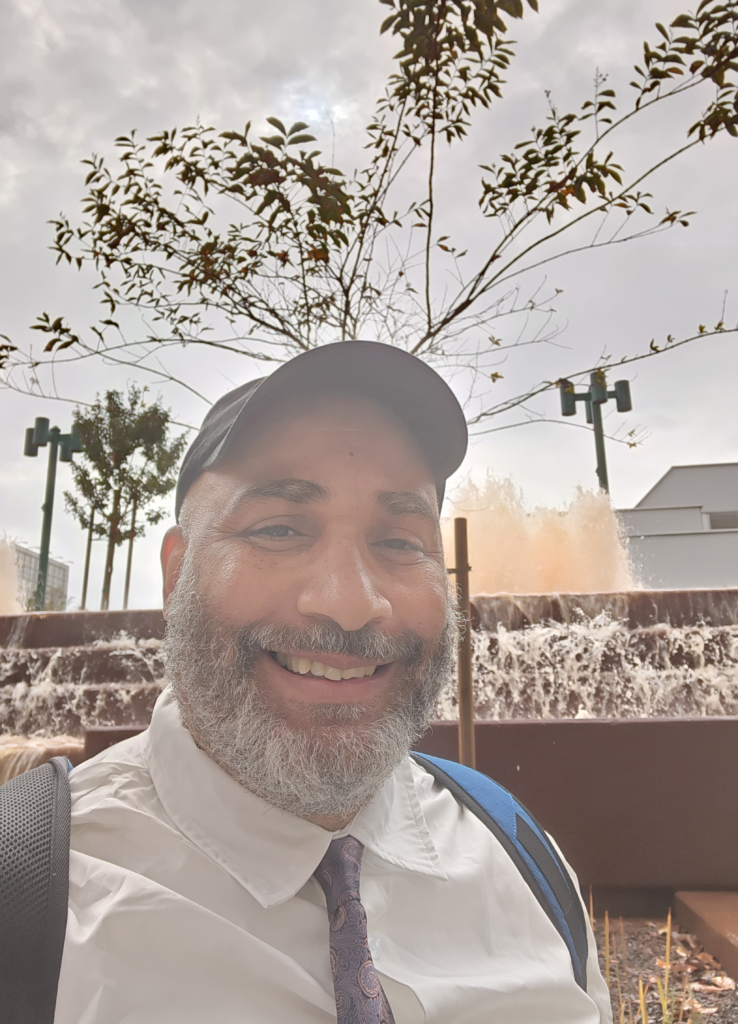
Malik Washington is an investigative journalist and co-founder of Destination Freedom Media Group, an independent nonprofit newsroom dedicated to accountability reporting at the intersection of civil rights, public integrity, and community survival. He has been a published journalist for over 14 years.
His work—published in partnership with the Davis Vanguard—focuses on government power, criminal justice, environmental justice, and the human consequences of policy decisions too often insulated from public scrutiny. Washington’s reporting amplifies the voices of impacted communities while insisting on documentary evidence, transparency, and the unvarnished truth—especially when institutions demand silence.
You can reach him via email: mwashington2059@gmail.com or call him at (719) 715-9592.
Suggestions or leads on stories are always welcome.
Please follow us on:
Facebook: https://www.facebook.com/destfreedom13
Instagram: https://www.instagram.com/destinationfreedom13/
X: https://x.com/dest_freedom