
In a defining victory for outgoing District 10 Supervisor Shamann Walton, the Board of Supervisors unanimously halted new data centers for 45 days. For environmental-justice advocates in Bayview–Hunters Point, the vote is not the finish line. It is the opening bell.
A Victory — and a Warning
SAN FRANCISCO — For once, San Francisco stopped before it built.
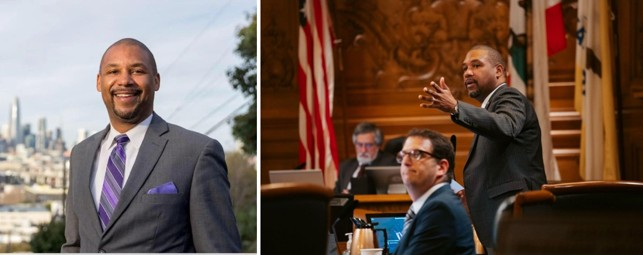
On Tuesday, October 6, the San Francisco Board of Supervisors unanimously approved a 45-day citywide moratorium on new data centers, handing outgoing District 10 Supervisor Shamann Walton one of the most consequential environmental-justice victories of his nearly eight years in office.
The ordinance, effective immediately, freezes city approvals of new data centers while the Planning Department studies their effects on electricity, water, air quality, land use and the surrounding community — and begins drafting long-term rules. The pause can be extended for up to 22 months, or replaced with permanent controls.
“During this period, we are looking at issues including energy, water, air quality, land use, and community impacts, while working toward stronger protections and meaningful community input,” Walton said after the vote.
For Walton, whose district stretches across Bayview–Hunters Point, Potrero Hill, Dogpatch and Visitacion Valley, the vote is larger than a temporary land-use restriction. It forces San Francisco to confront a question that technology has been answering faster than government has been willing — or able — to ask:
What is the physical cost of the artificial-intelligence revolution — and who will be made to pay it?
In Bayview–Hunters Point, there is a second question, older and sharper:
Why should the answer once again be us?
Inside the chamber, the vote was an unambiguous win. Outside it, the people who have spent their lives fighting for this neighborhood were already warning against an early celebration.
In an interview with this reporter following the vote, Arieann Harrison, Executive Director of the Marie Harrison Community Foundation for Social and Environmental Justice, cautioned that the 45-day moratorium must be understood as the beginning of a much longer struggle — not its conclusion.
A day earlier, Harrison had put the stakes plainly before the Board’s Land Use and Transportation Committee: “We need for this committee right here to stand on business when it comes to the health outcomes of our districts.”
Her warning matters because a political victory does not settle a policy question. Forty-five days from now, San Francisco must decide: Does it extend the moratorium? Impose permanent restrictions? Write environmental-justice siting requirements? Mandate disclosure of electricity and water use? Regulate backup generators? Prohibit certain facilities outright? Or simply let development resume under a new set of rules?
Those are the battles Harrison and her allies know are coming.
In Bayview–Hunters Point, there is a second question, older and sharper:
Why should the answer once again be us?
Inside the chamber, the vote was an unambiguous win. Outside it, the people who have spent their lives fighting for this neighborhood were already warning against an early celebration.
In an interview with this reporter following the vote, Arieann Harrison, Executive Director of the Marie Harrison Community Foundation for Social and Environmental Justice, cautioned that the 45-day moratorium must be understood as the beginning of a much longer struggle — not its conclusion.
A day earlier, Harrison had put the stakes plainly before the Board’s Land Use and Transportation Committee: “We need for this committee right here to stand on business when it comes to the health outcomes of our districts.”
Her warning matters because a political victory does not settle a policy question. Forty-five days from now, San Francisco must decide: Does it extend the moratorium? Impose permanent restrictions? Write environmental-justice siting requirements? Mandate disclosure of electricity and water use? Regulate backup generators? Prohibit certain facilities outright? Or simply let development resume under a new set of rules?
Those are the battles Harrison and her allies know are coming.
Video: Arieann Harrison post-vote interview – October 6, 2026
Destination Freedom Media Group. Harrison discusses the significance of the 45-day moratorium and why environmental-justice advocates believe the fight is only beginning.
The Cloud Is Not Weightless
We call it “the cloud.” The word sounds deliberately harmless — weightless, invisible, somewhere above us.
But the cloud is physical. It sits on land. It consumes enormous amounts of electricity. Its servers throw off heat that must be removed, and depending on design, cooling can draw on water. Backup power can mean diesel generators. Transmission lines must reach it.
And somewhere, somebody has to live next to it.
That reality turned an abstract argument about artificial intelligence into an environmental-justice fight in southeastern San Francisco. Bayview–Hunters Point is already home to two of the city’s largest data centers. The moratorium now pauses the planned expansion of NOVVA’s 7.6-acre campus at 400 Paul Avenue, which had been slated to grow from nine to 36 megawatts by 2028, according to Mission Local. In Dogpatch, permits have been filed for a 160,000-square-foot facility at 1215 Michigan Street.
Under Walton’s legislation, all of that now waits while San Francisco decides what rules should govern it.
AI has a physical footprint. In San Francisco, that footprint has been pointing southeast.
A 2001 Rulebook for the AI Age
One of the most striking facts to surface at Monday’s Land Use hearing was how antiquated San Francisco’s regulatory framework has become. The city’s existing land-use rules for this kind of information infrastructure trace back to 2001.
Think about that. Before the iPhone. Before cloud computing was ubiquitous. Before ChatGPT. Before generative AI entered homes, classrooms and workplaces — and before AI companies began demanding computing capacity on a scale cities across the country are now scrambling to absorb.
Yet San Francisco — the city at the epicenter of the AI revolution — has been regulating today’s data infrastructure with a framework written a quarter-century ago.
District 10 supervisorial candidate Dion-Jay “D.J.” Brookter says that mismatch is precisely why the city needed to stop.
“We need to slow down. Technology is moving faster than our ability to regulate it, and San Francisco is still relying on a data center framework from 2001. This 45-day moratorium is just the first step that gives us time to develop modern rules that protect our communities—particularly Bayview-Hunters Point and District 10, which have historically carried more than their fair share of environmental burdens.”
— Dion-Jay “D.J.” Brookter, District 10 candidate, in a statement to Destination Freedom Media Group
The question isn’t whether technology will keep advancing. It will. The question is whether public policy will remain permanently one technological generation behind it.
Walton Forced the Question
Walton’s ordinance, Board File No. 261021, was introduced September 15 and co-sponsored by Supervisors Connie Chan, Jackie Fielder and Chyanne Chen. It invokes California Government Code Section 65858 to impose a temporary, citywide interim zoning moratorium.
At Monday’s committee hearing, Walton explained why he believed immediate intervention was necessary. “District 10 has carried more than its share of the industrial burden for the city,” he told the committee. He called for “transparency about water and energy demands, enforceable community benefits and a real opportunity for residents to weigh in before projects are approved, not after.”
He framed the moratorium not as opposition to innovation, but as an attempt to restore balance. The following afternoon, every one of his colleagues agreed.
That makes Tuesday’s vote far more than symbolic. For at least the next 45 days, San Francisco has flipped the presumption. Instead of letting development proceed while government catches up, development must now wait while government decides what the rules should be.
Standing Up When the Stakes Were Bigger Than One Project
For District 10, this vote deserves to be remembered as an act of political courage. Walton did not wait for the data-center buildout to become irreversible before demanding answers. He used the final months of his tenure — he terms out in January 2027 — to force San Francisco to confront an emerging industry whose appetite for land, electricity and infrastructure is colliding with communities that have already carried generations of industrial and environmental burdens.
That matters in Bayview–Hunters Point, where residents have watched powerful institutions arrive with promises of progress while the community was left to fight for transparency, oversight and protection. On data centers, Walton reversed the sequence: first pause, then study, then decide.
His position placed him squarely against the momentum of a technology sector with enormous economic and political influence in this city. Walton had already warned that some technology interests were not sufficiently concerned about the environmental consequences for his community, and that well-funded interests would push hard for their priorities. The moratorium turned that warning into law.
There is room for legitimate disagreement over how data centers should ultimately be regulated. The industry can point to cleaner designs, tax revenue and the real infrastructure needs of a digital economy. But Walton’s achievement was to insist that none of those arguments entitles Big Tech — or any powerful industry — to write the rules by building first and answering community questions later.
Bayview–Hunters Point is not vacant industrial territory. It is not a sacrifice zone. It is not the automatic destination for every burden the rest of San Francisco depends upon.
As Walton prepares to leave office, the moratorium is a fitting test of the principle that animated many of the defining fights of his tenure: government has an obligation to stand between a community and powerful interests when development threatens to outrun accountability.
Bayview Has Heard the Word “Progress” Before
For generations, southeastern San Francisco has hosted infrastructure that served people far beyond its borders: the former Hunters Point Naval Shipyard, a since-shuttered PG&E power plant, heavy industry, freeways, truck traffic, wastewater treatment, legacy contamination and decades of environmental-health concerns.
That history is why data centers cannot be evaluated in District 10 as though they were appearing on an empty map. Environmental justice demands that cumulative impacts be counted.
One project may satisfy a regulatory threshold. So may the next. So may the one after that. But what happens to the human beings living at the intersection of all three?
At Monday’s hearing, one speaker captured it in a single sentence:
“Environmental justice means looking at the cumulative impacts, not just one project at a time.”
That principle should guide whatever San Francisco produces over the next 45 days.
“How About Human Centers?”
Malik Seneferu of the Marie Harrison Community Foundation approached the hearing from another direction entirely. While policymakers debated data centers, he asked why the same urgency and capital are not consistently directed toward human infrastructure.
Malik Seneferu of the Marie Harrison Community Foundation approached the hearing from another direction entirely. While policymakers debated data centers, he asked why the same urgency and capital are not consistently directed toward human infrastructure.
“How about community centers?” he asked. “How about schools?” Then he posed the most human question of the afternoon:
“How about human centers for good living in San Francisco?”
His point was not that the city is financing data centers. It was about priorities. San Francisco routinely confronts shortfalls for schools, youth programs, libraries and the arts, even as extraordinary private capital pours into artificial intelligence and the infrastructure behind it. Seneferu was asking the city to define what progress means if technological infrastructure flourishes while human infrastructure struggles.
J.R. Eppler: Don’t Make District 10 the Default
District 10 candidate J.R. Eppler also spoke in support of the moratorium, arguing that any permanent citywide policy must confront the geographic concentration of data infrastructure. District 10, he said, should not automatically become the home of infrastructure the entire city relies upon simply because the Southeast holds much of San Francisco’s remaining industrial land.
Eppler raised a second question that deserves far more scrutiny: industrial displacement. Industrial land in San Francisco is finite. If fast-growing data-center companies begin outbidding conventional businesses for those parcels, what happens to the blue-collar jobs those businesses provide?
The honest economic calculation isn’t only how many jobs a new facility creates. It is also what jobs, and what alternative uses, disappear when the facility takes the land.
An Industry Veteran Offers a Different View
A 45-day win for environmental advocates does not mean the evidence points in only one direction.
One of the most important witnesses Monday was John Paulsen, a Richmond District resident who told supervisors he has worked in the data-center industry for roughly 30 years on projects across North America, Europe and the Asia-Pacific region. He began with a striking admission:
“Honestly, we haven’t done a very good job communicating, regulating ourselves, and this is all the result of it.”
— John Paulsen, data-center industry veteran
Then he challenged the assumption that every data center must impose the same burden. He described projects powered by renewable electricity, facilities designed to use no water, and sites that do not rely on diesel backup generators. Those claims deserve independent verification — but the larger point is important. If those technologies are viable, then many of the harms associated with data centers are not inevitable. They are policy choices.
That changes the conversation. Should San Francisco require renewable power? Restrict water-intensive cooling? Phase out diesel backup? Require public disclosure of electricity and water use? Enforce strict noise standards? Bar concentration in already burdened neighborhoods? Mandate enforceable community benefits? Refuse tax giveaways to an industry fully capable of paying its own way?
Paulsen noted that the servers inside these facilities can generate substantial personal-property-tax revenue, and cautioned cities against waiving it. He also reminded opponents of an uncomfortable truth: “Everybody’s smartphones won’t work without them.”
That is exactly why the next 45 days must be driven by evidence, not slogans.
Transparency Before the Deal Is Done
District 10 resident Bradley Paul argued that if data centers are ultimately permitted, residents deserve operational information — including water and electricity consumption — early enough to shape the decision. Not after construction begins. Not after financing closes. Not after approvals become politically impossible to reverse.
Before.
Information after a decision is disclosure. Information before a decision is power.
What Happens on Day 46?
This is where Arieann Harrison’s warning becomes critical.
Tuesday’s unanimous vote deserves recognition. Walton forced an issue onto San Francisco’s agenda that might otherwise have stayed buried beneath the excitement over artificial intelligence — and he did it in the final months of representing a district that already bears an extraordinary environmental burden.
But the most important day may not have been October 6. It may be Day 46.
At the end of the 45-day period, the Planning Department is expected to return with findings at a public hearing. From there, the moratorium can be extended or replaced with permanent controls. Environmental-justice advocates cannot disengage now. Neither can the technology industry. Neither can the candidates seeking to replace Walton.
The city needs answers. How much electricity and water do existing facilities consume? What backup systems do they run, and what do those systems emit? How many permanent jobs does each facility create? How much tax revenue does San Francisco actually receive? What grid upgrades are required — and who pays for them? How should cumulative burden shape siting? What community benefits should be mandatory?
And perhaps most importantly: are there places in San Francisco where data centers simply should not be built?
The Next District 10 Supervisor Inherits This Fight
Walton’s term is ending. The question he forced onto the city’s agenda is not.
Theo Ellington, a frontrunner in the race and executive director of the Ruth Williams Bayview Opera House, says he was the first District 10 candidate to call for a data-center moratorium. The public record supports him. On September 8, Ellington published “Pause, Study, Protect” on his campaign website and Instagram, declaring, “I am calling for a moratorium on new Data Centers in District 10.” Mission Local then broke the news of Walton’s plan, in a report dated September 10 that noted Ellington’s announcement. Brookter’s and Eppler’s positions first appeared the same day, in Mission Local’s candidate questionnaire. This reporter found no earlier public call for a moratorium from another District 10 candidate.
It is worth noting that Supervisor Walton had been working on his ordinance for months before Ellington publicly called for a moratorium, according to the San Francisco Chronicle, as reported by SFist. The policy itself started in Walton’s office. Among the candidates running to succeed him, though, Ellington was clearly the first to speak up.
TIMELINE: WHO CALLED FOR A DATA-CENTER MORATORIUM FIRST
| Date (2026) | Who | What happened |
| Months before September | Supervisor Shamann Walton | Walton’s office develops a data-center moratorium ordinance. Walton aide Natalie Gee later tells the Chronicle he had been working on it “for months.” |
| Sept. 8 | Theo Ellington (D10 candidate) | First D10 candidate to call publicly for a moratorium. He posts “Pause, Study, Protect” on his campaign website and Instagram; the moratorium he proposes covers District 10 only. |
| Sept. 10 | Mission Local / Walton | Mission Local first reports Walton’s plan for a 45-day citywide moratorium and notes Ellington’s announcement. |
| Sept. 10 | Dion-Jay “DJ” Brookter and J.R. Eppler (D10 candidates) | In Mission Local’s candidate questionnaire, Eppler backs a D10 moratorium. Brookter goes further, with the first candidate call for a permanent ban “regardless of size.” |
| Fri., Sept. 11 | Supervisor Walton | Walton formally announces the ordinance, co-sponsored by Supervisors Chan, Fielder and Chen. |
| Mon., Sept. 14 | Supervisor Walton | Holds a press conference on the City Hall steps. |
| Tue., Sept. 15 | Board of Supervisors | Walton introduces the ordinance, Board File No. 261021. |
| Mon., Oct. 5 | Land Use & Transportation Committee | Hearing with public comment; Brookter and Eppler speak in support. The committee advances the ordinance. |
| Tue., Oct. 6 | Board of Supervisors | Unanimously approves the 45-day citywide moratorium, effective immediately. |
Sources: Ellington campaign website and Instagram; Mission Local (Sept. 10 and Oct. 6, 2026); San Francisco Chronicle via SFist and Hoodline; SF.gov (Sept. 11, 2026); The San Francisco Standard (Oct. 6, 2026).
Ellington’s proposal applied only to District 10. It called for full community input, environmental review, data-center companies paying the full cost of the power upgrades they require, ratepayer and anti-displacement protections, and public disclosure of water and energy use. “At the end of the day, we don’t want the residents of District 10 carrying the burden of that,” he told Mission Local.
Being first is not the same as going furthest. Brookter, Walton’s endorsed successor, was the first candidate to call for an outright permanent ban, “regardless of size.” Eppler argued that “counting megawatts is not enough,” because several smaller facilities can impose the same burden as one large project. Brookter and Eppler both spoke in support of the moratorium at Monday’s hearing. At a recent forum, according to Mission Local, all of the leading contenders said they would now support a permanent ban.
But campaigning against data centers is easier than writing the policy that governs them. The next District 10 supervisor may have to decide whether to extend this moratorium, replace it with permanent restrictions, negotiate environmental safeguards — or pursue an outright prohibition.
Voters deserve more than yes-or-no answers. They deserve specifics.
VIDEO Destination Freedom Media Group post-vote coverage — October 6, 2026
On-the-ground coverage following the San Francisco Board of Supervisors’ approval of the 45-day citywide data-center moratorium.
A Win for Walton. An Opening for Bayview
There is no reason to diminish what happened Tuesday. Shamann Walton won. He asked San Francisco to stop, and his colleagues agreed unanimously.
In a city racing to crown itself the global capital of artificial intelligence, an outgoing supervisor representing one of its most environmentally burdened communities persuaded the government to tell one piece of the AI industry: Not yet. Study the consequences first.
For decades, Bayview–Hunters Point residents have lived beside the machinery that lets the rest of San Francisco function. The shipyard has an address. The wastewater plant has an address. The industrial corridors and the freeways have addresses.
And now San Francisco is being forced to recognize something else. The cloud has an address, too.
Someone lives beside it. Someone’s grid powers it. Someone’s land is occupied by it. Someone may hear it. Someone’s neighborhood absorbs whatever consequences remain after the engineers, developers and regulators finish their calculations.
The issue before San Francisco isn’t whether artificial intelligence is good or bad, or whether the city should turn its back on innovation. It is whether technological progress grants private industry the right to determine the public consequences of that progress before communities have had the chance to decide what they are willing to bear.
On October 6, San Francisco answered that question. For 45 days, at least, the answer is no.
But Arieann Harrison understands something that communities carrying generations of environmental burden learn the hard way:
Winning a pause is not the same thing as winning protection.
Winning a pause is not the same thing as winning protection.
The clock is running. What San Francisco does with the next 45 days will determine whether Tuesday’s vote becomes merely a temporary interruption — or the moment the city decided that the infrastructure of the future cannot be built by repeating the environmental injustices of the past.