
The Price of Being Poor – Part 15
As residents report renewed eviction pressure, a City Hall hearing offers a path to answers. Mayor Daniel Lurie can help bring residents, advocates and public agencies together before those answers come too late.

SAN FRANCISCO — City Hall has a date on its calendar. Dede Hewitt says her neighbors have three-day notices.
In a lengthy telephone conversation with me on October 26, Hewitt described another problem: an oversight process she believes is being frustrated while the eviction process continues. She alleged that subpoenas intended to compel answers at City Hall were left on the door of Domus Management’s offices without ensuring the named individuals were properly served.
Her warning presents San Francisco with an opportunity as well as an obligation: bring the people who can help to the same table while there is still time to preserve residents’ homes.
Hewitt, founder and executive director of the Sharen Hewitt Empowerment Resource Organization, or S.H.E.R.O., has been a principal organizer and community advocate in the residents’ fight. In an urgent email sent Saturday evening, October 24, she warned that eviction activity had resumed against residents of the Martin Luther King–Marcus Garvey Square Cooperative. She attributed that activity to attorney Mercedes Gavin and said residents had received three-day notices the previous Thursday, October 22.
“There should be a follow up piece regarding the current actions,” Hewitt wrote, warning that waiting until December 3 could leave residents displaced before officials hear from the people being called to account.
The newly reported notices and affected case files have not been independently reviewed for this article. Hewitt’s warning nevertheless arrives against a documented backdrop: disputed housing accounts, public testimony from eviction-defense counsel and an official subpoena commanding Gavin to appear at City Hall on December 3.
A hearing can establish a record. It cannot, by itself, keep someone in a home.
The warnings were already public
I have examined King–Garvey in at least three earlier articles, tracing residents’ concerns about disputed accounts, recertification and oversight. Jesse Alejandro Cottrell of The San Francisco Standard independently reported on threatened evictions in May, confirming court filings against Alveries Harper and eight other residents.
Hewitt’s organizing has helped sustain that attention. She has connected residents with legal help and carried their concerns to officials. Her work is a reminder that accountability begins with people willing to stay with a problem after the first headline.

Hewitt brings the warning to a live audience
On October 27, fellow journalist Ace Washington and I discussed King–Garvey during a Facebook Live broadcast on my Malik Washington page. Hewitt called in, bringing her concerns to a public audience.
She questioned the accounting of shareholder equity and said residents were not being treated as cooperative members. She also alleged that Domus refused to accept subpoenas for board members and that people had been advised to avoid service. Importantly, she said two board members accepted subpoenas while the board president did not respond.
Her account therefore does not describe a process in which nobody accepted service. It describes a disputed process that needs to be clarified, individual by individual. Her concerns about equity likewise require financial records, not assumptions about where money went.
Hewitt urged affected residents to attend the December 3 hearing. The question is how to support them between that invitation and the hearing itself.
The city has moved beyond invitations
The official subpoena, dated October 14, commands Gavin to appear at 10 a.m. on December 3, 2026, in City Hall’s Legislative Chamber, Room 250, under Board File No. 260799. A separate subpoena names cooperative board president Linda Yoakum. The investigation concerns evictions, habitability, recertification, payment processing and resident safety at King–Garvey, Thomas Paine Square and other properties currently or previously managed by Domus.
In our October 26 conversation, Hewitt alleged that Gavin instructed Domus employees to make themselves unavailable for service. She also said Sheriff’s Department personnel left paperwork on the management-office door without ensuring the named individuals were properly served. Her October 24 email referred instead to individual doors; whether these accounts describe different attempts remains unresolved.
The service returns have not been reviewed for this article, and neither a defective service attempt nor an instruction to evade service has been independently established. Issuing a subpoena is not proof of successful service—or disobedience.
The Clerk and Sheriff’s Department can help resolve that uncertainty by identifying who was served, how and what remains outstanding. Gavin, Domus and the cooperative leadership should have an opportunity to address Hewitt’s account. A clear record would serve residents and the integrity of the hearing alike.
What Mahmood’s office actually promised
Supervisor Bilal Mahmood’s office has helped bring residents’ concerns into the public process. In September correspondence, Mahmood said invitations had gone out and that his office intended to pursue subpoenas for people who did not attend. His staff coordinated hearing access and later acknowledged my proposed Affordable Housing Property Manager Accountability Act.
Hewitt says Mahmood also requested a pause in the elders’ evictions until after December 3. She reports that eviction efforts nevertheless continue. The correspondence reviewed does not establish an accepted standstill agreement or binding stay; the terms and response to the reported request still need clarification.
Mahmood’s work provides a foundation for a broader response. A hearing can pursue accountability while city and state leaders help residents obtain immediate assistance. Those efforts need not wait for one another.
Behind the eviction warning, an unresolved account
The strongest case for urgent scrutiny is not an adjective attached to an attorney. It is the documentary question of what residents owe and how those amounts were calculated.
At the October 1 hearing, Eviction Defense Collaborative attorney Tuesday Thornton described two King–Garvey cases with notices seeking roughly $5,000 and $6,000. In one, she said, the plaintiff’s ledger asserted approximately $47,000. She testified that a Domus representative had acknowledged missing records supporting historical arrears, and that attempts to resolve the cases had instead produced intensive litigation.
Those are the statements of counsel representing residents, not findings by a judge. They identify records that can be examined: notices, ledgers, receipts, recertification histories and settlement communications.
Independent reporting had already established cause for concern. In May, The San Francisco Standard reported that 16 Black King–Garvey residents, most of them seniors, had received eviction notices. It confirmed unlawful-detainer filings against Alveries Harper and eight other residents. Mahmood told the publication that those filings contradicted information management had given his office.
The new notices reported by Hewitt must be examined individually. The earlier record is not proof that every later demand is wrong. It is a compelling reason not to accept unexplained balances at face value.
Scrutinize Gavin through the documents
The most useful questions about Gavin’s role are specific ones, grounded in the records of the cases she handles.
One document warrants particular attention: the redacted “Stipulation for Judgment and Settlement Agreement” previously published by Destination Freedom. Its first page identifies Gavin as attorney for the cooperative plaintiff.
The document states a claimed total of $64,053. It calls for $13,999 within seven calendar days of signing, with another $25,027 payable under a long-term schedule and the remaining $25,027 conditionally waived. It sets a term running from May 2026 to January 2035 and expressly prohibits prepaying the balance.
It also contains provisions purporting to waive trial rights and certain efforts to obtain relief, and states that the monthly payment representing rent “shall not reinstate Defendant’s tenancy.”
The public copy reviewed does not establish that residents signed it, that a court approved it, or that its terms are enforceable. It does not prove that the claimed balance is accurate. But it makes the questions tangible: What records support that balance? Why prohibit early repayment? What independent advice did the resident receive? Who authorized these terms on behalf of the cooperative?
Gavin’s State Bar profile lists her license as active and displays no public disciplinary entry. Representing a housing provider, litigating forcefully or being named in a subpoena is not itself proof of professional misconduct. Accountability requires specific answers about specific conduct—not a verdict by insinuation.
A progressive reputation is not a housing protection
A separate Instagram commentary shared by @alicollinsproductions raises a broader question about the distance between San Francisco’s progressive reputation and its political conduct. In the supplied account, the speaker identified as Meronek argues that the city’s image does not necessarily match its politicians’ actions.
That critique is not evidence about King–Garvey or any particular official. Its useful challenge here is simpler: judge public commitments by their practical meaning for people asking for help.
At King–Garvey, that means reliable accounts, access to counsel and a coordinated response. This need not become a contest over political labels. It can become an opportunity to demonstrate what housing stability looks like in practice.
An invitation to Mayor Lurie
Mayor Daniel Lurie, this is an invitation to help.
The mayor’s office has already engaged with the reporting. In a September 29 response, spokesperson Shelby Weiss explained that the city’s oversight authority at King–Garvey and Thomas Paine Square is limited, pointed to tenant-protection investments and referred additional questions to the housing office.
Those limits deserve to be taken seriously. A mayor cannot decide a private lawsuit, promise a legal outcome or simply declare every eviction halted. Nor does the correspondence reviewed establish a complete account of work the administration may have undertaken.
But the mayor can be asked to help convene a response: bring residents and their attorneys together with Mahmood, Assemblymember Matt Haney and the agencies that have a role; identify who can address which problem; and help residents understand the next step.
The administration’s September rent-emergency announcement emphasized legal representation and action against systemic unlawful landlord behavior. King–Garvey offers an opportunity to connect that prevention agenda with people seeking help now.
This is not an invitation to accept every allegation. It is an invitation to help establish the facts while seeking to prevent avoidable displacement.
A place for state leadership
Haney’s housing leadership makes his participation important. His official biography identifies him as chair of the Assembly Committee on Housing and Community Development and the Legislative Renters’ Caucus.
His office has responded to my inquiries. In May, staff offered a telephone conversation. On October 7, MacKenzie Ewing wrote that my accountability proposal was being forwarded to the legislative director. That acknowledgment is a starting point, not evidence that the proposal has been enacted or a protective agreement secured.
Assemblymember Haney, will you join the mayor, Mahmood and residents’ representatives in an urgent briefing? What assistance can your office provide now, and which oversight or legislative questions require a longer-term response? A named staff contact and a clear timetable would help residents understand where their concerns stand.
What help could look like before the hearing
A practical response can begin with a few commitments.
First, bring the parties together. A meeting should include Hewitt, residents who choose to participate, their legal representatives and the relevant public offices. Participation should respect residents’ consent, accessibility needs and their attorneys’ case strategies.
Second, seek breathing room. Ask the cooperative and its representatives to consider a written, voluntary pause while disputed accounts are reviewed. If an agreement cannot be reached, residents’ counsel should evaluate any lawful protective options. No resident should assume a hearing date suspends a deadline.
Third, make the records understandable. Disputed balances need supporting documents; subpoena service needs a clear status report. Identifying what is known, missing and contested is more useful than asking residents to navigate conflicting assurances.
Fourth, assign responsibility and follow through. Each referral should lead to a named contact and a next step. Residents should know which agency can address each concern and when they can expect an update.
The Human Rights Commission has a role within its stated limits, including mediation, engagement and referrals. Its representatives described jurisdictional constraints at the October 1 hearing. Those constraints make coordinated handoffs especially important, including on reported accommodation concerns.
Every supervisor can support that coordination and the Board’s oversight work. Community organizations can help residents participate and reach qualified assistance. The goal is not to substitute political pressure for legal process. It is to make sure vulnerable residents are not left alone within it.
A final plea: rental relief before an elder loses a home
The next act of help must include money where verified need and program eligibility warrant it. The elders and seniors at King–Garvey urgently need access to rental relief, arrears assistance or other housing-preservation support—not only another meeting, another referral or another date on the calendar.
If an eligible payment can preserve a home, we should be working to make it possible before a resident faces displacement. The goal is not to prepare our elders for life on the street. It is to mobilize every appropriate resource to help keep them from getting there.
Richard Ybarra: please help bring the community together
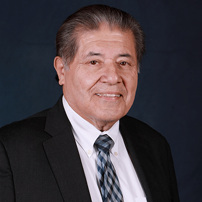
Mr. Ybarra, I am appealing to you personally: please help lead an urgent community response. Could MNC designate a staff coordinator and bring Hewitt, residents’ counsel, assistance providers and willing philanthropic partners into a rapid working conversation? MNC need not carry this burden alone. A trusted organization helping to organize the response could make the difference between a resident reaching assistance and giving up after one more unanswered referral.
The request is practical: help residents obtain an intake appointment, identify the documents each provider needs, and determine what verified funding gap remains. If MNC cannot provide financial assistance directly, please help make a direct introduction to someone who can assess it. These elders deserve a person who will stay with the referral until a real next step is in place.
Dr. Gina Fromer: help turn community care into housing stability

Dr. Fromer, this is a special plea for your leadership and GLIDE’s community reach. Please help connect these elders with the people, services and potential funding partners who can act. If direct rental assistance is outside GLIDE’s capacity, a staff liaison, application support or a philanthropic connection could still be consequential. The first goal should be preserving the homes residents already have—not waiting until they need a shelter referral.
To Season of Sharing and The Salvation Army: please help open a door
Season of Sharing’s published guidance includes emergency housing assistance, subject to program rules. I am asking its San Francisco program and intake partners to assess these households promptly, including whether cooperative occupancy or carrying charges qualify. To The Salvation Army: please identify any appropriate local assistance or make a direct referral to a funded partner. This appeal does not presume that funds are available or that every household is eligible.
Urgency must not become a blank check for an unexplained balance. No verified household count or total funding request has been established for this appeal. Each household needs individual screening, and any proposed payment should be coordinated with its attorneys, based on verified amounts and a clear understanding of whether it would preserve occupancy. Residents should not be pressured to concede disputed debt or waive rights to obtain help.
A named coordinator, a secure way to submit documents, a realistic funding timeline and a direct referral when one agency cannot help: these are modest requests with enormous human consequences. Residents’ consent and privacy must guide the process. An application for assistance must never be mistaken for a suspension of a legal deadline.
Mayor Lurie and Assemblymember Haney can help bring public agencies and this community response together. Hewitt and the elders should not have to hold the entire effort on their own. The invitation is open to service providers, faith communities, donors and neighbors: bring the resource you can offer, be honest about its limits, and help close the remaining gap.
We need community involvement now. Not after the hearing. Not after the moving truck. Not after an elder asks where they will sleep tonight. Let us make the next chapter of this story about people who answered—and homes that were saved.
The clock outside City Hall
On October 27, I contacted Open Door Legal executive director Adrian Tirtanadi for comment and reported that I was awaiting his response. I was also reaching out to Mahmood. No additional response to those inquiries is included here; a pending inquiry should not be mistaken for a refusal to engage.
A three-day notice is not a completed eviction or a sheriff’s lockout order. California Courts describes an eviction process involving notice, a court case, an opportunity to respond and, if the landlord prevails, enforcement. The applicable requirements and deadlines for each household here need review by qualified counsel.
That is why Hewitt’s advice to reconnect urgently with Open Door Legal and eviction-defense attorneys matters. The December hearing and immediate legal assistance serve different purposes. Residents may need both.
For an elder, a home is not simply a line in a ledger. It is the place from which daily life remains possible. When that home is in dispute, a clear explanation and timely help are not small things.
Mayor Lurie, Assemblymember Haney, members of the Human Rights Commission and every supervisor: there is room in this story for partnership. There is room for the cooperative’s representatives to answer questions, for records to correct misunderstandings and for public leadership to help prevent unnecessary harm.
The invitation is to act together while those possibilities remain open.
Let December 3 be a hearing where residents can ask hard questions with their homes still secure—not a date they remember as having arrived too late.
That would be more than a response to criticism. It would be a public commitment made tangible: people heard, facts examined and every reasonable effort made to keep elders home.
Our song/video for this article is: Stand Still | MAVHOUSE | feat. Mara Justine (Official Music Video)