
INCLUSION WITHOUT OWNERSHIP: WHY A BILLION-DOLLAR PROJECT IN HISTORIC BAYVIEW–HUNTERS POINT HAS ROOM FOR BLACK LABOR—BUT NOT BLACK DEVELOPERS
By Journalist Malik Washington
Destination Freedom Media Group & The Davis Vanguard
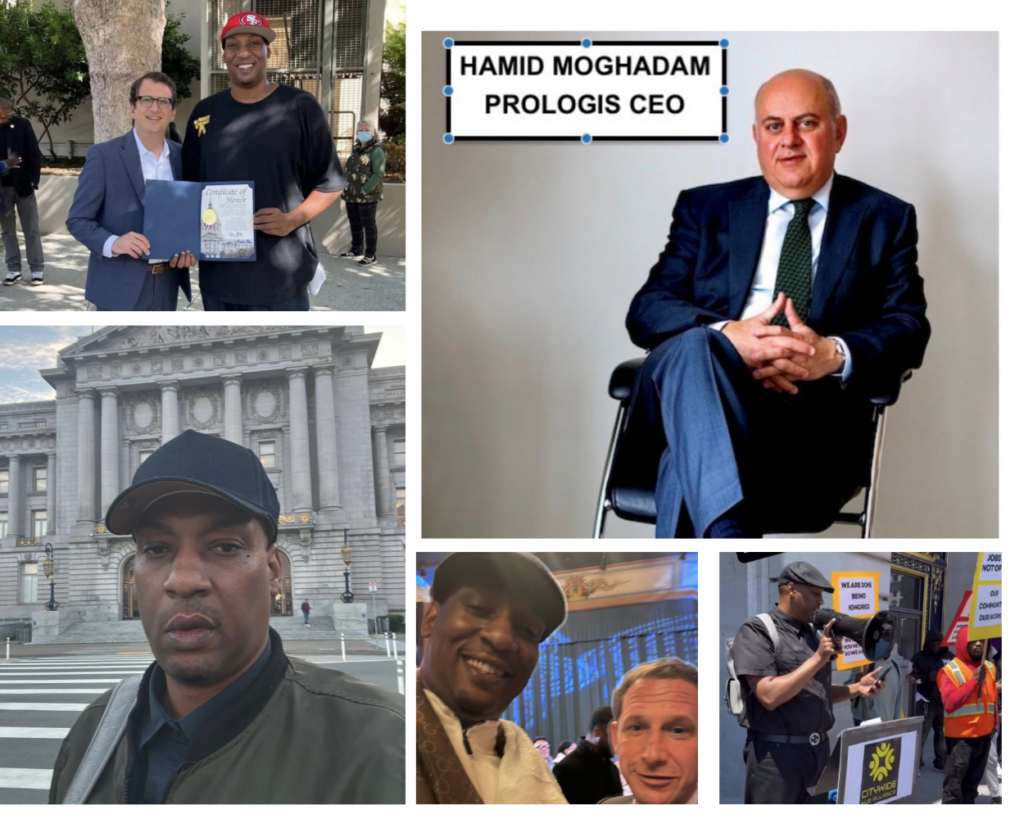
In San Francisco, redevelopment in Black neighborhoods has learned to speak the language of equity fluently. Local contractors are hired. Workforce pipelines are announced. Community meetings are held. PowerPoint slides promise inclusion.
What those projects almost never deliver is ownership
The proposed San Francisco Gateway Project, a $650–$900 million industrial redevelopment by global logistics real estate giant Prologis, now stands as a defining test of whether inclusion in San Francisco means more than labor and optics. Planned for 17.1 acres in Bayview–Hunters Point (District 10)—one of the city’s last historic Black communities—the project exposes a familiar fault line:
Black contractors are included.
Black developers are not.
The Project and the Ground It Sits On
The Gateway project proposes to replace World War II–era warehouses with approximately 1.64 million square feet of new industrial and logistics facilities, including rooftop solar generation and modern freight infrastructure. Prologis has positioned the development as forward-looking, aligned with San Francisco’s industrial retention and clean-energy goals.
Publicly, the company has confirmed that hyper-local contractors will be integrated into construction.
What has not been confirmed—despite years of engagement—is whether any Black local developer will receive developer-level, ownership-equivalent, or profit-participation rights in the project.
As of this writing, none has.
In Bayview–Hunters Point, that omission is not incidental. It is historical.
Inside the Process, Outside the Wealth
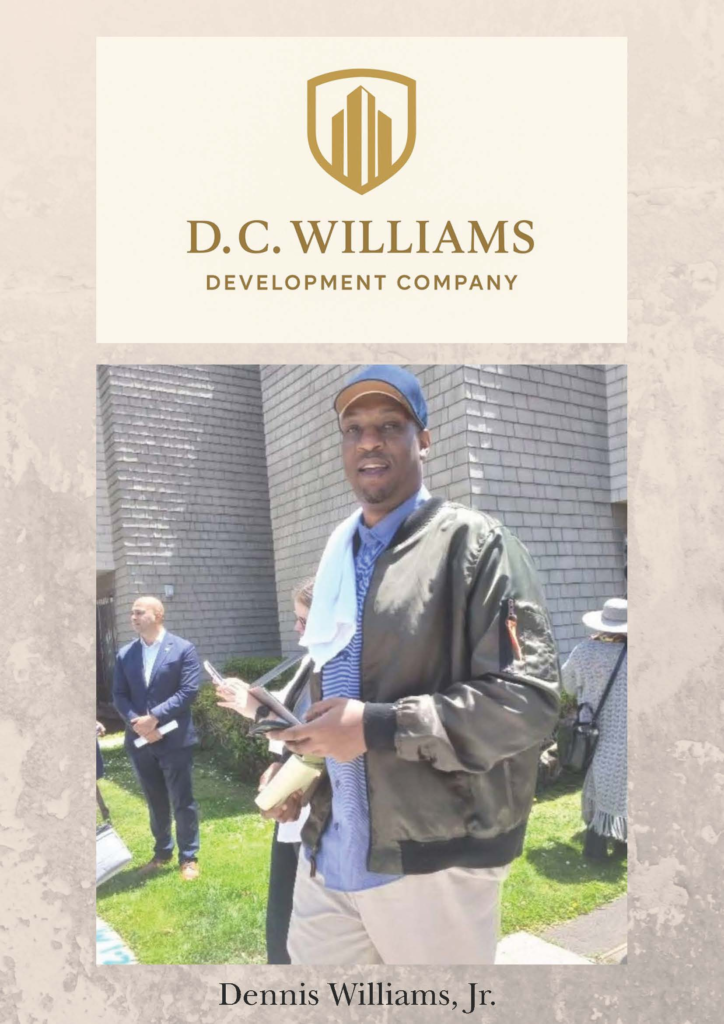
Dennis Williams Jr., Principal of D.C. Williams Development Company, is a San Francisco–based Black micro-developer and the only Black local developer involved in the Gateway project’s multi-year community planning and entitlement process.
Williams is not a ceremonial participant. His background includes:
Senior advisory roles on San Francisco developments exceeding $500 million;
Extensive experience navigating entitlements, redevelopment politics, and public-private partnerships; and
Long-standing recognition as a community development leader in District 10.
Williams became involved during the most politically sensitive phases of the project—when community trust, legitimacy, and buy-in were essential. He participated in planning meetings, strategy discussions, and community-facing processes that helped move the project forward in a neighborhood long wary of large corporate redevelopment.
But when the conversation shifted from engagement to economics, the welcome cooled.
Where Inclusion Stopped
Williams says he was encouraged to serve in community engagement or liaison roles only—positions that help legitimize and advance a project but do not share in ownership, profits, or long-term wealth creation.
In his words:
“We are allowed to build the project, but we are not allowed to own it—that is the problem.”
This distinction matters.
Community participation is not the same as economic participation.
Helping a project move forward without sharing in its upside is not equity.
“This Is What Equity Actually Looks Like”
I interviewed Dennis Williams Jr. to understand precisely what he is asking for—and what he is not.
His answer was deliberate, measured, and unmistakably clear.
“Let me be clear,” Williams told me. “This is not about stopping the project. It’s not about conflict. And it’s not about one person.”
While San Francisco hyper-local contractors are being integrated into construction, Williams—the only Black local micro-developer involved in the multi-year planning process—has been excluded from developer-level or ownership-equivalent economic participation.
That exclusion persists despite:
Years of documented planning and entitlement participation on behalf of Prologis;
Senior advisory roles on San Francisco developments exceeding $500 million;
Three years of formal community engagement tied specifically to the Bayview Gateway project; and
Strong support within the local contractor and community ecosystem.
Williams confirmed that he has sent formal notice of non-response to:
Prologis Vice President Courtney Bell;
District 10 Supervisor Shamann Walton;
Members of the San Francisco Board of Supervisors; and
The San Francisco Planning Commission.
Those notices, he says, have gone unanswered.
One response did come.
Williams’ complaint to the San Francisco Human Rights Commission was acknowledged, and he is scheduled for a phone intake interview on December 30 at 11:00 a.m.
“I would rather be negotiating in good faith than filing complaints,” Williams said. “But silence leaves you no choice.”
What He Is Asking For—and What He Is Not
Williams is explicit about what he is not seeking.
“I am not asking for a handout.
“I am not asking to control the project.
“I am not asking to change their design or their business model.”
What he is asking for is straightforward:
“I am asking for fair participation in the economic upside created in my own community.”
Williams submitted a formal, REIT-compliant participation term sheet to Prologis seeking 20% carried developer-level economic participation—a structure commonly used in institutional real estate that allows ownership-equivalent profit participation without violating REIT rules.
Prologis has cited its publicly traded REIT structure as a limitation on traditional joint ventures. But industry professionals note that REIT-compliant participation mechanisms are standard practice.
Williams received no written acceptance.
No written rejection.
No formal response.
As the project progressed, his role narrowed—while others advanced economically.
Labor Is Included. Ownership Is Not
Williams stresses that this is not about jobs.
“Black contractors are being included. That’s true,” he said. “But ownership is where wealth is built—and that’s where Black developers are being excluded.”
Bayview–Hunters Point has seen this pattern repeatedly: major projects built with Black labor, justified through Black political support, but stripped of Black ownership.
The results are not theoretical:
Displacement,
Loss of generational wealth, and
Permanent economic exclusion.
As Williams put it:
“This is about wealth-building, not just job building.
Inclusion cannot stop at subcontracting.”
A Longstanding Structural Pattern
San Francisco’s construction and development industries have historically restricted Black ownership through:
Limited access to capital and bonding;
Institutional preference for large, established developers;
Public-private deals that emphasize labor metrics while avoiding equity transfer; and
“Community benefits” frameworks that stop short of ownership.
Bayview–Hunters Point—already burdened by environmental injustice and redevelopment-driven displacement—has borne the brunt of these practices.
The Gateway project now stands as a test case.
A Call for Oversight and Accountability
Williams has formally briefed District 10 Supervisor Shamann Walton and notified the Planning Department and Office of Economic and Workforce Development (OEWD).
His intent is not litigation—it is accountability.
If San Francisco claims redevelopment in Black neighborhoods advances equity, then the agencies with authority over entitlements, development agreements, and economic inclusion standards must answer a basic question:
Why is Black labor acceptable, but Black ownership excluded?
Community members, advocates, and elected officials are now being called upon to demand answers—not in slogans, but in contracts.
The Choice Ahead
The San Francisco Gateway Project can either repeat history or break it.
It can continue a model where Black communities help build wealth for others—or it can finally recognize that real equity requires ownership, profit participation, and long-term economic power.
As Williams told me:
“Community engagement without economic participation is not equity. Black developers should not be limited to advisory roles on billion-dollar projects in our own neighborhoods.”
Part II of this investigative series will examine how San Francisco’s policies and precedents normalized this exclusion—and what tools the City already has, but rarely uses, to stop it.
For Bayview–Hunters Point, the question is no longer abstract.
It is immediate.
It is documented.
And it is unavoidable.
As always, here’s our song/video for this article:
ABOUT THE AUTHOR
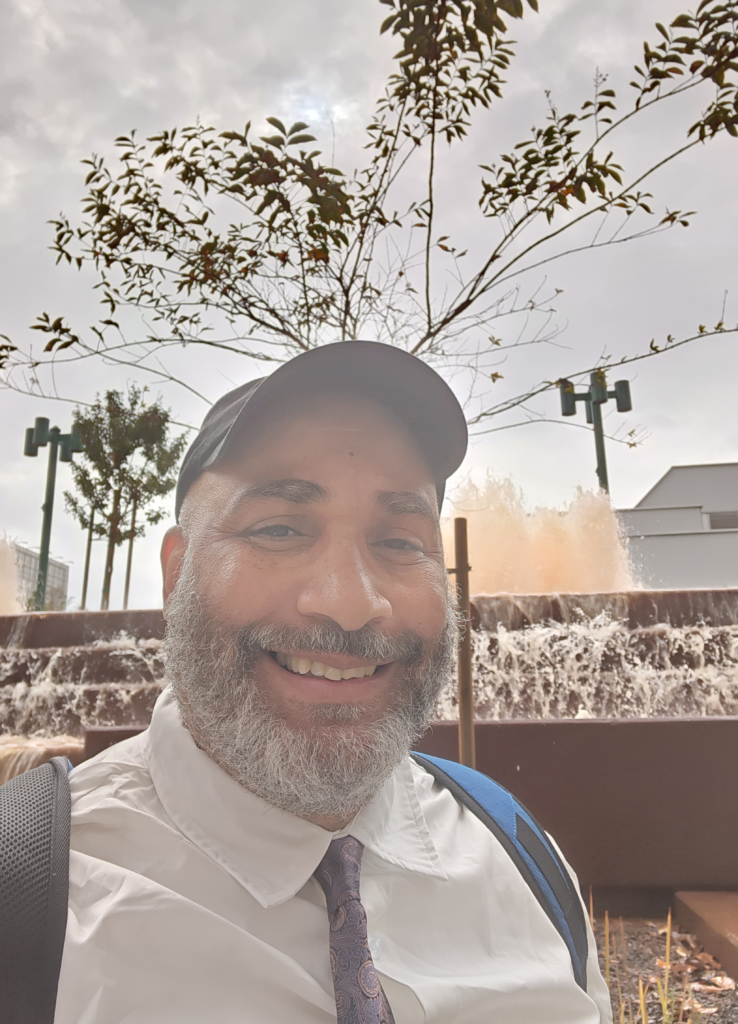
Malik Washington is an investigative journalist and co-founder of Destination Freedom Media Group, an independent nonprofit newsroom dedicated to accountability reporting at the intersection of civil rights, public integrity, and community survival. He has been a published journalist for over 14 years.
His work—published in partnership with the Davis Vanguard—focuses on government power, criminal justice, environmental justice, and the human consequences of policy decisions too often insulated from public scrutiny. Washington’s reporting amplifies the voices of impacted communities while insisting on documentary evidence, transparency, and the unvarnished truth—especially when institutions demand silence.
You can reach him via email: mwashington2059@gmail.com or call him at (719) 715-9592.
Suggestions or leads on stories are always welcome.
Please follow us on:
Facebook: https://www.facebook.com/destfreedom13
Instagram: https://www.instagram.com/destinationfreedom13/
X: https://x.com/dest_freedom