BY RIA TANDON
Introduced and contextualized by Journalist Malik Washington
WHEN HEALING ARRIVES THROUGH BREATH
By Journalist Malik Washington
Destination Freedom Media Group | The Davis Vanguard
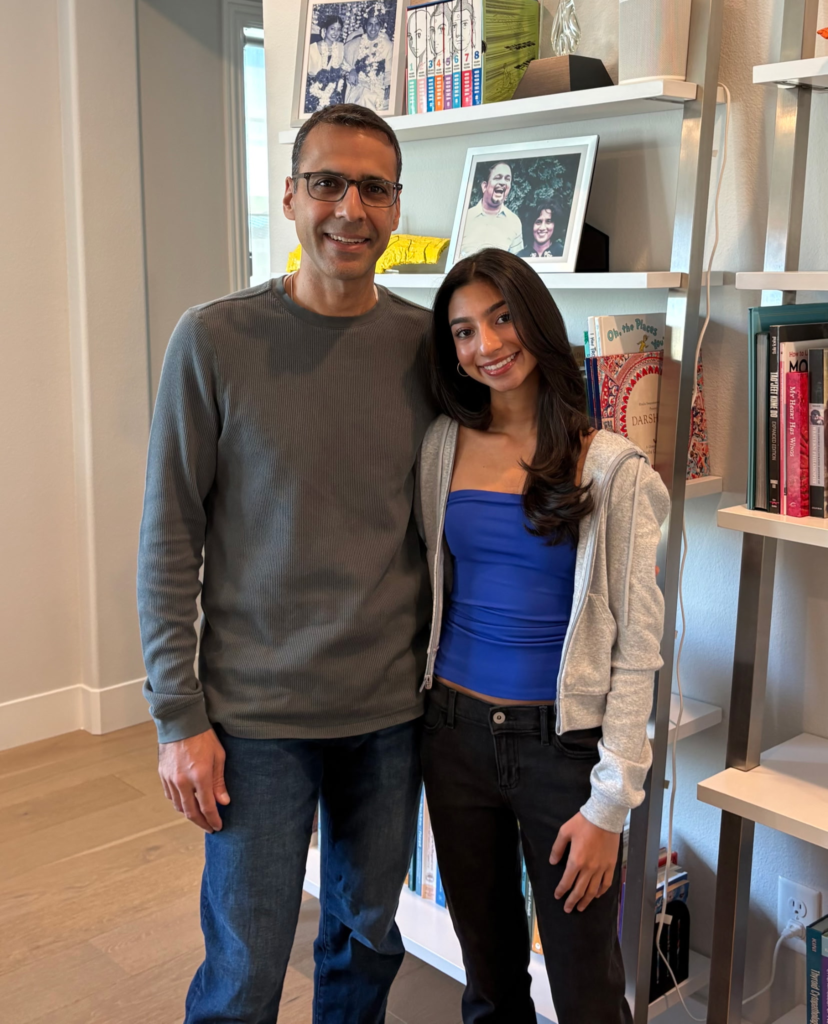
Pictured here is the Dynamic Duo of Ria Tandon
and her father, Dev. Together, they have edified
many lives in the Tenderloin and beyond with their
Breathwork experience
For the past two weekends, our nation has witnessed the deaths of human beings at the hands of agents employed by our government. Rather than recount these stories, we are offering some information that has the potential to help heal and aid our readers in managing the stress of a chaotic world.
In San Francisco’s Tenderloin District, trauma is not an abstraction — it is ambient. It lives in the nervous systems of veterans returning from war, in families navigating cycles of addiction, in elders carrying decades of stress, and in young people who have learned hypervigilance before they learned peace.
This neighborhood has endured overlapping public-health emergencies: untreated mental illness, entrenched poverty, generational trauma, and a fentanyl crisis that continues to take lives at alarming rates. In such an environment, healing is often framed in terms of enforcement, emergency response, or institutional intervention. Rarely is it discussed in terms of restoring safety to the human nervous system itself.
And yet, inside GLIDE Memorial Church — a sanctuary nationally recognized for radical inclusion, dignity, and service — something quietly transformative has been unfolding.
Not through spectacle.
Not through pharmaceuticals.
But through breath.
The teacher is not a clinician with a wall of credentials, nor a wellness influencer shaped by privilege. She is a teenager; an East Bay high school student. A young woman whose journey into healing began at home, beside her father, and now extends into one of San Francisco’s most historically marginalized communities.
Her name is Ria Tandon.
What makes this story extraordinary is not only Ria’s age, but the willingness of GLIDE Memorial Church to recognize wisdom wherever it appears.
Under the leadership of Executive Director Dr. Gina Fromer and Pastor Marvin K. White, GLIDE continues a long tradition of trusting lived experience, honoring unconventional healers, and understanding that healing does not always come from the top down.
When Ria approached Pastor Marvin K. White with the idea of offering breathwork classes to the GLIDE community, his response was immediate and enthusiastic.
That “yes” reflected GLIDE’s broader philosophy: real community safety and resilience are built through dignity, inclusion, and care.
It was also Shavonne Wong, a member of the GLIDE community, who encouraged me personally to participate in breathwork therapy. She speaks openly about the grounding, emotional regulation, and clarity she has gained through this practice — benefits that resonate deeply in a city defined by constant motion and chronic stress.
Her experience mirrors what many others have discovered in Ria’s class: breathwork restores agency to bodies that have lived too long in survival mode.
This work matters profoundly for U.S. military veterans, many of whom live with post-traumatic stress, hypervigilance, sleep disruption, and nervous system dysregulation long after their service ends.
Evidence-supported breathing practices have been shown to calm the autonomic nervous system, reduce panic responses, improve sleep quality, and support emotional resilience.
For individuals recovering from substance use disorders, breathwork offers a non-pharmacological pathway to grounding and self-regulation — particularly vital in communities like the Tenderloin, where fentanyl-related overdoses and untreated trauma have created an ongoing public-health emergency.
Breathwork does not replace medical or clinical treatment.
It complements it.
It stabilizes.
It humanizes.
In dense urban environments shaped by chronic exposure to violence and instability, breathwork becomes more than a wellness practice.
It becomes a community resilience tool — portable, free, culturally adaptable, and human.
What follows is Ria Tandon’s story, told entirely in her own words and presented without alteration.
A TEENAGER’S JOURNEY INTO BREATHWORK AND SERVICE
BY RIA TANDON
I never realized that something as simple as ten full, deep breaths could drastically change so many lives.
My name is Ria Tandon. I’m in 11th grade in the East Bay, and I am a certified breathwork coach. What began at home, in a moment I never expected to be life-changing, has grown into something that now shapes how I move through school, athletics, community service, and life itself.
My journey into breathwork began with my father.
My dad has a rare but serious spinal condition called adhesive arachnoiditis, a chronic neurological disorder that causes inflammation of the arachnoid mater, which is one of the membranes that surround and protect the nerves of the spinal cord. Over time, this inflammation leads to scar tissue formation around the nerve roots, resulting in severe symptoms such as nighttime sleep disruption, bladder and bowel dysfunction, and widespread nervous system complications.
Doctors describe the pain associated with arachnoiditis as comparable to terminal cancer.
According to Western medicine, arachnoiditis has no cure. Treatment focuses on symptom management, often relying on strong pharmaceutical drugs, including opiates.
With little hope offered through conventional medical pathways, my dad decided to explore Eastern wellness systems, including Yoga and Ayurveda. Among the many practices he encountered was pranayama, an ancient system of breathing techniques from the yogic tradition in India.
Most people are familiar with yoga postures, or asanas, where we bend, stretch, and strengthen the body. But postural yoga is just one limb of a vast eight-limbed system that has existed for thousands of years.
Pranayama is another of these limbs. It focuses on the breath as a direct gateway to physical health, mental clarity, and nervous system regulation.
To put lung capacity into perspective, the average adult male has a lung capacity of about six liters of air, while the average adult female has about 4.2 liters. In daily life, most of us use only around ten percent of our capacity.
Through pranayama, we can increase both lung capacity and utilization — often within just a few rounds of conscious breathing.
Seeking a strong foundation, my dad enrolled in a pranayama teacher training course through The Yoga Institute in India. After only a few weeks of consistent practice, he knew he had discovered something powerful.
He asked if I wanted to learn breathing techniques to help with anxiety and athletic performance. I agreed, though I was skeptical.
I remember thinking: Isn’t it all just air?
I had no idea that this “yes” would become one of the most important turning points in my life.
I was 12 years old the first time I practiced pranayama, and I was immediately shocked by how different I felt. I felt calm, clear, and grounded in a way I had never experienced before.
Over time, my anxiety faded. Situations that once felt overwhelming became manageable. I felt more present and more resilient.
The physical benefits were just as important. I play high school LaCrosse, and I noticed I could run across the field repeatedly without getting winded.
Pranayama also helped me academically. When test anxiety hits, a few intentional diaphragmatic breaths calm my nervous system and help me access what I’ve learned.
Seeing these changes in both myself and my dad, I decided to take the same teacher training course and became a certified breathwork coach.
After receiving my certification, my parents encouraged me to share breathwork with others.
I began teaching athletes, teachers, parents, students, and community members. I wanted to bring breathwork to those most marginalized, which led me to GLIDE Memorial Church in San Francisco’s Tenderloin district.
The first time I went to Glide, I was eight years old. Almost immediately, I felt a sense of belonging.
In early 2025, I approached Minister Marvin K. White about offering breathwork classes. Before I finished my sentence, he said “yes.”
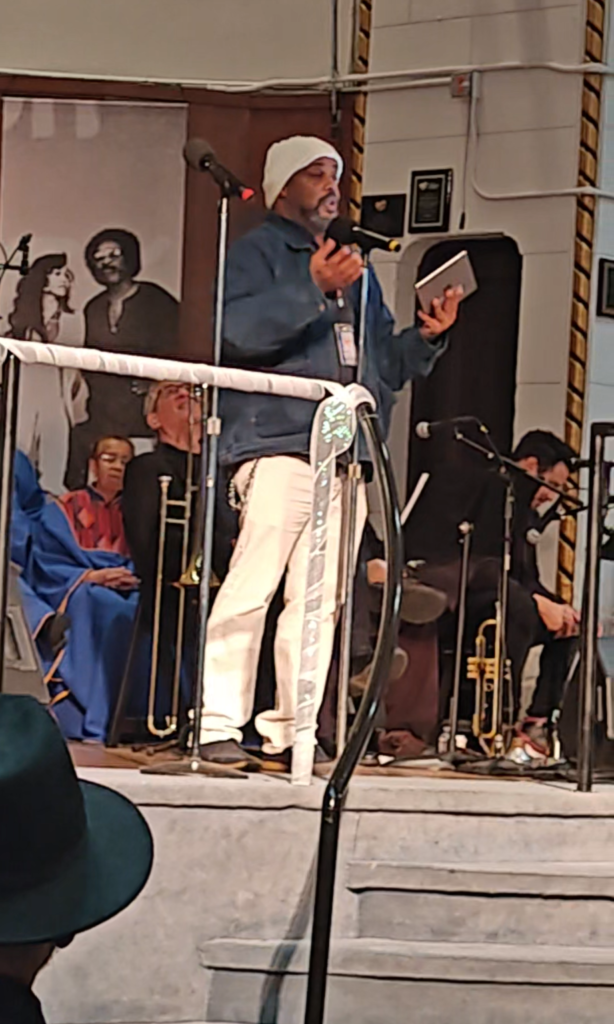
Freddy Martin, Congregational Life and Community Engagement
Manager, Glide Memorial Church (above)
Working with Freddy Martin, we created Breathwork @ Glide.
I became the youngest congregational life group leader in Glide’s history and began teaching Saturday morning classes.
For months, we sometimes had only one attendee. But if even one person felt calmer or more connected, that was enough.
Over time, the group has grown steadily.
Minister Marvin has invited me to guide breathwork during Sunday Celebrations, allowing hundreds of people to experience its effects together — one of the most rewarding experiences of my life.
As a teenager, I’m passionate about sharing breathwork because it’s simple, accessible, and effective.
A full practice can take ten minutes or less.
It requires no belief system.
It offers immediate benefits.
Today, my goal is to share breathwork with as many people as possible.
Everyone deserves tools that help them feel safe in their bodies.
Sometimes just one conscious breath is all it takes to change your life.
A COMMUNITY CALL TO BREATHE, HEAL, AND BELONG
BY JOURNALIST MALIK WASHINGTON
GLIDE Memorial Church has once again demonstrated what justice-rooted healing looks like in practice.
By uplifting Ria Tandon and honoring the journey she shares with her father, GLIDE affirms a truth too often ignored:
• Healing belongs to everyone.
• In a neighborhood disproportionately impacted by fentanyl overdose deaths, untreated trauma, and systemic neglect, Breathwork @ Glide is not symbolic.
• It is lifesaving infrastructure.
• If you are a veteran carrying invisible wounds, a person in recovery, a young person overwhelmed by expectation, or a community member seeking grounding, the invitation stands.
• No cost.
• No judgment.
• Just breath, community, and the possibility of healing.
Sometimes, the most radical act is learning how to breathe again.
Sources and Further Reading:
1.
U.S. Department of Veterans Affairs, National Center for PTSD
Complementary and Integrative Health for PTSD
https://www.ptsd.va.gov/professional/treat/cooccurring/cih_ptsd.asp
2.
Brown, R. P., & Gerbarg, P. L. (2005)
Sudarshan Kriya Yogic Breathing in the Treatment of Stress, Anxiety, and Depression
Journal of Alternative and Complementary Medicine, 11(4), 711–717
3.
Streeter, C. C., et al. (2012)
Effects of Yoga on the Autonomic Nervous System, Gamma-Aminobutyric Acid, and Allostasis
Medical Hypotheses, 78(5), 571–579
4.
Garland, E. L., et al. (2014)
Mindfulness-Oriented Recovery Enhancement for Addiction
Journal of Consulting and Clinical Psychology, 82(3), 448–459
5.
National Institute on Drug Abuse (NIDA)
Substance Use and Co-Occurring Mental Disorders
https://nida.nih.gov
6.
San Francisco Department of Public Health
Accidental Drug Overdose Deaths in San Francisco
https://www.sfdph.org
7.
Centers for Disease Control and Prevention (CDC)
Synthetic Opioid Overdose Data
https://www.cdc.gov/overdose
As always, here’s our song/video for this article:
Free Mind, by Tems
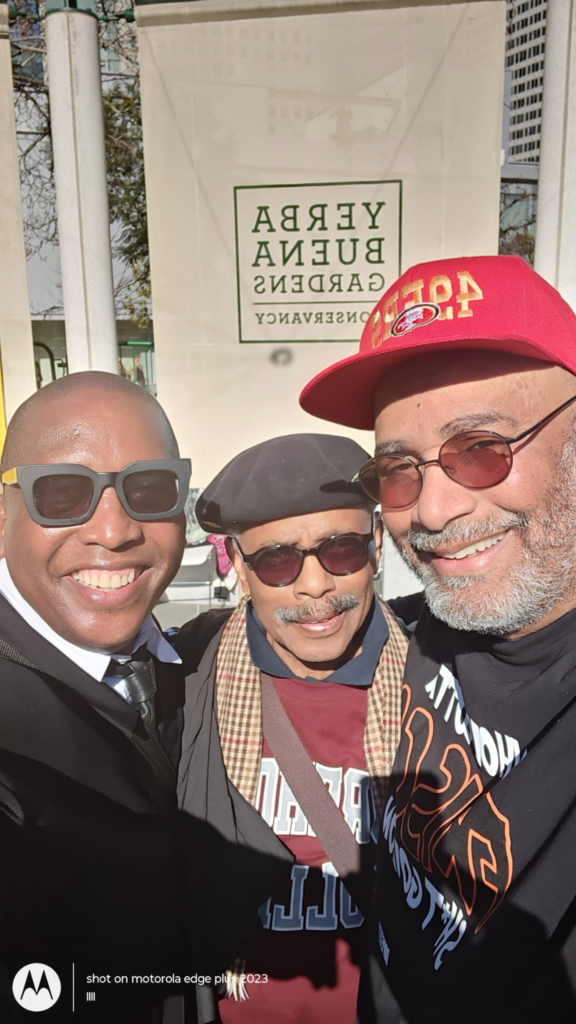
Malik Washington (right) with Marvin White,
Pastor of Glide Memorial Church (left)
ABOUT THE AUTHOR
Malik Washington is an investigative journalist and co-founder of Destination Freedom Media Group, an independent nonprofit newsroom dedicated to accountability reporting at the intersection of civil rights, public integrity, and community survival. He has been a published journalist for over 14 years.
His work—published in partnership with the Davis Vanguard—focuses on government power, criminal justice, environmental justice, and the human consequences of policy decisions too often insulated from public scrutiny. Washington’s reporting amplifies the voices of impacted communities while insisting on documentary evidence, transparency, and the unvarnished truth—especially when institutions demand silence.
You can reach him via email: mwashington2059@gmail.com or call him at (719) 715-9592.
Suggestions or leads on stories are always welcome.
Please follow us on:
Facebook: https://www.facebook.com/destfreedom13
Instagram: https://www.instagram.com/destinationfreedom13/
X: https://x.com/dest_freedom