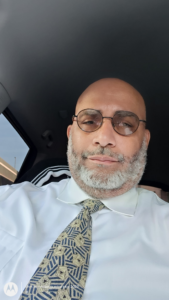
Body-worn camera footage released by the Public Defender’s Office shows three SFPD officers brutalizing a Black man who begged for his life. A jury rejected the officers’ sworn claims. The District Attorney thanked the officers anyway.
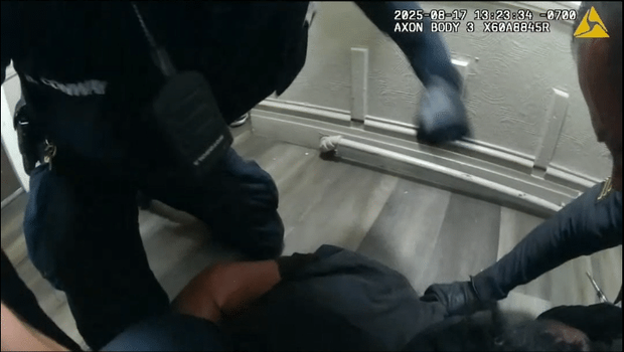
SAN FRANCISCO — The video is three minutes and change, and it is one of the hardest things I have watched in my years covering the machinery of American criminal justice. I have read thousands of pages of incident reports, sentencing memoranda, and autopsy summaries. I have sat in courtrooms where the state calmly asked judges to bury human beings. But there is something about hearing a man’s own voice — unscripted, terrified, begging — that no document can carry.
“Please, please sir, don’t,” Kevon Gibson says. “I’m not doing anything, sir. Can you please listen?”
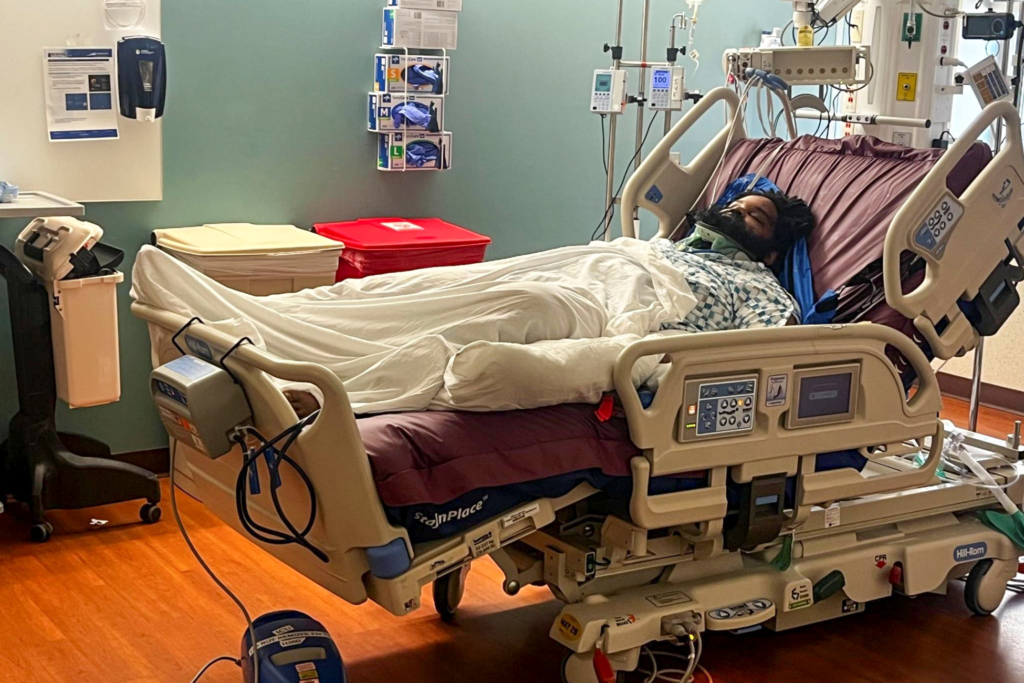
The San Francisco police officers do not listen. What happens next, captured on their own body-worn cameras and a hallway surveillance camera, is a beating so savage that the 33-year-old Black man spent days in an intensive care unit — medically induced into a coma, intubated — and was left urinating blood for nearly a year afterward, according to his attorneys. And what happened after the beating, inside the halls of the San Francisco District Attorney’s Office, is a scandal of a different kind: quieter, papered over with press releases, and in its own way just as damning.
FACT BOX: THE KEVON GIBSON CASE AT A GLANCE
- The incident: August 17, 2025, at a residential hotel on Sixth Street in San Francisco’s SoMa district.
- The officers: SFPD Officers Brendan Caraway, Brian Conway, and Gabriel Rivera.
- The injuries: Days in the ICU in a medically induced coma, intubated; blind in one eye for an extended period; urinating blood for nearly a year after release from the hospital, per his attorneys.
- The charges: Criminal threats (dismissed mid-trial by the prosecution); three felony counts of resisting arrest (jury acquitted on all three); gun possession (convicted; appeal planned); misdemeanor resisting arrest (convicted).
- The sentence: Credit for a year in jail, plus 17 days of home detention.
- The accountability: Public Defender’s Office filing a complaint with the SF Department of Police Accountability and seeking POST decertification of all three officers.
A Racist Threatened to Kill Him. Police Arrested Him
Understand how this began, because the beginning tells you everything about the end.
On the morning of August 17, 2025, a white resident of the Sixth Street building confronted Gibson, who had been staying there to help caretake for a friend. The resident then called police and claimed Gibson had threatened him. But when officers interviewed the complainant — on camera, in front of the police themselves — the man called Gibson the n-word and said he would “stick this knife into his Black ass” and “slice and watch him bleed everywhere.”
Let that sit for a moment. A man told police officers, in plain language, that he intended to stab a Black man and watch him bleed out — and the San Francisco Police Department’s response was to leave, return hours later on the same man’s second call, and beat the Black man into a coma.
Gibson, fearing the man, briefly possessed a firearm for protection — the basis of the one serious conviction against him, which he is appealing on grounds of necessity. He ran past the complainant’s door hoping to avoid confrontation. It did not matter.
“Ain’t Nobody Gonna Do Sh*t If I Kick This Door Down”
Before officers found Gibson, they found his friend’s door. Believing Gibson was inside — he was not — Officers Caraway, Conway and Rivera spent several minutes pounding on a woman’s door, a woman who was not a suspect in anything, taunting her with what the Public Defender’s Office rightly describes as racial overtones. They mocked the pronunciation of Gibson’s first name. They called him her “big ass boyfriend.” Smiling and laughing on camera, they lied to her — told her her father had sent them, told her they had drugs for her — and one officer delivered a line that should be engraved on the tombstone of SFPD’s reform era:
“Ain’t nobody gonna do sh*t if I kick this door down, right?”
— SFPD officer, body-worn camera audio, Aug. 17, 2025
That is not policing. That is an occupying force amusing itself. That is a man with a badge announcing, to a Black woman’s face, that the rules do not apply to him — and in San Francisco in 2025, why would he believe otherwise?
The Beating, In Their Own Words and His
When the officers learned Gibson was in an elevator down the hall, they rushed him. The body-worn camera audio is searing. They tell him he is not under arrest. They grab his wrist anyway and start pulling him out. He begs — over and over — for them to simply listen to him.
“Listen, I’m trying to tell you. Can you please listen?”
“Please, please sir, don’t.”
“I’m not fighting, sir. I just got in here.”
The officers’ response, per the footage: “Dude, I’m about to strike you in the face.” Then they slam him to the ground. Each of the three officers is seen punching him. They kick him. They kneel on his head and his neck. They drag him by his hair. And Kevon Gibson says the words that should chill every person in this country who remembers 2014 and 2020:
“I CAN’T BREATHE. I CAN’T BREATHE. PLEASE, SIR.”
“I’m scared right now,” he tells them. “I’m scared to death.” An officer answers: “Shut up.” Another says: “You’re fighting us. Don’t tell me you’re scared.” Blood pools visibly from Gibson’s forehead by the end of the footage.
Public Defender Mano Raju noted what every reader is already thinking: “I can’t breathe” were Eric Garner’s last words in 2014. A knee on the neck is how George Floyd was murdered in 2020. San Francisco’s officers knew exactly what script they were performing. They performed it anyway.
Video evidence:
Body-worn camera footage of the beating (San Francisco Public Defender’s Office)
KPIX / CBS News Bay Area report on the press conference and footage
Three Lies, One Jury, Zero Convictions
Here is where the case turns from brutality into institutional rot.
To justify the beating, the officers told the DA’s Independent Investigations Bureau that Gibson assaulted them. One claimed he was bitten. Another claimed he was punched repeatedly in the face and that Gibson tore off his radio and wrapped the cord around his neck. A third claimed Gibson nearly broke his thumb.
The body-worn cameras and the hallway surveillance video refuted every word of it. At trial, the jury — having watched the footage with the audio that prosecutors fought to suppress — acquitted Gibson of all three felony resisting-arrest counts built on those claims. As Deputy Public Defender John Paul Passaglia put it: “The jury knew these were lies because they were shown a volume of various videos that collectively showed unequivocally that not one of those incidents happened.”
Lying to investigators is a crime when you or I do it. When three police officers do it to justify beating a man into a coma, San Francisco’s District Attorney thanks them in a press release. More on that shortly.
The Cover-Up in the Courtroom
Now we arrive at the part of this story that should end careers at 850 Bryant Street — the conduct of the District Attorney’s Office itself.
The DA’s Independent Investigations Bureau — the unit that is supposed to independently investigate excessive force by officers — sent staff to the hospital, woke Gibson up from his medically induced sleep, interviewed him, and then turned their notes over to the prosecutors charging him. An “independent” bureau, handing its interviews with the victim of police violence to the very unit prosecuting that victim. Independence, apparently, is a word San Francisco uses the way its officers use the word “restraint.”
Assistant District Attorney Elizabeth Jimenez then prosecuted the case — and the public defenders’ account of her conduct, unrebutted in substance by any detailed DA denial, is a bill of ethical particulars:
- She fought to withhold discovery showing the complainant’s propensity for violence and racism. A judge had to order the office to turn it over. The Constitution’s Brady rule is not a suggestion, and a prosecutor who needs a court order to hand over exculpatory evidence is a prosecutor who has forgotten whom she works for.
- She declined to call the complainant — the state’s own alleged victim of the “criminal threats” charge — and then, when the defense called him, tried to block his testimony altogether. She later dismissed the criminal-threat charges herself, an implicit admission the case’s foundation was rotten.
- She sought to show jurors the bodycam of the arrest without audio — which would have silenced Gibson’s pleas, his screams for help, and the officers telling him to shut up. She fought to keep the jury from seeing the officers taunting the neighbor and the complainant’s racist death threats. The court granted the defense’s motion and let the jury hear everything.
- She offered a plea deal that would dismiss the felony resisting charges — but only if Gibson signed a Harvey waiver that could have kneecapped any civil suit against the officers. Read that again: the DA’s office was willing to trade away its own “assault on officers” theory — the theory it later took to trial — in exchange for protecting the officers from civil liability. Whose interests was the People’s lawyer serving?
Gibson rejected the deal. He sat in jail for a year awaiting trial for crimes a jury would say he did not commit. He was acquitted of the felonies, convicted of misdemeanor resisting — for not exiting an elevator he’d been told he wasn’t under arrest in — and of the gun charge, which he is appealing on necessity grounds. He was sentenced last month to credit for time served plus 17 days of home detention.
Brooke Jenkins’ Press Release: A Masterclass in Omission
After the verdict, District Attorney Brooke Jenkins issued a press release declaring victory: “I would like to thank the jury for their service in this trial. I would also like to thank the witnesses and San Francisco Police who responded. Compliance with our gun laws, especially for convicted felons, is not optional.”
Her office’s account of the arrest reads like fan fiction: “When officers attempted a pat search for weapons, Mr. Gipson started to actively resist their attempts and fight with officers. Eventually three officers were able to restrain Mr. Gipson and handcuff him.”
Yes — the press release repeatedly misspells his name as “Gipson.” The DA could not get the name of the man her office jailed for a year right, but she got the officers’ thank-you in on time.
Nowhere in the release: that Gibson was beaten into a medically induced coma. Nowhere: that a jury had just rejected the officers’ assault claims as not credible — which is to say, the jury concluded the officers lied. Nowhere: that prosecutors had dropped the underlying criminal-threat charges over the complainant’s shattered credibility. ADA Jimenez added her own statement, saying the verdict “recognized the work that San Francisco Police Officers do every day to keep this city safe” — referring, one presumes, to the same work that left a man intubated in the ICU for not exiting an elevator.
When the Public Defender’s Office went public this week, the DA’s office responded not with answers but with indignation: “Calling this a cover-up isn’t just an attack on our prosecutors — it shows remarkable disrespect for the court and the jurors who heard the evidence and rendered the verdict.” The office also claimed it “never asked the Court to exclude the footage” — a carefully lawyered sentence that does not address the audio-suppression motion, the discovery fight, or the attempt to block the complainant’s testimony.
And here is the question the people of San Francisco deserve answered, District Attorney: What are the ethics of the lawyers you supervise? The California Rules of Professional Conduct require prosecutors to do justice, not merely to win. Brady obliges disclosure without a judge’s order. Model Rule 3.8 makes the prosecutor a minister of justice with obligations above those of an ordinary advocate. If the public defenders’ account is accurate — and the jury’s verdicts and the video evidence corroborate nearly all of it — then lawyers under Brooke Jenkins’ supervision fought to hide exculpatory evidence, fought to mute a beating victim’s screams, tried to buy an officer-protecting waiver with a plea deal, and then signed their names to a victory lap that airbrushed a coma out of the record. That is not prosecutorial discretion. That is prosecutorial misconduct wearing a press release.
Raju said the jurors were “very, very upset with the misrepresentation of what happened in this case.” The jurors saw it. The city should too.
This Is Not New. It Never Was.
Anyone tempted to call the Gibson beating an aberration has not been paying attention to the San Francisco Police Department’s ledger, which runs long and runs bloody — and runs disproportionately through Black and brown bodies.
- Idriss Stelley, 2001: a young Black man in mental-health crisis, shot by police at the Metreon Theater.
- Asa B. Sullivan, 2006: shot in an attic by officers who mistook his eyeglasses case for a gun.
- Alex Nieto, 2014: a 28-year-old Latino man eating a burrito on Bernal Hill before his security-guard shift, killed in a hail of police bullets; a federal jury later cleared the officers.
- Amilcar Perez-Lopez, 2015: a 20-year-old Guatemalan immigrant shot in the back in the Mission District.
- Mario Woods, December 2015: a 26-year-old Black man shot by five officers in the Bayview, a killing captured on video that shook the city and triggered a federal review of the department.
Layer onto that the racist and homophobic text-message scandals that have repeatedly erupted from within SFPD’s ranks, and the two decades the department spent under a federal consent decree over discriminatory hiring. As the Rosenberg Foundation wrote in the wake of the Woods killing: “San Francisco has a long history of aggressive policing in the black, Latino, Asian Pacific Islander and LGBT communities… We don’t need to wait for the results of a federal investigation to demand that our city’s leaders take a forceful and hands-on approach to reforming the SFPD now.” That was written in 2016. A decade later, officers were on camera telling a Black woman that nobody would care if they kicked her door down, then beating a Black man while he screamed that he could not breathe.
And just weeks before the Gibson footage dropped, the city’s own Department of Police Accountability found that SFPD officers used excessive force against Matthew Ludwig in a case of mistaken identity that cost him “virtually everything,” per his attorney. The pattern is not a pattern anymore. It is the culture.
What Accountability Must Look Like
The Public Defender’s Office is filing a complaint with the Department of Police Accountability and notifying the California Commission on Peace Officer Standards and Training to seek decertification of Officers Caraway, Conway and Rivera — the state’s post-George Floyd decertification law exists precisely for cases like this. It is a start, not a finish.
Decertification takes these three men off the street. It does not answer for the institution that promoted — yes, promoted; the public defenders believe one officer was promoted after the incident — the conduct. It does not answer for a prosecutor’s office that woke a comatose man for a one-sided interview, fought to keep his screams from the jury, and tried to sell back his civil rights in a plea deal. And it does not answer for a District Attorney who looked at all of it and said: thank you, officers.
“It’s our job as public defenders to fight back against government overreach, and to protect the community by confronting violence perpetrated by state actors. That is why we are exposing this police brutality and the District Attorney Office’s attempts to cover it up.”
— San Francisco Public Defender Mano Raju
“Brooke Jenkins claiming victory, hiding any mention of police brutality, and thanking the very officers who the jury described as violent, is deceitful and deeply unjust.”
— Deputy Public Defender Bonnie Chan-Silen
SOURCE LIST
I. PRIMARY SOURCES
1. San Francisco Public Defender’s Office — Press Release: “SFPD Officers Brutally Beat and Hospitalized a Black Man, DA’s Office Tried to Cover it Up”
Published: October 8, 2026 https://sfpublicdefender.org/2026/10/08/sfpd-officers-brutally-beat-and-hospitalized-a-black-man-das-office-tried-to-cover-it-up/
2. San Francisco Public Defender’s Office (YouTube) — Body-worn camera footage: “Gibson Beating BWC” (3:05)
3. San Francisco District Attorney’s Office — Press Release: “Man Convicted of Illegal Firearm Possession and Resisting Arrest in SoMa”
Published: August 19, 2026: https://sfdistrictattorney.org/man-convicted-of-illegal-firearm-possession-and-resisting-arrest-in-soma/
II. INDEPENDENT REPORTING
4. KQED — “SF Public Defender Pushes to Decertify 3 Police Officers Whose Arrest Left Man in Coma”
Published: October 8, 2026: https://www.kqed.org/news/12103506/sf-public-defender-pushes-to-decertify-3-police-officers-whose-arrest-left-man-in-coma
5. Mission Local — “SFPD beat resident into near-coma, public defenders allege”
Published: October 8, 2026: https://missionlocal.org/2026/10/sfpd-beat-resident-near-coma-public-defenders-allege/
CBS News Bay Area (KPIX) — “Public Defender’s Office claims police, DA misconduct” (print) and video report (2:44)
Published: October 8, 2026: https://www.cbsnews.com/sanfrancisco/news/san-francisco-police-body-cam-officer-beating-suspect/
7. Hoodline — “Felon Caught With Loaded Glock in SoMa Hotel Elevator Convicted After Jury Trial”
Published: August 2026: https://hoodline.com/2026/08/felon-caught-with-loaded-glock-in-soma-hotel-elevator-convicted-after-jury-trial/
8. San Francisco Chronicle — “S.F. public defenders accuse police of beating a man, then lying about the arrest”
Published: October 8, 2026: https://www.sfchronicle.com/crime/article/sf-public-defender-police-arrest-conduct-22468573.php
III. HISTORICAL CONTEXT — SFPD USE OF FORCE IN COMMUNITIES OF COLOR
9. Rosenberg Foundation — “Deep and Lasting Reform of SFPD Is Long Overdue” (Lateefah Simon & Tim Silard)
Published: February 4, 2016: https://rosenbergfound.org/deep-and-lasting-reform-of-sfpd-is-long-overdue/
10. ABC7 News (KGO) — “Video released of 2015 fatal shooting of Mario Woods by SFPD”
https://abc7news.com/post/video-released-of-2015-fatal-shooting-of-mario-woods-by-sfpd/4463760/
11. San Francisco Public Defender’s Office — Press Release: “Police Watchdog Agency Finds SFPD Officers Used Excessive Force in Wrongful Arrest” (Matthew Ludwig)
Published: August 10, 2026: https://sfpublicdefender.org/2026/08/10/police-watchdog-agency-finds-sfpd-officers-used-excessive-force-in-wrongful-arrest/
IV. REFERENCE POINTS IN THE ARTICLE’S ANALYSIS
- Brady v. Maryland, 373 U.S. 83 (1963) — Constitutional duty to disclose exculpatory evidence — basis for the critique of the discovery fight.
- ABA Model Rule 3.8 / Cal. Rules of Prof. Conduct, Rule 3.8 — Prosecutor as “minister of justice” — basis for the ethics critique of DA supervision.
- People v. Harvey (1979) 25 Cal.3d 754 (Harvey waiver) — The plea-term waiver at issue in the rejected deal, with potential civil-litigation consequences.
- SB 2 (2021), the Kenneth Ross Jr. Police Decertification Act — California’s POST decertification framework invoked by the Public Defender’s Office.
- Eric Garner (2014) / George Floyd (2020) — “I can’t breathe” and neck-kneeling parallels drawn by Public Defender Mano Raju at the Oct. 8 press conference.
Prepared by Malik Washington for The People’s Vanguard of Davis — davisvanguard.org — October 9, 2026
The song/video for this article is from the Soundtrack of Django Unchained:
Who Did That To You? (John Legend)