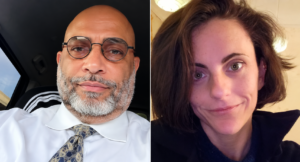
Dr. Vidrale Franklin was removed from her principalship after an investigation this newsroom has documented as procedurally irregular and, in appearance, discriminatory. A former President of the San Francisco Board of Education and a veteran substitute teacher now describe the culture that produced it — and the State of California has put the district on notice.
SPECIAL INVESTIGATIVE SERIES | PART THREE
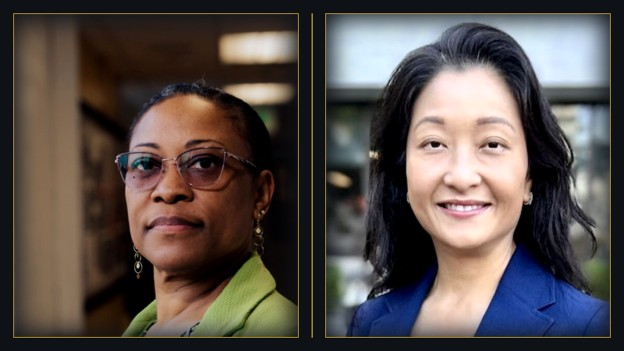
On the record · Parents for Public Schools
| “What happened to Dr. Franklin is a stark example of institutional anti-Blackness operating under the guise of bureaucratic routine. By using rigid procedural infractions as a weapon to push out a highly effective Black woman leading a school in her own historically Black community, the district has prioritized paperwork over the tangible success of Black and Brown children. This is the precise mechanism of structural violence: employing administrative technicalities to systematically disrupt, devalue, and dismantle transformative Black leadership.” — Vanessa Marrero, President, Parents for Public Schools |
Dr. Vidrale Franklin gave the San Francisco Unified School District nearly three decades of her professional life. She began at Bret Harte Elementary School in 1997 and rose through the ranks, from classroom teacher to instructional coach to building principal.
We spoke to Dr. Vidrale Franklin and this is the information she provided to us about her accomplishments:
Dr. Franklin’s leadership at Drew Elementary is reflected in measurable academic progress and the testimony of those who worked alongside her. Between 2022–23 and 2024–25, the percentage of students meeting or exceeding state English language arts standards increased from 10% to 23%. Third-grade proficiency rose from 5% to 27%, while proficiency among African American students increased from 9% to 26% and among English learners from 7% to 20%. In a March 29, 2026, email to Superintendent Maria Su, fifth-grade teacher Grace Del Toro described the work behind those gains: structured literacy interventions, regular training and coaching for paraeducators, expanded community partnerships, and a school-wide behavior-support system that earned two PBIS Platinum Awards. Del Toro also reported teacher retention above 95% and kindergarten early literacy proficiency of 86%, compared with the district’s 61%. Challenges remained, and progress varied across grades and student groups, but the record shows a school making meaningful gains. For Drew, Franklin’s departure meant losing a leader who had attended the school herself and returned to build the instructional systems and community relationships that support its growth and provide the quality education her community deserves.
Parts One and Two of this series have set out, on the record and with her express permission to publish, what she says happened to her: an investigation opened without the corrective steps her contract required, a forced resignation while the investigation remained unfinished, and a demotion to a classroom position that had not been part of her professional life for years. This installment is not about additional allegations. It is about the two questions those documented facts leave behind: how did an SFUSD investigation of a veteran Black woman principal come to look, in Dr. Franklin’s account, like an instrument of removal rather than an instrument of fact-finding — and what does the district’s culture around that kind of removal look like from the vantage of those who have seen it before?
This installment answers those questions through three converging sources of evidence. First, the State of California’s own action: on September 18, 2026, the California Department of Education referred a complaint against SFUSD back to the district under state civil-rights procedures, on the strength of the filings this newsroom lodged on behalf of Dr. Franklin and the class of students whose treatment she described. Second, the on-the-record testimony of a former President of the San Francisco Board of Education, who describes a culture of retaliation directed specifically at women of color who challenge institutional practice. Third, the corroborating account of a veteran substitute teacher who has watched the same district assign disciplinary consequences to educators who ask questions, while the schools that need help go without.
The three sources arrive at the same finding by different routes: the procedural irregularities and the appearance of bias that Dr. Franklin describes in her own case are not unique to her case. They are the operating characteristics of a district that has, in the words of a former Board President, “processes [that] only matter when people in power see a decision being made that they’re not supportive of — and it’s also very glaring when a woman of color is leading it.”
The name of the recall campaign that ousted three SFUSD commissioners in February 2022 was “A Question of Competence.” The phrase fits this installment too — though this time the question runs in the other direction.
The Investigation That Produced a Resignation Before It Produced a Finding
The specific facts of Dr. Franklin’s case, as documented in this series and in the complaint now before the district, are these:
- An SFUSD investigation was opened against her in October 2025. That investigation, on Dr. Franklin’s account, was never concluded, but rather left unfinished as she submitted her resignation under what she describes as coercive circumstances.
- She was nonetheless issued a notice of release on May 13, 2026, and a release agreement on May 22, 2026, without the progressive corrective action that district agreements require before senior personnel are separated. This was in spite of Dr. Maria Su complimenting and encouraging her and Drew staff on the school’s progress only two months earlier during a campus walk-through.
- In yet another civil breach of contract, Dr. Franklin was not at any point provided with a required written statement from SFUSD clarifying its reasons for demanding her resignation despite multiple requests for one; she has not received such a letter to date.
- Her administrative release took effect on June 30, 2026.
- She was then reassigned from her principalship to a classroom English Language Development role at another school, and a summer assignment she had already accepted was canceled within twenty-four hours of a community protest on her behalf.
- At no point did she receive any communication from her district supervisors explaining the steps the district chose to take, in spite of multiple attempts to contact them.
- The Bret Harte Elementary directive she says she refused in 2010 — to displace Black and Brown students through suspensions, expulsions, and referrals to special education programs — is the same conduct the state has since sanctioned SFUSD for, in the form of a significant-disproportionality finding requiring the district to reallocate fifteen percent of its special education budget to corrective work.
Each of those facts is documentary. Taken together, they are the strong appearance of a personnel action that ran on a decision rather than on an investigation. That appearance is not, in this installment, disproven. It is corroborated.
The Meeting of March 30 — and the Sentence That Changed Dr. Franklin’s Life
The clearest window this reporting has yet obtained into the mechanics of what happened to Dr. Franklin is a set of contemporaneous meeting notes recording a conversation on Monday, March 30, 2026, at 1:30 p.m., obtained by this newsroom. The meeting was between Dr. Franklin, her union legal counsel Dino Velez of the United Administrators of San Francisco, and her union representative Jolynn Washington.
Union counsel opened the meeting with a warning, relaying what he had just heard from Manuel Martinez — the former head counsel for the San Francisco Unified School District, then working in a private-side advisory capacity, who had gone to district stakeholders on Dr. Franklin’s behalf.
Velez: “Hard conversation. New information from Manuel. The investigation has changed from offering you a teaching position. Now, if you stay in the district, they will seek a termination.”
Meeting notes, March 30, 2026, 1:30 p.m., obtained by Destination Freedom Media Group
Dr. Franklin asked the obvious question:
Franklin: “What changed?”
Velez: “MM has gone back to stakeholders and is looking at the investigation and what happened. We want them to recognize her contribution and not let them handle money. MM is getting pushback.”
Franklin: “Pushback from who?”
Velez: “I don’t know. If you stay in the district, they may try to suspend you.”
She then made a request any principal facing termination would make.
Franklin: “Do you have anything in writing? I did not do anything wrong. The Title I money I paid teachers is allowable.”
Velez: “We do not have anything in writing.”
Read those two exchanges in sequence. The union’s attorney is telling a veteran principal that the district’s posture toward her has changed from a placement into a teaching position to a threatened termination. The change is being driven by unnamed “stakeholders.” The union attorney does not know who those stakeholders are. And when the principal asks whether any of this is in writing, she is told plainly that it is not.
Dr. Franklin then spoke, in the notes, in words that describe exactly the through-line of this entire series:
Franklin: “These fifteen things. This reaction to me is extreme. I did this to support my community. Instead of offering to help me, they want to terminate me.”
What follows in the meeting record is the mechanics of the choice the district was, in Velez’s account, presenting her:
Velez: “This is a lot. Do you need to take time, or do you want to take time? You are not at the site, so you can fully focus on another position. Right now, that is what I will tell you to do. They may try to go for dismissal. If she resigns at the end of the school year, they may not suspend her. Ed Code 44932: rules for discipline. Just because she is on sick leave, she can still be disciplined…. If they try to suspend you without pay, you will have to get a lawyer, and you will not have any income coming in.”
Read as journalism, not as legal advice, that passage is the most consequential document this reporting has surfaced. It describes the choice architecture in which a veteran Black woman principal was placed on March 30, 2026: resign at the end of the school year, or face a termination whose evidentiary basis your own union attorney cannot show you in writing, in a proceeding that will take place while you have no income, run under the discipline rules of California Education Code section 44932.
Six weeks and thirteen days later, on May 13, 2026, Dr. Franklin received her release notice. Nine days after that, on May 22, 2026, she signed the release agreement. She has said, in interviews now published, that she did so because she could not fight the district without income. The March 30 notes are how the district got her there.
“I did this to support my community. Instead of offering to help me, they want to terminate me.” — Dr. Vidrale Franklin, meeting with union counsel, March 30, 2026
What the Complaint to the State of California Says
On September 8, 2026, Destination Freedom Media Group mailed a written complaint to Superintendent Maria Su, to every member of the San Francisco Board of Education, and to the district’s senior administrative team — and, in parallel, to the California Department of Education. The complaint was signed by this newsroom’s co-directors. Its enclosure was the first installment of this series. Its subject line was “The Unquiet Resignation — Request for Accountability and Corrective Action.”
Because members of the public are entitled to know what has been alleged in their name, this newsroom summarizes here the six allegations the complaint asks the State of California and the district to investigate. Each is pleaded under California Education Code sections 200 and 220, California Government Code section 11135, and Title VI of the federal Civil Rights Act of 1964.
- Displacement of Black and Brown students through the misuse of discipline and special-education referral. The complaint alleges that at Bret Harte Elementary School in or about 2010, and, on information and belief, at other San Francisco schools before and since, district officials directed the use of suspensions, expulsions, and referrals to special education as instruments of racial enrollment change — the same conduct for which the California Department of Education has since sanctioned SFUSD under federal significant-disproportionality provisions.
- Retaliation against a Black woman principal for refusing to participate. The complaint alleges that Dr. Vidrale Franklin, in twenty-nine years of service to the district and its Black and Brown children, was subjected to an investigation opened in October 2025, prosecuted without the progressive corrective steps her contract required, and resolved by a release agreement executed while the investigation itself remained incomplete.
- The absence of due process. As set out above, the district’s ultimatum to Dr. Franklin was delivered orally, without written charges, without written findings, and without an opportunity to respond in the record.
- A pattern of the same conduct, in her name and in others’. The complaint identifies a broader pattern in which the district’s procedural obligations to its educators and its equity obligations to its Black and Brown students appear to be enforced selectively.
- The failure of internal oversight. The complaint alleges that the Board of Education, having been noticed in writing of the facts above, has neither investigated nor answered.
- Public-fund concerns raised during the underlying investigation. The complaint records, without adopting, concerns raised in and around the underlying district investigation regarding the handling of Title I and site-level funds during Dr. Franklin’s tenure — concerns Dr. Franklin has publicly answered, and which she has stated were the pretext, not the reason, for the action against her.
The complaint requests investigation, findings of fact on each allegation, and corrective action, including a remedy to affected pupils and their families. It does not ask the state to punish anyone. It asks the state to look.
The Complaint the State Sent to Franklin Street
On Friday, September 18, 2026, at 1:59 p.m. Pacific Time, the Uniform Complaint Procedures Office of the California Department of Education wrote to the San Francisco Unified School District Office of Equity. The subject line was “CDE-UCPO.” The operative language, in full:
FROM: EEUCPO@CDE.CA.GOV · TO: EQUITY@SFUSD.EDU · SEPT. 18, 2026
” Greetings,
“The California Department of Education (CDE) has received a complaint that appears to concern your local educational agency (LEA). The complaint is attached for your review.
“The CDE is referring the complaint to your LEA to determine if the allegations in the complaint meet the requirements for investigation under the Uniform Complaint Procedures (UCP), as outlined in the California Code of Regulations, Title 5, Section 4600 et seq. and if so, to investigate it pursuant to the UCP.
“Kind regards,
“Uniform Complaint Procedures Office
Legal, Audits, and Charters Branch
California Department of Education
1430 N Street, Suite 5319
Sacramento, CA 95814”
The complainant is Destination Freedom Media Group, this newsroom. The complaint concerns unlawful discrimination, harassment, intimidation, and the denial of equitable educational opportunity affecting Black and Brown students of the San Francisco Unified School District, pleaded under the California Education Code and Government Code, together with Title VI of the federal Civil Rights Act of 1964.
The district’s Office of Equity acknowledged receipt one hour and twenty-five minutes later. Its response, verbatim:
FROM: EQUITY@SFUSD.EDU · SEPT. 18, 2026, 3:24 P.M.
” Hello,
“The SFUSD Office of Equity is in receipt of your email and will review the complaint to determine if it meets the requirements for investigation under the Uniform Complaint Procedures. Thank you for bringing this matter to our attention.
“Warm regards,
“Office of Equity
San Francisco Unified School District
555 Franklin Street, Third Floor
San Francisco, California 94102”
Under California’s Uniform Complaint Procedures at Title 5 of the California Code of Regulations, section 4631(a), an LEA that has received a UCP complaint is required to conduct and complete an investigation and issue a written Investigation Report within sixty calendar days. Applied to this transfer, that report is due on or about November 17, 2026. Under section 4631(e), that report must contain findings of fact and a separate determination on each allegation, together with any corrective actions and a remedy to affected pupils. Under section 4621(a), the district is required to protect complainants from retaliation and to keep the identity of complainants alleging discrimination confidential as appropriate.
Those are not aspirations. They are the operative timelines of an active state civil-rights procedure now running against San Francisco Unified.
What a Board President Learned About Democracy
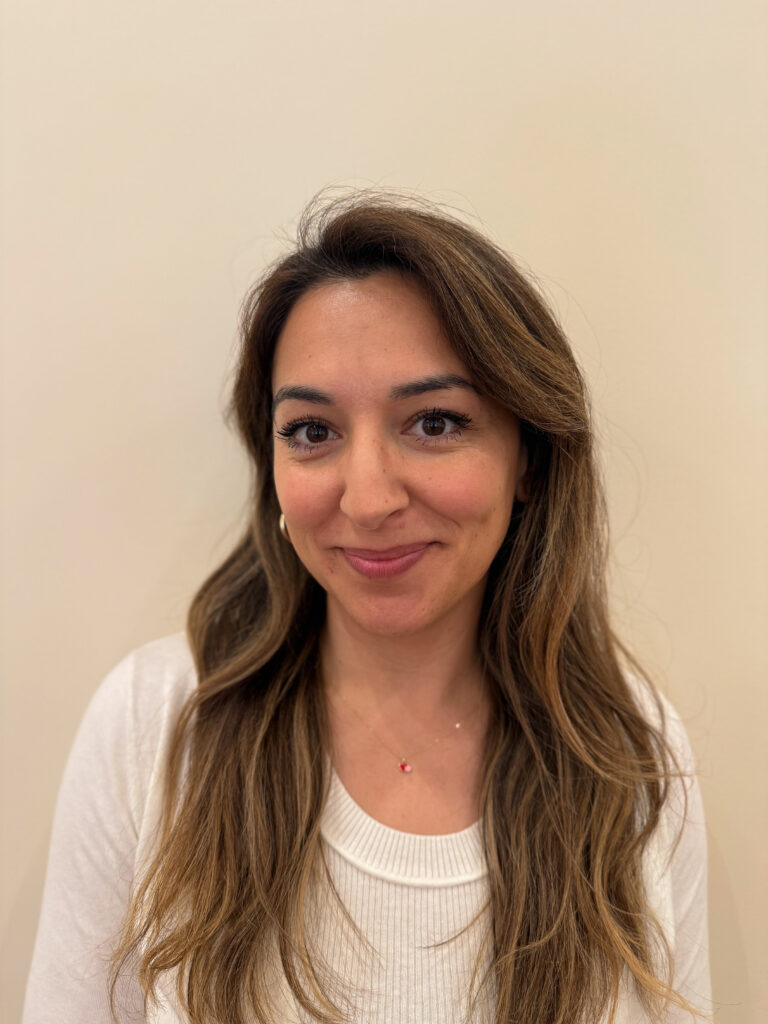
Every discriminatory removal in an institutional setting looks, at the moment it happens, like an isolated personnel decision. The question is whether the institution has a pattern of doing this to particular people. On that question, this newsroom has now heard from a witness whose credentials in the room are unrivaled: a former President of the San Francisco Board of Education, whose four years of service on the Board coincided almost exactly with the pandemic-era decisions that continue to shape the district where Dr. Franklin was, until this year, one of its principals.
Her name is Gabriela López. She served on the San Francisco Board of Education from January 2019 until her recall on February 15, 2022. She was Vice President in 2019 and 2020, and Board President in 2021 — a term to which her colleagues reelected her in January 2022, five weeks before she was removed. Today she is a doctoral candidate at Stanford University’s Graduate School of Education, whose dissertation research examines how teachers respond to Black, Brown, Pacific Islander and Indigenous children in American classrooms. She has given this newsroom her express permission to quote her extensively. What she said is set out in her own words below.
Gabriela López did not enter public life on a platform of institutional critique. She entered it as a former public school student from Los Angeles who moved to San Francisco in 2017 to teach at Flynn Elementary School in the Mission District, where she remained for eight years. She joined Teachers for Social Justice. She became a union representative. She ran for the Board of Education and, in January 2019, was elected.
She told this newsroom what that moment felt like.
“It was one of the best moments of my life—up until I actually had to start doing the work. There was this phase where it felt like we had accomplished something really wonderful and really beautiful. But I had no idea that I was about to enter into some of the worst experiences I would ever go through. There was this period of bliss, and then, of course, the pandemic hit. I stepped into the leadership role, and all the attacks started. What had been one of the best moments of my life ended up becoming one of the worst things I’ve ever done.” Gabriela López, interview with Destination Freedom Media Group, September 2026
The first crisis of her tenure was not the pandemic, and it was not the recall. It was a mural.
George Washington High School was home to a set of thirteen fresco panels titled The Life of Washington, painted in 1936 by the Russian-born artist Victor Arnautoff. Two of them depicted Washington’s slaves and the body of a slain Native American man. Students at the school, together with organizers led by descendants of the depicted communities, asked the district for years to remove or cover the images. In 2019, the Board voted to do so.
“So that year with the mural, I had a choice: I could protect my position, avoid upsetting the public, and stay in the good graces of voters—or I could listen to the young people who came to our podium and spent their nights telling us why this was important to them, why they wanted the mural gone, and support them.”
She supported the students. And the record of what happened next, in her account, describes a rule she says she did not know was a rule until she broke it.
“When there are really big issues and the outcome of a vote isn’t what people in power want, they will do the digging necessary to reverse that vote. This was the first time I learned that processes only seem to matter when people in power see a decision being made that they don’t support. And it becomes especially glaring when a woman of color is leading that decision, or when someone who normally wouldn’t be in a position of power is the one holding that position.”
She said the emails from the public began then.
“It was also my first experience with racist attacks, misogynistic emails, and other attacks directed at me. The first threat of a recall came over the mural. A lot of the emails included threats—someone threatened to decapitate me, someone threatened to rape me. It was like, what? Yeah, it was nonsense.”
“It was just awful. It was awful. It made me realize so many things about our processes and our democracy—things I firmly do not believe in anymore because of everything I learned.” — Gabriela López, former President, San Francisco Board of Education
“The Two of Us They Named”
On February 9, 2021, the San Francisco Board of Education voted five to two to end merit-based admissions at Lowell High School and to move the school into the city’s general assignment lottery. The resolution was authored by then-President López and then-Vice President Collins. The commissioners who voted yes were López, Collins, Matt Alexander, Faauuga Moliga, and Mark Sanchez. Two commissioners voted no.
Of the five who voted yes, in the campaign that followed, two were named.
“I bring up Alison because she and I were always targeted. When we would get attacked and targeted, it would just be me and her by name.”
“There was a Lowell alumni who cared so much that he needed to…. He created this video where he printed the pages, the photos of Alison and I, put Nazi symbols on her forehead, and then burned that photo.”
“Only Alison and I were targeted, and that was so odd. What else explains that except the fact that we’re not men and we’re not white?”
The San Francisco recall campaign qualified for the ballot in the fall of 2021. On February 15, 2022, San Francisco voters removed López, Collins, and Moliga from office. The three commissioners who had cast the same Lowell vote and had not been named in the campaign literature — Alexander and Sanchez — kept their seats. The seventh commissioner, who had voted no, was Jenny Lam.
The campaign’s stated case for removal was “a question of competence.”
What She Sees Now — and Why Dr. Franklin’s Case Is Not an Outlier
López’s testimony matters to Dr. Franklin’s case precisely because López was not testifying about Dr. Franklin. Interviewed for this series about her own tenure and her doctoral research, she described — unprompted — the same pattern the Franklin case exemplifies: a district in which processes are honored when the preferred outcome results, and worked around when it does not, with particular consequences for women of color who lead.
López returned to the classroom after her recall. She then left the classroom to pursue her doctorate at Stanford. What she saw as a commissioner, she says, has become clearer to her since she stopped being one.
“I notice more the people who are in those positions and the treatment of children. Not that I didn’t notice it before, but I do think it’s all aligned. So I argue a lot of the time how we obviously operate within racialized institutions, and that has an impact on the people in them. It has an impact on how people behave, specifically how adults behave, and sometimes they’re just really bad actors within the system.”
She was asked to describe the district as she now understands it.
“I’ll say it plainly: it would require a cultural shift and a shift in the mindset of educators in those positions to effectively serve populations with higher needs. And you see it in any space that is preparing teachers. If that space isn’t led by equity and an understanding of anti-Blackness and anti-racism, then these systems remain embedded with people who hold certain beliefs and assumptions about specific communities—and they pass those beliefs on to anyone entering that space.”
“The people in district administrative positions need to be in classrooms. I think that’s my number one concern. They’re so disconnected. They may have many solutions, but they don’t see the kids, so they don’t really know how to apply those solutions.”
“It’s necessary—absolutely necessary—that schools operate as communities and not just as entities that cycle people in and out. Schools need to feel like home and learners need to feel safe.”
And the subject of her doctoral work, in her own words:
“I’m looking at how teachers respond specifically to Black, Brown, Pacific Islander, and Indigenous students—or what I’m now aiming to reframe as anti-Blackness in schools. I’m talking specifically about the treatment of children who appear to be Black. That’s exactly what I’m calling out: how those students are treated compared to students who are not Black, and what those differences look like.” — López, on what SFUSD would require
Buena Vista, and the City That Loves to Gloss Over
Twice in her interview, without prompting, López returned to a single K-8 elementary school in the Mission District: Buena Vista Horace Mann.
“One of the last things I got to vote on involved the school district’s renovation of several schools. Buena Vista Horace Mann had been on the list forever, and the building conditions were just terrible. Parents talked about it all the time. They came to us repeatedly. We visited the school, we held meetings there, and nothing ever changed.”
The building conditions were not her only concern with the school. Buena Vista Horace Mann had, during her tenure, hosted a shelter providing housing and food for unhoused families in the Mission — a program that drew, in her words, “a lot of really ugly complaints.”
“It just showed me where we are in terms of humanity and where people in San Francisco really are. Everyone loves to gloss over the problems and think we’re this happy, united, anti-racist place—and we’re not.”
The observation goes to the heart of what this series has documented across three installments. San Francisco’s public account of itself — as a diverse city with a progressive school district committed to equity — is not the account the record produces. The families the mural offended stayed in the district after 2019. The families the pandemic separated from schools stayed too. The families displaced from schools in the southeastern corridor by closures, consolidations, and by the mechanisms this series has documented did not.
The Substitute Teacher Who Would Not Keep His Head Down
The pattern of removing educators who raise inconvenient questions, without following the district’s own procedural obligations, is documented in a second personnel case running in parallel to Dr. Franklin’s. A veteran San Francisco educator with roughly two decades of experience in the city’s public schools — whose career began as a Big Brother running after-school tutoring, and progressed through his substitute teaching credential to guest work at schools across the district — spoke at length to Destination Freedom Media Group. He asked that his name not be used in this installment. He is currently in a disciplinary proceeding with the district, has been unable to renew his teaching credential for more than two years, and told this newsroom he fears further professional and financial harm. This newsroom, mindful of section 4621(a) of the California Code of Regulations, has honored that request. He is referred to here as the substitute teacher.
The substitute teacher’s account is significant for a specific reason: the procedural irregularity he describes in his own case is the same procedural irregularity Dr. Franklin describes in hers. Neither educator, on their own account, received the progressive corrective steps that district agreements require. Both learned of their consequences through an administrative communication rather than a documented process. Both are educators who, in their own words, refused to keep their head down.
The two schoolhouses
He asked this newsroom to picture the city’s two educational geographies as he saw them during the pandemic reopening, when he was working as a guest substitute.
“During reopening, schools on the westside were retrofitted with plexiglass shields, air purifiers, everything all laid out according to COVID guidelines. Schools in the Bayview, Hunters Point — the COVID equipment was absent. The chairs and tables weren’t even laid out.” Anonymous SFUSD substitute teacher, interview with Destination Freedom Media Group, September 2026
The specific reopening protocol he describes — portable air cleaners with HEPA air filtration in every classroom — was described by then-Superintendent Vincent Matthews in an official district announcement dated September 20, 2021, which promised that each classroom would be equipped with such a filter. The substitute teacher told this newsroom that what the district committed to in writing did not arrive equally at every school he was assigned to. The reporting record does not yet contain a public, per-school inventory of ventilation deployment sufficient to confirm or refute his direct comparison. What his account establishes is what he observed as he walked into classroom after classroom, and what he asked the district about, and what he says the district did not answer.
The city that donated the computers to schools without computers
His second observation is documented in the public record.
“Salesforce has donated close to $100 million to SF Unified School District for STEM education, and as a guest teacher I would go to some of these schools, and not only would they not have a computer science teacher, some didn’t have computers.”
The dollar figure is real. Salesforce’s own press announcement dated September 14, 2026, states that the company has contributed “more than $180 million to public schools nationwide, including $156 million to Bay Area public schools” over fourteen years of partnership. San Francisco Unified is the single largest beneficiary named. Superintendent Maria Su is quoted in the same release: “Salesforce’s continued partnership helps us invest not only in our students, but in the educators who support them every day.” In a parallel ABC7 report dated September 17, 2026, Su told the station that SFUSD will receive $6 million from the Salesforce Foundation this year, that the district has used prior grants to build a preschool-through-twelfth-grade computer science curriculum, and that this funding has helped double the number of girls with access to computer science and triple the number who pass the AP Computer Science exam.
Those are the district’s numbers, in the district’s own voice. Set the substitute teacher’s observation next to them: the schools without computer science teachers, and, in his account, sometimes without computers at all, are in the same city as the donor.
“So here we are, in the beating heart of the technology world, and kids — a lot of kids grew up with cell phones and computers, their world was, they didn’t know anything else — and yet they’re not able to be active participants in computer science and the things that go with that. That’s mind-boggling.”
He continued:
“Think of if anyone knows San Francisco — think of the west side and the northeast side, which I know they’re going to have all that stuff. It’s been like that. It’s been like that for decades. So I’d ask [the district] those questions, year in, year out, and either got no response or a lukewarm response.”
“Salesforce has donated close to $100 million to SF Unified. Some of the schools I was assigned to didn’t have a computer science teacher. Some didn’t have computers.” — Anonymous SFUSD substitute teacher, describing what he saw as a guest teacher across the district
The credential that was not renewed
The substitute teacher told this newsroom that his California teaching credential expired at the end of 2023 and was due to be renewed in 2024. It has not been.
“Now my credential is in limbo. I’m not teaching in SF Unified for almost three years. I cannot get my credential renewed. The district — they put some kind of block on that. I think it’s in retaliation because I brought these things up over and over and over again. I asked for transparency and accountability.”
He described two disciplinary incidents that, on his account, form the basis of the district’s hold.
In the first, he was assigned to teach a general education class, then reassigned at the last minute to cover a special education class for which, he says, he was given no information about students’ needs or disabilities — information that guest teachers who teach special education classes almost always receive to better support their students. A joke he made about reading triggered an argument with a student. He directed the student to the hallway with the classroom paraprofessional, taught the rest of the day, and was not disciplined by the school at the time.
In the second, he was leading a class discussion about commonality of childhood experience:
“Raise your hand if you like chicken — a lot of kids raise their hand. Rice. Mango. Raise your hand if, when you acted up as a kid, would your parents break out the chancla — the fashion sandal, or whatever — and a lot of kids raised their hands. So I said, ‘See, there’s a commonality here. We all have common experiences.'”
The result of this discussion was an accusation from the district that he was in favor of corporal punishment for students.
He told this newsroom the incidents did not produce contemporaneous discipline at the school level. The consequence came later.
“I get an email during winter break saying I’m — I’m out of the city having a great time — I get an email saying you can’t teach until the findings of this hearing.”
He said he has never been formally written up, never had a document placed in his file, and never received the progressive corrective steps he understands the district’s labor agreements to require:
“Nope. Did not. I was not written up. I was not spoken to. There’s nothing in my file about this.”
He is now, in his account, awaiting a settlement conference or a hearing before a deputy state attorney general.
The system he describes
The substitute teacher’s frustration was directed less at the specific proceeding than at the pattern he saw around it. He told this newsroom that at various schools across the district he had been repeatedly asked to consider working full-time. He said that when he raised the westside/southeast disparity in district meetings, he was told he “babied” his students; his reply, as recounted: “Well, I don’t think we are — we’re not raising the kids to their potential. We’re lowering the bar.” And, finally, the sentence in which he described what he understands his own situation to mean:
“The district is, as we know, willingly blind to context. And it keeps saying we need more teachers. We need more male teachers. We need more male teachers of color. Here you go. But keep your head down and don’t say anything.”
He then observed, on the record with this newsroom, that during the same period he has been unable to renew his credential, another SFUSD teacher who, on information he was recently given, was found to have physically injured a student roughly fifteen years ago remained employed in the district and was released only this year. This newsroom has not yet independently verified that comparator case, and does not publish it here as a finding of fact, although this newsroom has been given multiple — unverified — accounts from various educators of similar occurrences. It appears here as the substitute teacher’s stated understanding of the district’s consistency, or lack of it, in enforcing its written obligations to teachers and children alike.
His observation that Dr. Franklin did not receive the corrective steps required of the district before her forced resignation — a pattern this series has documented from Dr. Franklin’s own account in Parts One and Two — is, in his experience, not unique to her. Two SFUSD educators of color, in two different roles, in two different disciplinary tracks, have now told this newsroom the same thing: the district acted first and documented afterward, if it documented at all.
External Oversight: The Inspector General and the Attorney General
Two independent offices — neither of them the district’s own, and neither of them answerable to the Superintendent — now have the authority to examine what this series has documented. One sits at the City level. One sits at the State level. This newsroom is asking both to act now, rather than waiting on the district’s own sixty-day clock.
The Office of the Inspector General
The State of California is not the only entity now positioned to examine what has occurred at San Francisco Unified. On January 5, 2026, the City and County of San Francisco seated its first-ever Inspector General, Alexandra “Alex” Shepard, a career federal prosecutor who worked in the U.S. Attorney’s Office for the Northern District of California and helped send former San Francisco Public Works director Mohammed Nuru to federal prison for corruption. The Office of the Inspector General sits within the Office of the City Controller and is charged, in the words of the Mayor’s office, with investigating “fraud, waste, and abuse” in city government.
The facts documented in this series present three questions squarely within that mandate: whether the disposition of Title I and site-level funds during the underlying investigation of Dr. Franklin was handled in accordance with district policy and state law; whether the release agreement of May 22, 2026 was executed pursuant to district procedure, or in circumvention of it; and whether the resources documented as flowing to San Francisco Unified — including the $156 million in Salesforce contributions to Bay Area public schools over fourteen years, of which SFUSD is the single largest beneficiary — have reached the Black and Brown students in the district’s southeastern corridor whose schools the veteran substitute teacher quoted above described as, in some cases, without computer science teachers or computers at all.
Destination Freedom Media Group has this week transmitted the record of this reporting to Inspector General Alexandra Shepard and to the Office of the City Controller with a formal request that the Office of the Inspector General examine these questions within its jurisdiction, and to act on them without waiting for the district. San Francisco Unified is not a City agency; its finances, however, and its fiduciary obligations to public dollars flowing through the City and its philanthropic ecosystem, sit closer to that jurisdiction than the district’s press office may wish to acknowledge. That request is made public here.
The California Attorney General
The second office is the one the district can least afford to ignore. California’s Attorney General, Rob Bonta, leads the California Department of Justice and its Civil Rights Enforcement Section, whose published mandate expressly includes education rights and children’s rights, and which states that it “takes a proactive role in identifying civil rights violations to be remedied by the Attorney General” and works with “civil rights and community organizations to identify potential civil rights initiatives.” The Section also houses the Bureau of Children’s Justice, created to protect the rights of children across this state.
California’s own Education Code opens with a declaration that it is the policy of the State of California to afford all persons in public schools, regardless of race, ethnicity, gender, or disability, “equal rights, and opportunities in the educational institutions of the state,” and directs that no person be subjected to discrimination in those institutions (Education Code sections 200 and 201). The Attorney General is the State’s chief law officer, with independent authority to enforce those guarantees and to act without the consent of the institution under scrutiny.
The question this series puts to his office is therefore direct, and it is a question about duty rather than discretion: whether the removal of Dr. Vidrale Franklin — and the documented pattern of treatment of Black women educators that a former President of the Board of Education has now described on the record — is a violation of state law that his office has an obligation to examine. If it is not, the public deserves to be told why. If it is, the public deserves to know when the examination will begin.
Destination Freedom Media Group has asked the Attorney General’s Civil Rights Enforcement Section and the Bureau of Children’s Justice to open an immediate inquiry into the matters reported in this series, and has offered the full documentary record — the district’s correspondence, the state’s September 18 referral to Franklin Street, the March 30 meeting notes, and the accounts of both the named and the anonymous sources — as the basis for that inquiry. Whether the office investigates is the office’s call. That it be asked, in the open, on this record, and before the district’s November 17 deadline forecloses the question, is not.
A Public Request to the NAACP San Francisco Branch
To Dr. Jonathan Butler, President, NAACP San Francisco Branch.
Destination Freedom Media Group respectfully requests that the National Association for the Advancement of Colored People, San Francisco Branch, pledge its support to Dr. Vidrale Franklin and to the Black and Brown families and children of the San Francisco Unified School District whose experiences are the subject of the state complaint now before Franklin Street.
The moral authority of the NAACP has been indispensable to every meaningful civil rights advance in the American public schools — from Brown v. Board to the desegregation cases of the twentieth century to the discipline-reform movement of the twenty-first. That authority is called for again, in this city, now.
A veteran Black woman educator has been removed from her principalship after a career of nearly three decades. A former Board President has spoken on the record about a culture of retaliation directed at women of color who challenge institutional practice. The California Department of Education has referred a complaint against the district for investigation under the state’s civil-rights procedures. The families in the pews of the Bayview–Hunters Point, of the Mission, of the Fillmore, and of District 10 are watching to see who will stand with their children.
This newsroom is making that request simultaneously, and in writing, to the Office of the Inspector General of the City and County of San Francisco and to the Civil Rights Enforcement Section of the California Attorney General. Neither office requires the district’s permission to look. Neither is bound by the district’s sixty-day clock. The full record accompanying this installment has now been placed before all three, on the same day.
This newsroom asks the NAACP San Francisco Branch to be among those who stand — and to stand now, while the record is fresh and the witnesses are still willing to speak.
What the Board Has Not Answered
The Board of Education and Superintendent Maria Su were sent, on September 8, 2026, a written communication from Destination Freedom Media Group enclosing the first installment of this series and requesting corrective action on behalf of Dr. Vidrale Franklin and the class of students whose treatment she described. The California Department of Education referred a formal complaint to the Superintendent ten days later. As of publication, the district has issued no substantive response to either the September 8 mailing or to the facts alleged.
Several questions follow — each of them directed to the Franklin matter and the pattern this reporting now describes.
- Was the SFUSD investigation opened against Dr. Franklin ever completed, and, if so, on what date, by whom, and with what documented findings of fact? If the investigation was not completed before her release notice was issued on May 13, 2026, on what basis was that release action taken?
- Did Dr. Franklin receive each of the progressive corrective steps that the administrator’s agreement requires before separation? If not, which steps were skipped, and by whose written authority?
- What is the district’s procedural plan for investigating the state-referred complaint by November 17, 2026, and who is the assigned investigator? Section 4621(b) of Title 5 requires that person to be knowledgeable about the laws they are assigned to investigate. Will that person be independent of the offices named in the complaint?
- Between the removal of Board President López in February 2022 and today, how many Black women educators have been separated from principalships or from senior instructional roles in this district, and under what circumstances?
- What written commitment will the Board and the Superintendent make, in the record of this state-referred proceeding, that no district employee, source, or complainant of Destination Freedom Media Group — and, expressly, Dr. Franklin herself — will face retaliation, in any form, during or after its resolution?
This newsroom has sought comment from Superintendent Maria Su, all members of the Board of Education, and district leadership on the matters raised in this installment. Their responses will be published in full when received.
Sources
Documents obtained by this newsroom
- Contemporaneous meeting notes recording the March 30, 2026, 1:30 p.m. meeting among Dr. Vidrale Franklin, Dino Velez, and Jolynn Washington.
- District release notice, May 13, 2026, and release agreement, May 22, 2026.
- Letter from Destination Freedom Media Group to Superintendent Maria Su, the Board of Education, and district leadership, September 8, 2026.
- Complaint enclosure, The Unquiet Resignation, Part One.
Interviews and on-the-record statements
- Gabriela López, former President (2021–2022) and Vice President (2019–2020) of the San Francisco Board of Education; doctoral candidate, Stanford Graduate School of Education. Interviewed September 2026; quoted with her express permission.
- Vanessa Marrero, President, Parents for Public Schools. Statement provided to Destination Freedom Media Group, September 2026; quoted with her express permission.
- Anonymous veteran SFUSD substitute teacher, approximately two decades of service. Interviewed September 2026; quoted by agreement, name withheld to protect against retaliation.
Agency and court records
- California Department of Education, Uniform Complaint Procedures Office, referral letter to the SFUSD Office of Equity, September 18, 2026; SFUSD Office of Equity, acknowledgment of receipt, same date.
- California Code of Regulations, Title 5, sections 4600–4687 (Uniform Complaint Procedures), including sections 4621(a), 4630(b), 4631(a) and (e), 4632, and 4640(a).
- California Education Code sections 200, 201, 220, and 44932; California Government Code section 11135; Title VI of the Civil Rights Act of 1964.
- SFUSD Program for Comprehensive Coordinated Early Intervening Services, recording the state’s significant-disproportionality finding and the reallocation of fifteen percent of the special education budget.
- SFUSD Board of Education records, February 9, 2021; San Francisco Department of Elections, February 15, 2022.
Reporting and public documents
- Salesforce, “Salesforce Announces $27 Million in New Education Grants,” September 14, 2026.
- ABC7 News, “How much of Dreamforce money stays local?” September 17, 2026.
- SFUSD Superintendent’s column, “Keeping our air clean,” September 20, 2021.
- Mission Local, June 9, 2026.
- City and County of San Francisco, Office of the Inspector General (sf.gov).
- San Francisco Chronicle, January 21, 2026; San Francisco Examiner, January 25, 2026; Local News Matters, November 2, 2025.
- California Department of Justice, Civil Rights Enforcement Section (oag.ca.gov).
Attribution and methodology
Gabriela López gave this newsroom her express permission to quote her extensively; all quotations attributed to her are drawn from a September 2026 interview with The Unquiet Resignation. One veteran SFUSD substitute teacher spoke on condition of anonymity out of a documented fear of professional and financial retaliation, and because he is currently in a disciplinary proceeding and unable to renew his California teaching credential. His identity is known to this newsroom. The facts he asserts about himself — his years of service, the sequence of the disciplinary matter, and the pending proceeding — are within his personal knowledge; where he makes assertions about other individuals or comparator cases, they are flagged in the text as unverified. Quotations from the March 30, 2026 meeting are drawn from contemporaneous notes obtained by this newsroom. Mr. Velez’s role as Dr. Franklin’s union counsel is independently corroborated by reporting in Mission Local.
Requests for comment were sent to Superintendent Maria Su, all seven members of the Board of Education, and district leadership. Any response received will be published in full. Corrections of fact will be published promptly and prominently. Destination Freedom Media Group · P.O. Box 15222 · Colorado Springs, Colorado 80935-5222 · www.destination-freedom.org
Our song/video for this article is: Liberation by Outkast