For three years, retired engineer Mark Baker has challenged the agencies and private interests behind Bay Lights 360. Courts have rejected his claims and branded him a vexatious litigant. But government records he forced into the daylight raise questions that deserve something he has rarely received: a full public answer.
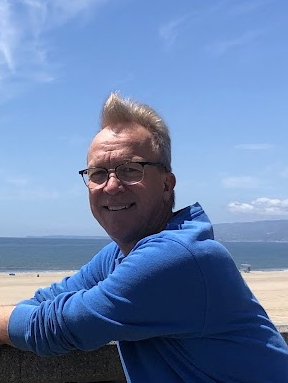
Photo credit: Mark Baker
There are easier ways to spend retirement than suing the State of California from your kitchen table.
Mark Baker chose the harder one.
Baker is a retired engineer, not a lawyer. He represents himself. He has no corporate legal department, no major environmental organization underwriting his litigation and no army of attorneys billing by the hour.
What he has is patience, technical discipline, an engineer’s instinct for inconsistencies — and a remarkable unwillingness to stop reading when government paperwork raises more questions than it answers.
For the past three years, Baker has challenged Bay Lights 360, the approximately $11 million effort to transform the celebrated Bay Bridge light installation into a larger, 360-degree display.
Across the table have been some of California’s most powerful transportation and regulatory institutions: Caltrans, the Metropolitan Transportation Commission, the Bay Area Toll Authority and the San Francisco Bay Conservation and Development Commission.
Baker has brought multiple legal challenges, pursued federal claims, filed a whistleblower complaint with the California State Auditor, and taken his concerns to the Caltrans Inspector General. The courts have repeatedly ruled against him. San Francisco Superior Court eventually declared him a vexatious litigant.
And still he kept going.
That persistence deserves recognition. Whatever the ultimate legal judgment on Baker’s allegations, few private citizens would devote three years to obtaining records, studying regulations, challenging powerful institutions and building a documentary trail that journalists and the public can independently examine.
Mark Baker did exactly that.
His work represents a form of civic engagement that receives very little attention: the exhausting, methodical work of requesting documents, comparing what agencies say publicly with what their paperwork says privately, and refusing to accept government authority as a substitute for government accountability.
Over two weeks of correspondence in August 2026, Baker provided me with records accumulated during that campaign. What I found deserves public scrutiny.
Someone Else Opened the Door
Before examining those records, a journalistic debt needs to be acknowledged. In July 2026, Davis Vanguard journalist Matt Stone published “Fraud: Put Those Lights on the Bay Bridge,” bringing Baker’s allegations before a general audience.
Stone named central actors, explained the permit controversy, examined Baker’s vexatious-litigant designation and treated a pro se citizen’s documentary campaign as something worthy of serious journalism. I came to this story after Stone opened that door.
My purpose here is to walk further through it: to put Baker’s primary-source records on the table, distinguish documented facts from allegations, and ask the questions those records place before the public.
Credit belongs to Stone and the Davis Vanguard for recognizing that this story deserved to be told. But the documents deserve to speak for themselves. And some of them say remarkable things.
Exhibit One: The Letter That Started It
On January 24, 2012 — more than a decade before Baker began his Bay Lights 360 campaign — Caltrans District 4 Director Bijan Sartipi sent a one-page letter responding to a request that the Bay Area Toll Authority assume CEQA lead-agency responsibility for the original Bay Lights installation.
“I have determined that there is sufficient justification to delegate CEQA Lead since the organization sponsoring this project is a non-profit group and the project will be privately funded.”
Caltrans identified two circumstances supporting the delegation: a nonprofit was sponsoring the project and private money would pay for it. Baker argues that neither circumstance supplied a lawful basis for transferring Caltrans’ statutory responsibility.
His argument points to Planning & Conservation League v. Department of Water Resources, a 2000 California appellate decision containing unusually direct language: “So significant is the role of the lead agency that CEQA proscribes delegation.”
Whether Baker’s application of that precedent ultimately prevails is a legal question. But Caltrans put its rationale in writing. Baker found it — and asked whether it was lawful.
Exhibit Two: One Checked Box
On August 15, 2023, BATA filed a Notice of Exemption for Bay Lights 360. The project contemplated approximately 48,000 LEDs — roughly twice the original number — including new lights facing inward toward the roadway.
On the Notice of Exemption signed by BATA Deputy Executive Director Alix Bockelman, the box identifying the project applicant as a “Local Public Agency” is checked. Baker contends that BATA’s legal status required different CEQA filing procedures and that the notice should have been processed through the State Clearinghouse rather than filed solely with the San Francisco County Clerk.
BATA invoked the Class 1 categorical exemption under CEQA Guidelines Section 15301, covering existing facilities involving negligible or no expansion of existing or former use. Yet the project description contemplated replacing approximately 25,000 existing fixtures, extending the installation for another decade and adding another field of LEDs to create the 360-degree display.
When does an alteration stop being negligible?
Baker wanted a court to answer it. Instead, his litigation encountered procedural barriers before he obtained the merits-level examination he sought.
Exhibit Three: How Big Is 1.8 Miles?
On September 7, 2023, the San Francisco Bay Conservation and Development Commission issued Amendment No. Four to Permit M2012.009.04. The document describes Bay Lights 360 as approximately 48,000 two-inch LED fixtures secured to the inward- and outward-facing sides of 308 vertical suspension cables.
“The project therefore involves minor fill in the Bay … and does not exceed 1,000 square feet…”
Forty-eight thousand lights. Three hundred and eight suspension cables. An installation stretching across the western span of the Bay Bridge. And, for purposes of the applicable BCDC regulation, no more than 1,000 square feet of fill.
The significance is not merely mathematical. According to the permit, remaining within the applicable regulatory threshold allowed the project to be treated as a “minor repair or improvement” subject to administrative approval.
In other words, the measurement affected who got to decide.
Baker’s challenge therefore goes beyond an argument about square footage. He is asking whether the regulatory characterization allowed a project of extraordinary geographic scale to proceed without the level of public Commission consideration he believes should have occurred. That question deserves a clear answer from BCDC.
Exhibit Four: The Signature on Line 31
The most legally sensitive document in Baker’s collection may be a Caltrans Standard Encroachment Permit Application dated September 13, 2024.
Field 28 identifies the applicant as “Bay Area Toll Authority — Angela Louie.” Field 29 identifies the authorized agent as “Ben Davis (Illuminate).” Then comes line 31. The signature of the “APPLICANT OR AUTHORIZED AGENT” is Ben Davis’. His title is CEO — CEO of Illuminate, the private nonprofit behind the project, not BATA.
“I hereby certify under penalty of perjury under the laws of the State of California that the information in this application … are true and correct to the best of my knowledge and belief.”
The form further warns that false, intentionally incomplete or misleading information can carry criminal consequences and references California Penal Code Section 72.
The Letter BATA Could Not Find
On February 11, 2026, Baker submitted a California Public Records Act request specifically seeking the Letter of Authorization from BATA to Ben Davis that would establish Davis as BATA’s authorized agent for the Bay Lights 360 project.
“I am requesting the Letter of Authorization from BATA to Ben Davis that authorizes Ben Davis as the AUTHORIZED AGENT for the Bay Lights 360 project.”
The response from MTC/BATA’s records operation was direct:
“After conducting a reasonable search, we were unable to locate any additional records responsive to your request.”
That materially strengthens the documentary record. The responsible public agency was specifically asked for the authorization Baker identified, and after what it described as a reasonable search, it could not locate an additional responsive record.
That does not establish, by itself, that Davis committed a crime. Nor does it prove that authorization could not have existed in some other form. But it eliminates one easy response to Baker’s allegation: that he simply failed to look hard enough.
He asked the agency. The agency searched. It could not locate the requested authorization record.
If another document legally empowered Davis to sign as BATA’s authorized agent, the agencies involved should identify and produce it. If none exists, they should explain how a private nonprofit executive came to sign the application in that capacity.
Baker deserves that answer. So does the public.
Exhibit Five: The Federal Government Said Not Yet
On October 15, 2024, the Federal Highway Administration’s California Division approved a Right of Way Use Agreement associated with Bay Lights 360 — but did not approve unrestricted operation of the project.
“Due to safety concerns already articulated to Caltrans, FHWA will not authorize the use of the interior lights until FHWA has determined the lights can function safely and does not impair the highway or interfere with the free and safe flow of traffic.”
“Interior lights use (including testing) is not allowed under this approval…”
FHWA required a comprehensive test under an approved testing plan and separate federal approval before those lights could operate. It also required post-installation crash monitoring that included a threshold for terminating use of the interior lights if serious-injury or fatal crash rates increased.
That was not a ceremonial sign-off.
The federal government had identified a highway-safety question serious enough to withhold authorization for the inward-facing portion of the installation pending further analysis.
As of late August 2026, those inward-facing LEDs remain dark. What the public sees illuminated over San Francisco Bay is therefore not the complete Bay Lights 360 concept as originally envisioned.
Why Mark Baker Keeps Fighting
Baker founded the Soft Lights Foundation and has spent years advocating around LED lighting, disability access, artificial light at night and what he sees as the failure of government agencies to keep pace with a technology that has transformed the nighttime environment.
His concern is not simply that someone installed lights improperly. It is that government is approving increasingly powerful artificial-light systems without adequately confronting their potential consequences for human health, wildlife and the environment.
“The invention of high-intensity LEDs has enabled the ability to provide artificial light in ways never before imagined. But the harms from exposure to artificial light are substantial and real. It’s time for government officials to start addressing the health and environmental impacts of LED lights and light pollution.” — Mark Baker
That statement helps explain three years of persistence.
Baker reads regulations. He files Public Records Act requests. He waits. Documents arrive. He reads those. Then he asks another question.
That process uncovered the 2012 delegation letter, the 2023 Notice of Exemption, the BCDC amendment, the Caltrans application bearing Ben Davis’s signature, the FHWA safety restrictions and the February 2026 records response stating that the agency could not locate the authorization Baker specifically requested.
That is painstaking public-interest work.
Baker may be a controversial litigant. Courts may reject his legal theories. Government officials may disagree with his conclusions. None of that diminishes what he has accomplished as a citizen investigator.
He has assembled records that would otherwise remain scattered through government files and forced institutions far larger than himself to answer questions they might never have faced. That deserves respect.
The Institutions Around Him
Baker’s frustration now extends far beyond one permit. He believes the Bay Lights controversy reflects a broader failure of institutional oversight involving transportation agencies, regulators and political leadership.
Some of his conclusions are allegations and opinions that this investigation cannot independently establish. They should be identified as such.
But one criticism can be evaluated without adopting Baker’s entire theory: Where was the oversight?
If BATA’s authorization of Davis was proper, where is the record? If the BCDC square-footage calculation was proper, how was it calculated? If the CEQA exemption was appropriate for an expanded 360-degree installation, why? If the inward-facing lights were safe, why did FHWA explicitly withhold authorization pending safety testing?
These are not ideological questions. They are documentary questions. And documentary questions deserve documentary answers.
When the Courts Don’t Reach the Question
Baker’s litigation history is complicated, and fairness requires saying clearly that the courts have not adopted his theory of the case. In Baker v. Bay Area Toll Authority, decided June 5, 2026, the First District Court of Appeal affirmed dismissal of his second CEQA challenge.
That decision is important because it presents the government’s successful legal position, not merely Baker’s allegations. Journalism has a responsibility to make that distinction.
But procedural defeat and documentary accuracy are different things. A court can reject a lawsuit without making every government record underlying the controversy meaningless.
The documents remain. They can still be read. They can still be questioned. And the agencies responsible for them can still explain them.
The vexatious-litigant designation may restrict Baker’s access to the courthouse. It does not repeal the public’s right to ask what happened.
The Question Above the Bay
San Francisco loves monuments to itself. We illuminate buildings, bridges and skylines and call the result civic identity. The Bay Lights were sold as beauty — technology transforming infrastructure into wonder.
Perhaps they are beautiful.
But beauty is not an exemption from accountability.
Not when the canvas is public infrastructure. Not when government agencies issue the permits. Not when federal officials identify highway-safety concerns. Not when a private nonprofit executive signs paperwork as the authorized agent of a public entity and the agency later says it cannot locate the authorization record specifically requested by a citizen. And not when approximately $11 million is involved.
The Bay Lights controversy therefore presents a larger question than whether LEDs should shimmer across the Bay Bridge. It asks what happens when civic prestige, private philanthropy and public regulatory authority become so intertwined that ordinary citizens struggle to determine where one ends and another begins.
Mark Baker has spent three years trying to force that question into rooms where it cannot be ignored.
The courts have often answered him with procedure. Eventually, they called him vexatious.
But procedure cannot erase ink from a government document. And a label attached to a litigant cannot substitute for an answer to the evidence he uncovers.
The records examined here do not, standing alone, prove fraud. They do not establish criminal liability. They do not mean Baker is correct about every legal argument he has advanced.
They mean his questions deserve answers.
Democracy depends upon people willing to read the footnotes.
Mark Baker read them.
He read the permits. He read the exemptions. He read the regulations. He read the federal conditions. And when a state permit identified a private nonprofit CEO as an authorized agent for a public entity, Baker did something wonderfully uncomplicated.
He asked for the authorization.
The government searched. It could not locate it.
So Baker kept asking questions.
That is the part of his story no adverse ruling can erase.
Three years into this fight, Mark Baker is still reading. Still requesting records. Still challenging powerful institutions to explain what their own documents say.
They called him vexatious.
He kept the receipts.
And now the rest of us can read them.
Primary-Source Documents Reviewed
- Exhibit G — Caltrans Lead Agency Deferral Letter, Bijan Sartipi, District Director, January 24, 2012. On file with Destination Freedom Media Group.
- Exhibit L — Bay Area Toll Authority Notice of Exemption, August 15, 2023. On file with Destination Freedom Media Group.
- Exhibit D — BCDC Permit M2012.009.04, Amendment No. Four, September 7, 2023. On file with Destination Freedom Media Group.
- Caltrans Form DOT TR-0100 — Standard Encroachment Permit Application, signed September 13, 2024. On file with Destination Freedom Media Group.
- Exhibit F — Federal Highway Administration Right of Way Use Agreement approval letter, October 15, 2024. On file with Destination Freedom Media Group.
- MTC/BATA Public Records Response R001206-021126 — February 2026 response to Baker’s request for the Letter of Authorization identifying Ben Davis as BATA’s authorized agent. The response states that after a reasonable search the agency was unable to locate additional responsive records. On file with Destination Freedom Media Group.
Supporting Sources — Clickable
- Matt Stone, “Fraud: Put Those Lights on the Bay Bridge,” Davis Vanguard
- Baker v. Bay Area Toll Authority — Justia
- Planning & Conservation League v. Department of Water Resources — Justia
- Soft Lights Foundation
- Soft Lights Foundation — Human Health Research Library
- Moonlight Advocacy
Our song/video for this article is:
Tom Petty and the Heartbreakers – I Won’t Back Down