
A documented public-record argument for deeper scrutiny of the prosecution that sent San Francisco filmmaker and editor Kevin Epps to prison.
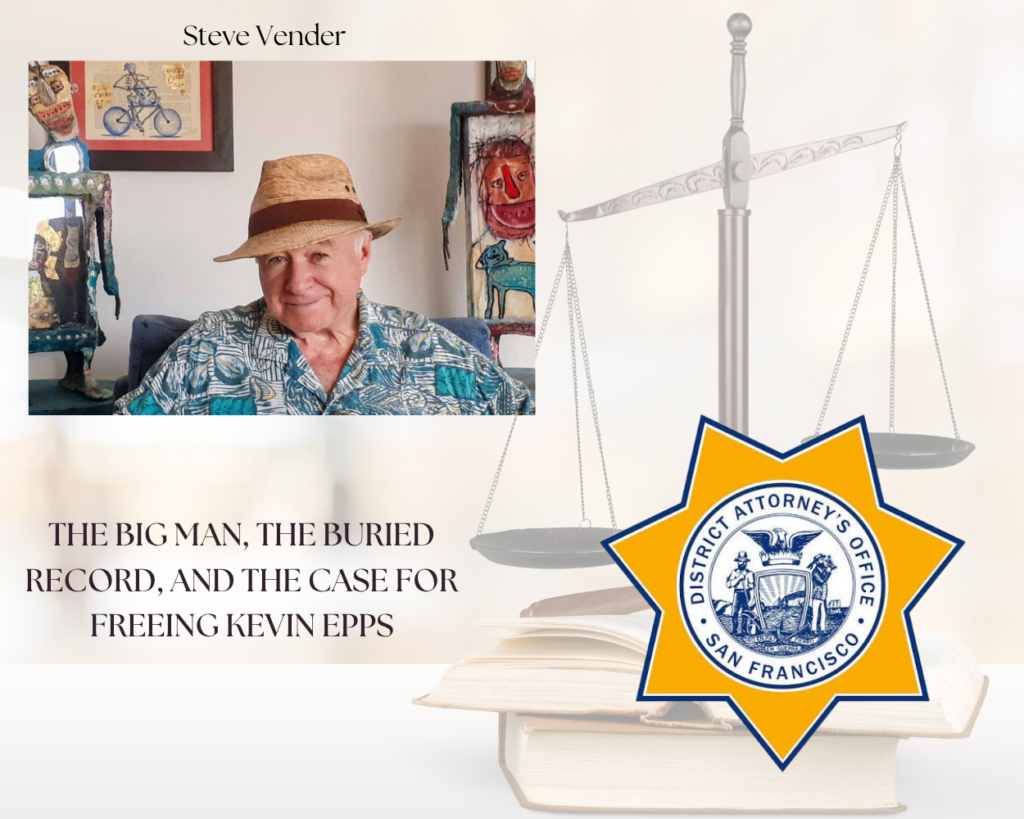
There are moments when history does not knock politely. It kicks the door open.
Kevin Epps is not just a criminal defendant with a file number. He is a San Francisco filmmaker and journalist whose work has long centered Black life in the city, and he now serves as executive editor of the San Francisco Bay View. Public reporting shows that after the 2016 shooting death of Marcus Polk, then-District Attorney George Gascón initially declined to charge Epps, citing insufficient evidence. In 2019, however, Epps was rearrested and prosecuted in a revived case that later became the center of fierce controversy over digital reconstruction evidence and prosecutorial judgment.
That controversy matters because it goes to the heart of public trust. KQED and American Community Media both reported that the revived prosecution leaned on three-dimensional computer-generated reconstructions or digital animation presented as new evidence. KQED reported that those images were ultimately withdrawn over defense objections, while American Community Media reported that a prosecution-commissioned animation was effectively undermined in pretrial proceedings and later replaced with a narrower version. That is not a small procedural footnote. It is the kind of fact that can determine whether the public sees a prosecution as careful, fair and scientifically grounded—or as something more opportunistic.
Now comes another document, surfaced through the work of private investigator Steve Vender: a two-page scan of a Feb. 23, 1994 nwitimes.com article by Mark Kiesling titled ‘Illinois prosecutor arrested in bar fracas.’ The clipping identifies its subject as ‘J. Michael Swart,’ then a Knox County Assistant State’s Attorney in Galesburg, Illinois, and reports that he was charged with public intoxication and disorderly conduct after an incident at the Star Plaza hotel complex in Merrillville, Indiana. Because the document is a private scan and because identity matching across decades should be independently confirmed, the careful and defensible point is not that this clipping resolves everything. It is that Vender has surfaced a serious documentary lead bearing the same name as the prosecutor later tied to the Kevin Epps case.
Illinois Prosecutor Arrested in Bar Fracas
https://destination-freedom.org/wp-content/uploads/2026/07/The-Big-Man001.pdf
That distinction matters. Journalism is not supposed to collapse caution into cowardice or substitute innuendo for proof. The question is whether this newly surfaced record, if confirmed to involve the same Michael Swart, fits a broader public pattern already visible in official records and credible reporting. On that question, the documentary trail is substantial enough to demand scrutiny rather than silence.
Start with what is already uncontested in the public record. The State Bar of California attorney profile for J. Michael Swart shows that he was admitted to the California bar in 1999. More significantly, the San Francisco Ethics Commission announced in May 2016 that Assistant District Attorney Michael Swart agreed to pay a $1,500 fine after acknowledging that he directly asked attendees at a 2014 fundraiser for then-District Attorney George Gascón to make campaign contributions—conduct the commission found violated city law prohibiting solicitation of political contributions from other city employees. That is not rumor. That is an official enforcement action.
Ethics Commission fins D.A., staffers
https://destination-freedom.org/wp-content/uploads/2026/07/More-of-The-Big-Man009.pdf
Then there is the Espinoza-Gerada Cerrato matter. Mission Local’s public database of major San Francisco settlements includes a 2013 entry stating that Carlos Espinoza and Naomi Gerada Cerrato were allegedly detained for 84 days so they could testify in a San Francisco murder case, despite not being suspected of or charged with any crime, and that Michael Swart was among the named defendants connected to the matter. The same entry lists the settlement amount at $95,000. A federal court order in the case further recites the plaintiffs’ allegations that Swart directed investigators to take the prospective witnesses into custody, keep them jailed, and that they were confined for a total of eighty-four days. Those allegations are not findings of liability, but they are serious enough to have lived in both the court record and the city’s settlement trail.
Buried in the federal court record is a deeply disturbing allegation involving Michael Swart. In Espinosa et al. v. City and County of San Francisco et al., a federal judge summarized claims that Swart, while prosecuting People v. Manuel Castro, “directed Gaynor to take custody of the Plaintiffs and return them to San Francisco to be jailed,” and that the two material witnesses, Carlos Espinosa and Naomi Gerada Cerrato, were “confined for a total of eighty-four days, from November 16, 2009 through February 8, 2010.” The order also recites the allegation that Swart kept their confinement secret from the defense and “never brought them before a judge to assess the necessity of continued confinement or the possibility of release on bail.” Those are not minor claims. They are the kind of allegations that go directly toward painting a picture of abuse of prosecutorial power.
You can form your own opinion from these documents: Motion to Dismiss First Amended Complaint; Stipulation and Order re Settlement; and the City’s Ordinance re Settlement.
https://destination-freedom.org/wp-content/uploads/2026/07/Espinosa-Order-re-Motion-to-Dismiss-FAC-highlighted.pdf
https://destination-freedom.org/wp-content/uploads/2026/07/Espinosa-Court-Settlement.pdf
https://destination-freedom.org/wp-content/uploads/2026/07/Espinosa-Ordinance-re-Settlement.pdf
Then there is Charles Heard. The San Francisco Standard reported that prosecutor Michael Swart argued surveillance video placed Heard at the scene of a North Beach killing. The Standard further reported that Heard’s conviction was later overturned after it emerged that police and prosecutors had disagreed over whether Heard was even in the surveillance video and that the disagreement was never disclosed to the defense. Again, one need not overstate the point. The point is pattern: public controversy over evidence, disclosure and prosecutorial judgment.
In the Charles Heard case, court and government records show that officers reviewing surveillance footage at the District Attorney’s Office internally disputed whether Heard was even one of the men in the video, that this dispute was not disclosed to the defense, and that the resulting Brady violation later helped unravel the conviction in a prosecution contemporaneous reporting tied directly to Michael Swart.
Here are the documents for you to form your own opinion: Victim Compensation Board Decision re Heard’s 1485.55 Motion for a Finding of Factual Innocence which was denied and then overturned on appeal by the First District Court of Appeal (highlighted pages 4, 9, 10, 11, 14, and 15; ABC7 Article: Man sentenced for 2008 North Beach Murder; and $900,000 payout likely for man wrongly convicted of 2008 Murder
https://destination-freedom.org/wp-content/uploads/2026/07/Heard-Victim-Compensation-Board-Decision-highlighted-1.pdf
https://destination-freedom.org/wp-content/uploads/2026/07/Man-sentenced-for-2008-North-Beach-murder.pdf
https://destination-freedom.org/wp-content/uploads/2026/07/Heard-900^J000-payout-likely-for-man-wrongly-convicted-of-2008-murder-in-San-Franciscos-North-Beach.pdf
Place those records beside Kevin Epps’s case and the appearance problem becomes impossible to wave away. A prosecution initially declined for insufficient evidence was revived years later. The revival reportedly relied on digital reconstruction evidence that became a major source of challenge and was at least partly withdrawn. The prosecutor tied to that revival already appears in an official ethics disposition and in public records involving other disputed exercises of power. If San Francisco residents do not at least recognize the appearance of impropriety, then the public threshold for alarm has become dangerously high.
This is why Vender’s work matters. Private investigators and archival diggers often go where institutions would prefer no one look: into forgotten clips, stale dockets, settlement ledgers and inconvenient biographies. By surfacing the 1994 Swart clipping, Vender has not handed the public a final verdict. He has handed the public a lead—one that now deserves professional corroboration, public examination and serious reporting.
I am not writing to claim more than the records show. I am writing to say the records show enough to justify renewed scrutiny. They show enough to ask whether Kevin Epps was prosecuted in an atmosphere shaped by selective zeal, compromised judgment or evidentiary opportunism. They show enough to question whether the revival of the case reflected sober justice or prosecutorial ambition. And they show enough to insist that when public confidence in the integrity of a prosecution is this badly shaken, freedom pending deeper review is not a radical demand. It is a democratic one.
The state always wants us to believe that its actors arrive wrapped in discipline, neutrality and moral authority. But sometimes the archive tells a harder story. Sometimes ethics findings, settlement records, appellate reversals, contested evidence and old newspaper clips begin speaking to one another. And when they do, they do not whisper. They thunder.
Kevin Epps should be free while this record is fully examined. Michael Swart’s role in the Epps prosecution should be publicly re-investigated. Steve Vender’s findings should be corroborated and expanded. And San Francisco should be willing to ask an old question that never stops mattering: when the machinery of prosecution begins to look compromised, who prosecutes the prosecutors?

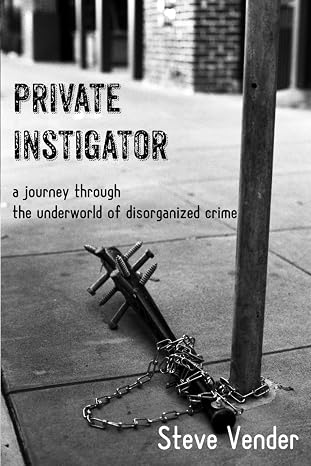
Who Is Steve Vender?
I do not write about Steve Vender as if he were carved from marble and lowered into history without contradiction. Men who spend their lives in the wreckage of the criminal legal system do not come out antiseptic. They come out marked. And what the public record shows is that Vender has spent decades moving through that wreckage as a criminal-defense investigator, memoirist and relentless digger of facts, chasing the truth in places where polite society does not like to look. Common Reader describes him as a veteran private eye who worked homicides, gang cases, hate crimes and cases involving people he believed were bullied or framed by police. The Oaxaca Lending Library’s notice for his 2025 book talk describes him as a seasoned investigator specializing in criminal and indigent defense work. In other words: he made a life out of standing near the people this system most easily discards.
That matters to me, because redemption is rarely neat. According to Common Reader, Vender did not arrive at this work by floating down from the clouds of respectability. He came through family chaos, addiction, drift, disillusionment, bartending, collapse and recovery. He studied, wrote, wandered, got lost, got sober, cared for his dying mother, and then rebuilt his life through investigative work. The same profile says he worked as an investigative assistant for the State Bar of California before earning his private-investigator license and stepping into the bruising world of criminal defense. That biography does not read like the resume of a bureaucrat. It reads like the making of a man who understands, in his bones, that broken people are still people and that the truth is often buried under class contempt, police narratives and institutional convenience.
The good in Steve Vender is not abstract. It is visible in the way other public accounts describe his work. SF Weekly portrayed him as a well-regarded and unusually tenacious defense investigator, the kind of investigator prosecutors notice when he starts tearing holes in a case they thought was sewn shut. In its reporting on the Daniel Dennard case, the paper quoted Vender arguing that overzealous prosecution and flimsy evidence should never be enough to take a man’s freedom. He pointed to cellphone records, alibi witnesses and the simple proposition that should be engraved above every courthouse door in America: you need evidence to convict somebody. That is the language of a real investigator, not a courtroom mascot. That is the language of someone who understands that in the criminal justice system, facts are often the only shield poor people have.
But no honest portrait can stop at the halo and call it journalism. The bad and the ugly are in the file too. In 2009, Vender was indicted on a felony charge of attempting to dissuade a witness in the Philip Pitney case after a voicemail referencing a no-bail warrant and the so-called ‘Fresno Riviera.’ SF Weekly reported that the prosecution was viewed by some defense lawyers as retaliation against a highly effective investigator; prosecutors, for their part, argued that witness intimidation threatens the integrity of the justice system. A jury later deadlocked 11-1 in favor of guilt, producing a mistrial. The San Francisco Examiner subsequently reported that the felony was reduced and Vender pleaded no contest to a misdemeanor count of attempting to dissuade a witness, receiving one year of probation. That episode belongs in any fair telling of his life. It is not a footnote. It is part of the scar tissue.
And still, scar tissue is not the same thing as surrender. Vender’s book, Private Instigator: A Journey Through the Underworld of Disorganized Crime, helps explain why his name still carries force among people who care about due process. Google Books describes it as the story of an unconventional man who found his calling in criminal and indigent defense work. The Oaxaca Lending Library says the memoir follows a guide helping clients navigate a corrupt criminal justice system and fighting to free them with pathos and humor. Common Reader goes further, portraying him as a man who tried not just to work cases, but to understand the damaged human beings inside them. That is what separates a mere operator from a witness to history: the refusal to look away from human complexity, even when it is ugly, even when it implicates the state, and even when it implicates the investigator himself.
So who is Steve Vender? He is not a saint for the comfortable, and that may be exactly why he matters to the condemned, the accused, the poor and the politically forgotten. He is a flawed, battle-tested investigator whose life story is steeped in ruin, reinvention and hard-earned purpose. He has taken hits. He has made enemies. He has lived long enough in the underworld of courts, cops, gangs and broken institutions to know that justice in America does not arrive by itself; somebody has to go into the archive, knock on the door, track down the witness, challenge the script and drag the truth into the light. For people trapped in the machinery of prosecution, that kind of investigator is not a luxury. He is often the last line between a human being and oblivion. That is why Steve Vender deserves to be understood not as a myth, but as something more useful: a deeply imperfect hero for the oppressed inside a deeply imperfect system.
SOURCE LIST
- KQED — ‘SF Filmmaker Kevin Epps Convicted of Manslaughter, Not Murder in 2016 Shooting’ (Dec. 15, 2025). https://www.kqed.org/news/12066917/sf-filmmaker-kevin-epps-convicted-of-manslaughter-not-murder-in-2016-shooting
- KQED — ‘SF Filmmaker Kevin Epps Is Sentenced to Over 6 Years in Prison for Fatal Shooting’ (Apr. 8, 2026). https://www.kqed.org/news/12078987/sf-filmmaker-kevin-epps-is-sentenced-to-over-6-years-in-prison-for-fatal-shooting
- NBC Bay Area — ‘SF Fatal Shooting Victim Had Long Criminal History, Court Records Show’ (Oct. 27, 2016). https://www.nbcbayarea.com/news/local/sf-fatal-shooting-victim-had-long-criminal-history-court-records-show/2010399/
- NBC Bay Area — ‘San Francisco Filmmaker Rearrested for 2016 Murder’ (May 7, 2019). https://www.nbcbayarea.com/news/local/san-francisco-filmmaker-rearrested-for-2016-murder/191518/
- American Community Media — ‘In Epps Trial, Concerns Over Prosecutorial Misconduct and Political Agendas’ (2025). https://americancommunitymedia.org/news-exchange/in-epps-trial-concerns-over-prosecutorial-misconduct-and-political-agendas/
- American Community Media — ‘Legal, Ethical Questions Remain as Epps Trial Sentencing Date Nears’ (Mar. 2026). https://americancommunitymedia.org/criminal-justice/legal-ethical-questions-remain-as-epps-trial-sentencing-date-nears/
- State Bar of California — ‘J Michael Swart #201643 – Attorney Licensee Search.’ https://apps.calbar.ca.gov/attorney/Licensee/Detail/201643
- San Francisco Ethics Commission — ‘Public Announcement of Enforcement Action – Ethics Commission Fines District Attorney and Two DA Staff for Soliciting Campaign Contributions…’ (May 24, 2016). https://sfethics.org/ethics/2016/05/public-announcement-of-enforcement-action-ethics-commission-fines-district-attorney-and-two-da-staff-for-soliciting-campaign-contributions-in-from-other-city-employees-at-2014-staff-fundraiser-in-vi.html
- Mission Local dataset — ‘majorSettlementsSince2010_data.csv,’ entry for ‘Carlos Espinoza et al.’ https://missionloca.s3.amazonaws.com/mission/wp-content/uploads/2023/06/majorSettlementsSince2010_data.csv
- Justia Dockets & Filings — ‘Espinosa et al v. City and County of San Francisco et al,’ Order on Motion to Dismiss (Dec. 6, 2011). https://docs.justia.com/cases/federal/district-courts/california/candce/3:2011cv02282/241839/28
- The San Francisco Standard — ‘San Francisco Man Wrongly Convicted of Murder Could Get $900K from City’ (Sept. 27, 2023). https://sfstandard.com/2023/09/27/north-beach-murder-conviction-overturned-san-francisco-payout-charles-heard/
- Private archival source: The Big Man001.pdf (link above), described as a two-page scan of a Feb. 23; and 1994 nwitimes.com article by Mark Kiesling titled “Illinois prosecutor arrested in bar fracas.” No public URL was available for this source, so it is identified and the document is hyperlinked above.
- Common Reader — Jeannette Cooperman, “An Existentialist Private Eye Writes His Memoirs.” https://commonreader.wustl.edu/an-existentialist-private-eye-writes-his-memoirs/
- Oaxaca Lending Library — “Book Talk: Private Instigator: A Journey Through the World of Disorganized Crime.” https://www.oaxlibrary.org/event-details/book-talk-private-instigator-a-journey-through-the-world-of-disorganized-crime-free
- Google Books — “Private Instigator: A Journey Through the Underworld of Disorganized Crime.” https://books.google.com/books/about/Private_Instigator.html?id=hgbh0AEACAAJ
- SF Weekly — “Travel Agent: A Veteran Private Investigator Goes on Trial. But Some Say It’s a Set-Up.” https://www.sfweekly.com/archives/travel-agent-a-veteran-private-investigator-goes-on-trial-but-some-say-its-a-set/article_d3a9f5c6-8e6c-5758-a57d-31b3fab5f12d.html
- San Francisco Examiner — “Defense investigator pleads no contest to misdemeanor charge of witness tampering.” https://www.sfexaminer.com/news/defense-investigator-pleads-no-contest-to-misdemeanor-charge-of-witness-tampering/article_dfc81c3b-1d73-5cc7-903b-66e471928417.html
- SF Weekly — “Walking the Line.” https://www.sfweekly.com/archives/walking-the-line/article_65fa0d83-f744-5fa1-b405-35674ffd2bf8.html
Verification note: The public sources above support the article’s core factual statements about the Epps prosecution, the ethics fine, the Espinoza-Gerada Cerrato detention allegations, the Charles Heard reporting, and the added Steve Vender profile section. The 1994 clipping remains a documentary lead that should be independently cross-matched before being treated as conclusively linked to the later California prosecutor.
Research for this piece was obtained through various search engines, private investigator Steve Vender, as well as documents obtained from authentic court and other public records. Destination Freedom Media Group strongly encourages members of the public and community at large to conduct their own research. Destination Freedom Media Group also sought approval of this article from Kevin Epps’ defense attorney, Mark Vermeulen.
WE WOULD APPRECIATE A RESPONSE FROM THE SAN FRANCISCO DISTRICT ATTORNEY’S OFFICE
Our song/video for this article is: Tems – What You Need (Official Video)