At Sentencing, Grief, Love, and Loss Shared the Same Space
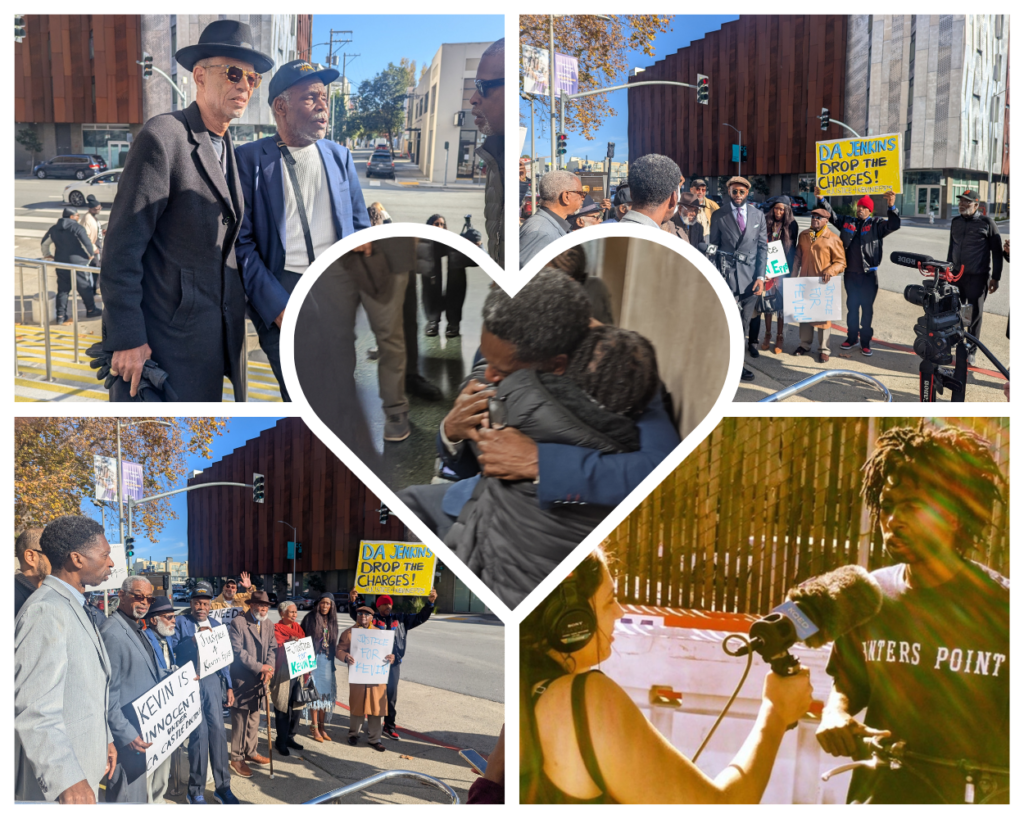
San Francisco Hall of Justice — December 2025
The sentence, when it came, was measured in months: SEVENTY-SIX MONTHS.
In California, that translates to approximately six years and four months in state prison. With credit for roughly 400 days already served, Kevin Epps is expected to face closer to five years remaining—and under typical conditions, potentially two-thirds of that time.
But inside Department 13, as the words left the bench, the impact was not measured in months.
It was measured in people.
A MOTHER’S BODY GIVES WAY
When Judge Brian L. Ferrall announced the sentence, Kevin Epps’s mother reacted in a way no legal record can fully capture.
She was visibly distraught—overcome to the point that those around her feared she might faint.
This is the part of the justice system that transcripts do not show. Not the sentence itself—but what it does to the people sitting behind the defendant.
CHILDREN LEFT TO PROCESS WHAT THEY CANNOT YET UNDERSTAND
As the courtroom emptied, the consequences continued to unfold in quieter ways. A close family friend, Robert Fleetwood Bowden, gathered Kevin Epps’ daughters and took them out for pizza—an act not of celebration, but of care. A small attempt to soften a moment that cannot be softened.
Because what the court imposed in years, those children experienced in absence.
Kevin Epps is, by every account presented in that courtroom, a devoted father—a “girl dad” in the truest sense of the phrase. Not in theory. In routine.
He takes his children to school
He shows up to their games
He builds time around them
He is present
His daughter told the court as much.
And yet, none of those moments—rides to school, sideline cheers, family outings—carry legal weight at sentencing.
A DAUGHTER SPEAKS FOR THE DEAD
Earlier in the hearing, another daughter stood. Marcus Polk’s eldest daughter, Jazmine, spoke not of routine—but of loss.
She remembered her father in the small ways that define a life: presence, laughter, shared space. She spoke of love in ordinary terms—the kind that becomes extraordinary only after it is gone.
Then she spoke of harm.
She described Kevin Epps as someone who inflicted fear, not one who lived in it. Someone capable of control, violence, and intimidation. In her telling, her father was not a threat.
He was a man trying to exist in spaces where he felt safe.
And whatever complexities existed in that household, they ended in something irreversible. Her voice carried what the system often struggles to hold: grief that does not need legal validation to be real.
A COMMUNITY SPEAKS FOR THE LIVING
Then came the voices from the other side of that same loss.
Not to erase it.
Not to challenge it directly.
But to expand the frame.
Speaker after speaker described Kevin Epps not as a danger—but as a presence. A connector. A man whose absence would ripple outward into communities already under strain.
One voice captured it simply:
“If he is not there… it will devastate our community.”
That statement was not about sympathy.
It was about impact.
WHEN REHABILITATION IS NOT THE QUESTION
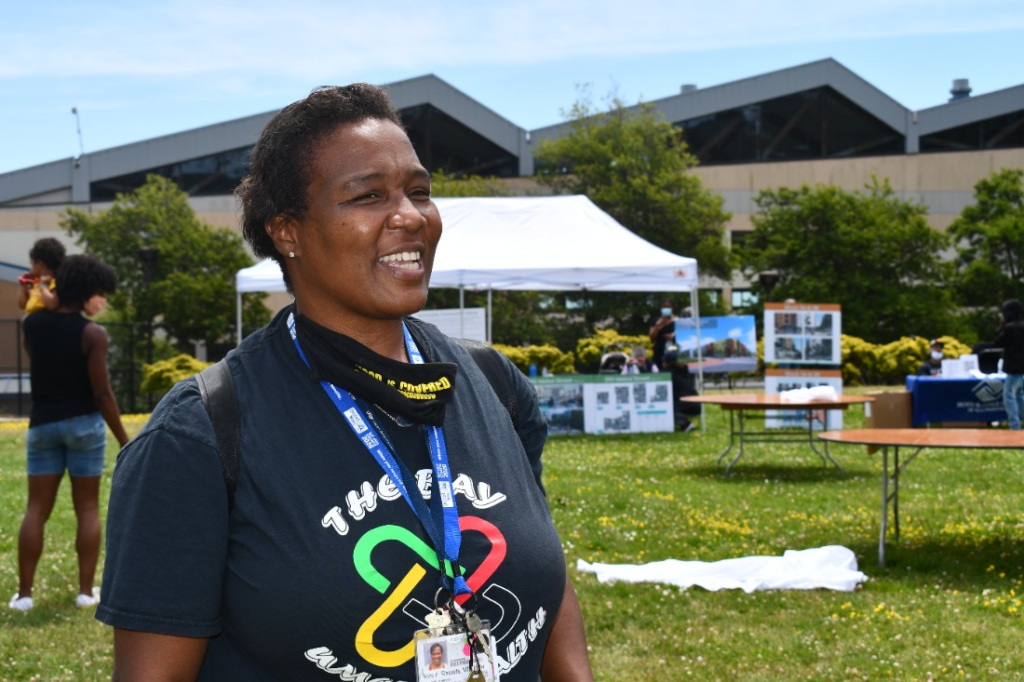
Photo credit: Mission Local
https://missionlocal.org/2021/11/dr-kim-rhoads-showing-up-for-the-underserved/
Dr. Kim Rhoads gave the court something rare: measurable context.
A physician. A public health leader. A former UCSF professor. Someone whose work required engaging communities that institutions alone could not reach.
She told the court that Kevin Epps helped build that bridge.
During the COVID-19 pandemic, when distrust ran high and participation was low, Epps became a credible messenger—someone who could move people not through authority but through trust.
Through Umoja Health, a coalition of over 100 organizations, that trust translated into action. Testing. Vaccination. Outreach.
Results that could be measured.
Lives that were impacted.
“We couldn’t have done that without Kevin.”
She did not deny the tragedy that brought the courtroom together.
But she asked a different question:
”If the purpose of punishment includes rehabilitation—what happens when that process has already begun?”
WHAT THE SYSTEM MEASURES — AND WHAT IT DOES NOT
By the time the judge imposed sentence, the courtroom had heard:
A daughter grieving her father
A daughter defending her father
A community describing dependence
A professional describing impact
All of it real.
All of it unresolved.
The law does not reconcile those realities.
It selects within them.
THE SENTENCE — AND ITS LIMITS
Kevin Epps was sentenced to 76 months in state prison. That sentence accounts for time already served. It anticipates time still to come. It answers the legal question.
But it does not answer the human one.
WHAT REMAINS
In court, everything is reduced:
To counts.
To factors.
To time.
Outside of court, nothing is.
• A mother steadies herself after hearing her son’s fate
• Children begin to understand absence in real time
• A family continues to grieve a life that will not return
• A community adjusts to the removal of someone it relied on
This is the part of the story that does not fit neatly into verdicts or sentencing structures.
But it is the part that endures.
CLOSING
The Kevin Epps case has now reached its legal conclusion. But what unfolded in that courtroom—grief, love, contradiction, and consequence—does not end with a sentence.
It lives on in the people who walked out of that room carrying different versions of the same loss. And in a justice system that is often asked to measure harm, the question remains:
“What does it mean to measure humanity?”
THE SAN FRANCISCO BAYVIEW NEWSPAPER FIGHTS ON
This story is one of loss. A mother temporarily loses a son, daughters lose a father, and a small but mighty newspaper loses its editor-in-chief. I haven’t spoken about it openly, but I have a strong connection to the San Francisco Bayview National Black Newspaper. I am a former editor, and I am intimately familiar with the inner workings of this one-of-a-kind revolutionary newspaper.
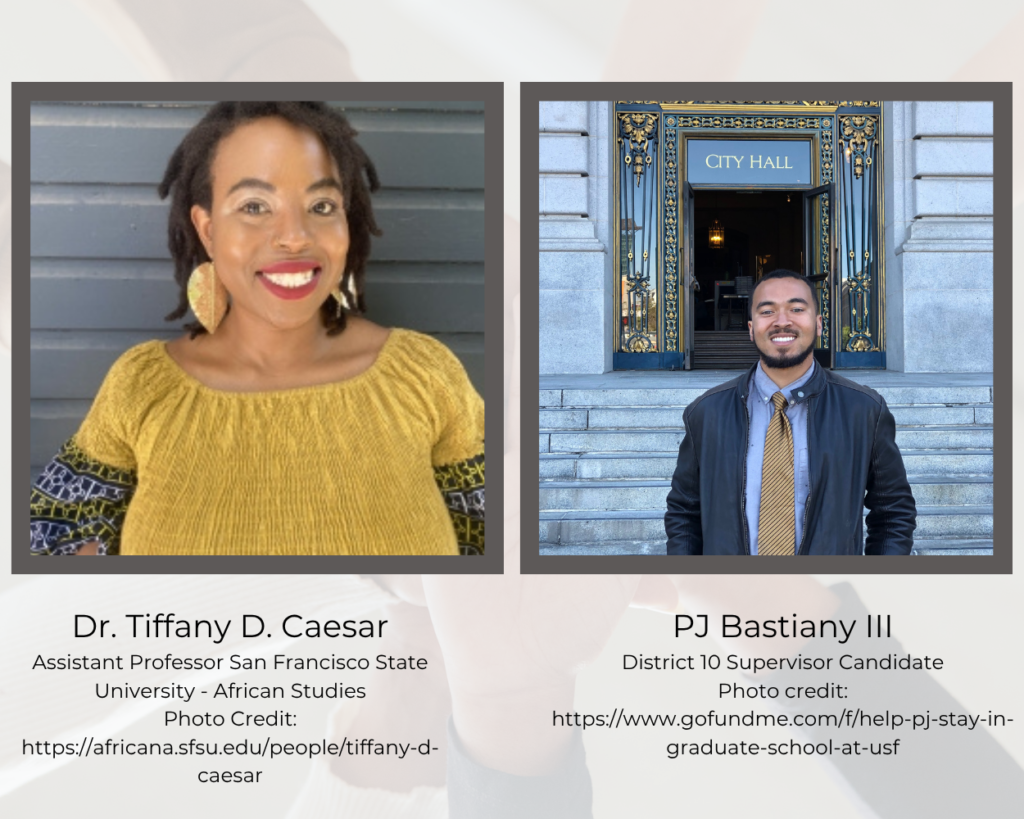
What many people do not know is that Kevin Epps has been shaping and molding a group of young budding journalists. He has been training them to tell the stories of local nonprofits that provide mental health services and other support services to people who live in San Francisco. I am sure that there will be some people like Dr. Tiffany D. Caesar and District 10 supervisor candidate, PJ Bastiany III, who will attempt to fill the vacuum left by Epps’ absence.
I think it is important that the community rally around the SF Bayview Newspaper because this is another attempt to destroy a nonprofit media outlet that is known for speaking truth to power. I have to admit, I would not be the journalist that I am today without the experience that I gained as editor-in-chief of the San Francisco Bayview National Black Newspaper.
Here’s our song/video for this article:
Skin I’m In – Cameo