
San Francisco’s Historic Crime Drop — and the Community Infrastructure That Must Sustain It

San Francisco — March 2026
THE MILESTONE
San Francisco closed out 2025 with 28 homicides — the lowest total recorded since 1954 [2][45][48].
City officials reported a 20% reduction in homicides and declines across major crime categories [2][47]. Independent analysis confirmed that 2025 marked historic lows not only in San Francisco, but across California’s largest cities [19][20][21][45][46].
The data is publicly verifiable through SFPD’s Crime Dashboard and the City’s open data portal [1][5].
The milestone matters.
But public safety is not defined by a single year. It is defined by whether the conditions that produced that reduction are preserved.
EARLY 2026: A TEST OF INFRASTRUCTURE
According to the Police Commission’s 2026 year-to-date trends report, San Francisco recorded six homicides by mid-February 2026, compared to approximately three during the same period in 2025 [4].
On February 27, 2026, a shooting at Dakota and 25th Streets in Potrero Hill left one person dead and others injured [3][41][42][43][44].
These early-year increases do not negate 2025’s achievement.
But they reinforce a structural truth:
Crime reductions endure only when the systems supporting them remain intact.
WHAT THE EVIDENCE SHOWS
San Francisco’s Violence Reduction Initiative (VRI) was independently evaluated by Dr. Anthony Braga and colleagues through the BSCC [14][15][16].
The findings were clear: District 10 experienced a 50% greater reduction in homicides and non-fatal shootings compared to other districts during the intervention period [13][14].
The reduction followed structured, community-based intervention.
Statewide, homicide rates declined dramatically in 2024 and 2025 [19][20][21]. Analysts consistently link those reductions to sustained investment in community violence intervention (CVI) strategies [12][19].
Since 2018, the CalVIP program has directed hundreds of millions of dollars toward local intervention efforts [8][11]. On February 19, 2026, Governor Gavin Newsom announced an additional $107 million in funding to 42 communities statewide [7][9].
The National Institute of Justice documents the effectiveness of credible messenger and focused deterrence models [22]. The National Alliance of Trauma Recovery Centers outlines how trauma-informed care interrupts cycles of retaliation [23].
The evidence base is not speculative.
Investment, when sustained and geographically aligned, reduces violence.
If 2025’s crime reduction tells a statistical story, community leaders tell the human one.
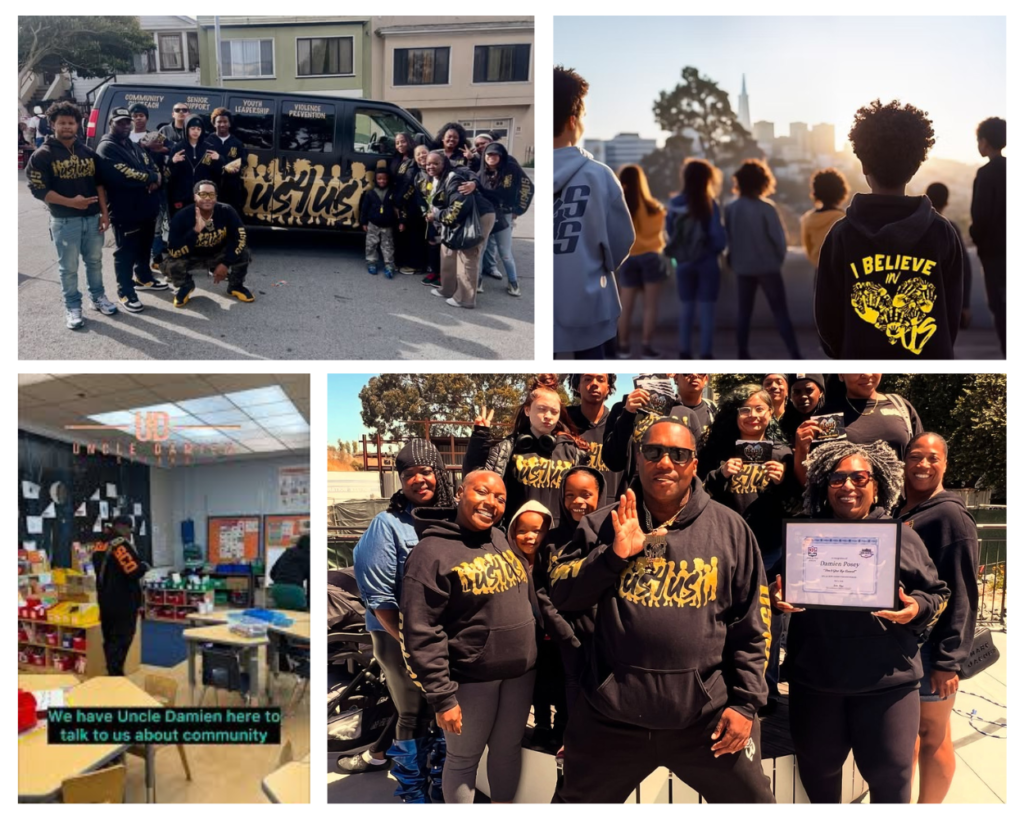
Photo credit: Us4Us Bay Area — Damien Posey
Us4Us Bay Area, founded by Damien Posey — widely known as “Uncle Damien” — operates in violence interruption, youth mentorship, and conflict mediation [31][32].
Regional reporting has profiled Posey’s work and examined the uneven distribution of anti-violence resources across the city [33].
His model relies on credibility, lived experience, and daily presence in neighborhoods where escalation can happen in hours.
It is relational infrastructure.
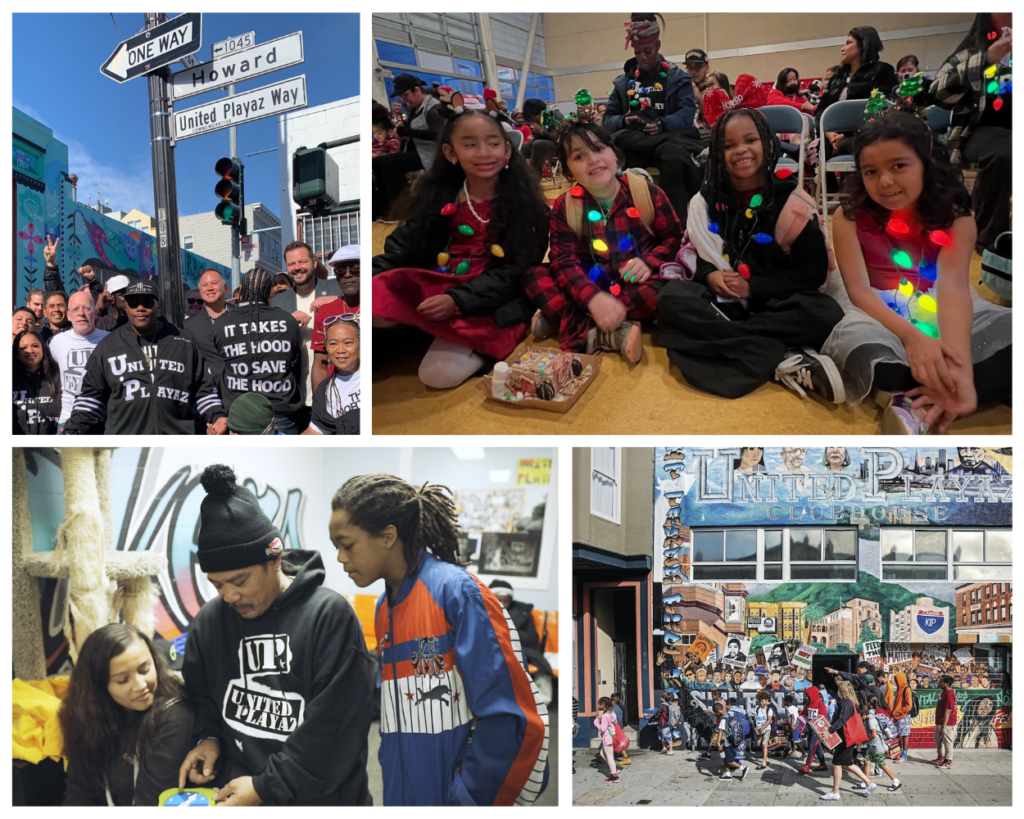
Photo Credit: United Playaz — Rudy Corpuz
Rudy Corpuz, founder of United Playaz, has built one of San Francisco’s most enduring youth violence prevention organizations [34].
United Playaz provides mentorship, leadership development, academic support, and street-level intervention. Its expansion into the Tenderloin and other high-risk neighborhoods has been covered by KQED and the San Francisco Chronicle [25][26].
Corpuz’s organization demonstrates longevity and measurable impact.
Together, Posey and Corpuz represent complementary pillars of San Francisco’s prevention ecosystem:
• Both operate with credible messengers.
• Both prioritize youth engagement.
• Both align with research-backed intervention models [22].
• Both function in neighborhoods historically underserved by institutional investment.
If the data from 2025 demonstrates what works [2][45], these organizations are part of that explanation.
PUBLIC SAFETY IS ECONOMIC INFRASTRUCTURE
Violence prevention does not exist in isolation from economic policy.
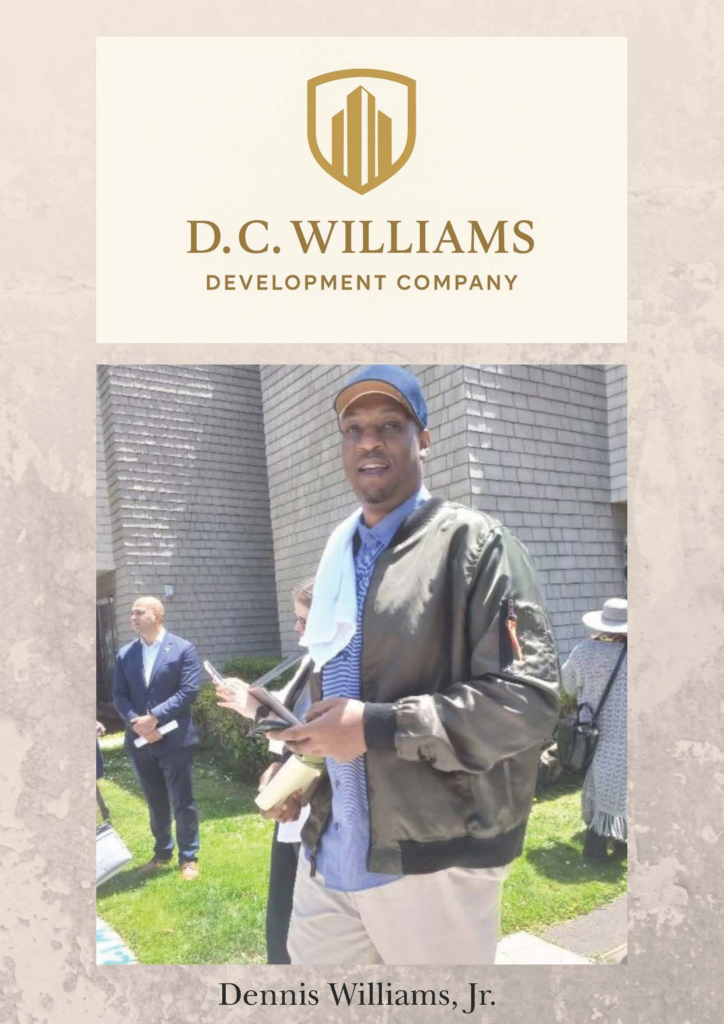
Dennis Williams Jr., Principal of D.C. Williams Development Company and Executive Director of the Fillmore Community Development Corporation, framed the broader structural issue directly:
“San Francisco has systematically starved Black communities of real economic investment, while city departments continue to house Black and minority residents in egregious, uninhabitable conditions. At the same time, billions of dollars allocated in our name are mismanaged, delayed, or diverted, never reaching the neighborhoods they were intended to stabilize.
“Public safety is not just policing after the fact. It is jobs, housing, functional community centers, accountable governance, and timely investment. Until the City addresses those root failures with the same urgency it brings to press conferences, we will keep standing at crime scenes instead of celebrating futures.”
Williams’ point aligns with the research.
Crime reduction correlates with stable housing, economic opportunity, and sustained community infrastructure [22][23].
The Dream Keeper Initiative was designed to direct investment into historically underserved Black communities [28]. Public reporting has documented audit findings and fiscal concerns [29][30].
Accountability and investment are not competing priorities.
They are co-requisites for durable public safety.
FUNDING MUST MATCH THE EVIDENCE
Federal instability threatens prevention continuity. CalMatters reported on cuts to California crime prevention grants [51]. Reuters documented more than $158 million in national reductions to gun violence prevention funding [52]. NPR and the Council on Criminal Justice analyzed the downstream effects on frontline organizations [53][54].
Prevention requires consistency.
Consistency requires funding.
If San Francisco intends to preserve the historic reductions documented in 2025 [2][45], then organizations like Us4Us Bay Area [31][32] and United Playaz [34] must be funded as essential infrastructure — not treated as peripheral partners.
The research supports them [14][22].
The state funding framework supports them [7][8].
The data from 2025 reflects what happens when that model is resourced [2][45].
The logical conclusion is direct:
The City must fund both.
CONCLUSION
San Francisco’s 2025 homicide reduction was measurable and historic [2][45][48].
The early months of 2026 are a reminder that progress requires reinforcement [4].
The research base is established [14][22].
The funding streams exist [7][8].
The community leadership is present [31][34].
The path forward is structural:
• Align investment with need.
• Stabilize prevention infrastructure.
• Fund the organizations already embedded in the neighborhoods most affected.
Statistics can mark progress.
But sustained public safety is built by people — and preserved by policy.
Here’s our song/video for this article:
Hog Mob – Reload – Brotha Ruff x Bazooka tha Disciple x Eric C TTT
RESOURCE LIST
San Francisco Violence, Prevention & Public Policy
56 Verified Entries · March 2026
SECTION A — Official Crime Data & Primary Public Records
[1] San Francisco Police Department (SFPD) Crime Dashboard — Filterable by district, crime type, and date range
https://sanfranciscopolice.org/stay-safe/crime-data/crime-dashboard�
[2] SFPD Press Release — “San Francisco Has Lowest Homicide Rate in 70 Years, Declines Across All Major Crime Categories in 2025”
https://sanfranciscopolice.org/news/san-francisco-has-lowest-homicide-rate-70-years-declines�
[3] SFPD Official Incident Report — Homicide, Bayview/Potrero Hill, February 27, 2026 (Dakota & 25th Streets)
https://sanfranciscopolice.org/news/sfpd-investigates-homicide-bayview-police-district-26-020�
[4] SF.gov — Police Commission Crime Trends Report, 2026 YTD (PDF)
https://media.api.sf.gov/documents/PoliceCommission_2426_-_Commission_Crime_Trends.pdf�
[5] San Francisco Open Data Portal — Incident-level crime datasets
https://data.sfgov.org�
[6] FBI Crime Data Explorer — National context and methodology notes
https://cde.ucr.cjis.gov�
SECTION B — State Funding: CalVIP & $107 Million Announcement
[7] Office of Governor Gavin Newsom — “$107 Million to Prevent Gun Violence and Improve Community Safety Across State” (Feb. 19, 2026)
https://www.gov.ca.gov/2026/02/19/governor-newsom-awards-107-million-to-prevent-gun-violence-and-improve-community-safety-across-state�
[8] Board of State and Community Corrections (BSCC) — CalVIP Program Overview
https://www.bscc.ca.gov/s_fundingcalvip�
[9] Giffords — CalVIP Coalition Statement on $107 Million Award
https://giffords.org/press-release/2026/02/calvip-coalition-statement-on-107-million-in-new-funding-for-community-violence-intervention�
[10] Giffords Law Center — Center for Violence Intervention
https://giffords.org/lawcenter/giffords-center-for-violence-intervention�
[11] California Legislature — AB-2378 (CalVIP Bill Text)
https://leginfo.legislature.ca.gov/faces/billNavClient.xhtml?bill_id=202520260AB2378�
[12] Californians for Safety and Justice — Policy Framework
https://safeandjust.org�
SECTION C — Research, Evaluation & Evidence Base
[13] SFPD — San Francisco Violence Reduction Initiative (SF-VRI)
https://sanfranciscopolice.org/san-francisco-violence-reduction-initiative-sf-vri�
[14] Dr. Anthony Braga / BSCC — SF-VRI Independent Evaluation Report (2024 PDF)
https://www.bscc.ca.gov/wp-content/uploads/2025/01/SF-VRI-Evaluation-Dr.-Braga-2024.pdf�
[15] University of Pennsylvania — Anthony A. Braga Faculty Profile
https://lps.upenn.edu/degree-programs/mcpl/faculty/anthony-braga�
[16] Penn Crime & Justice Policy Lab
https://crimejusticelab.org�
[17] Penn Today — “Anti-Violence Programs Aren’t in One of S.F.’s Most Violent Neighborhoods”
https://penntoday.upenn.edu/penn-in-the-news/anti-violence-programs-arent-one-sfs-most-violent-neighborhoods�
[18] UPenn Leonard Davis Institute — Federal Cuts & Violence Prevention
https://ldi.upenn.edu/our-work/research-updates/trump-cuts-to-violence-prevention-programs-likely-to-increase-deaths�
[19] Public Policy Institute of California (PPIC) — Homicides in California Have Decreased Dramatically
https://www.ppic.org/blog/homicides-in-california-have-decreased-dramatically�
[20] CalMatters — “California Homicide Rates Decreased to Historic Lows in 2025”
https://calmatters.org/justice/2026/01/california-homicide-rate�
[21] Council on Criminal Justice — Crime Trends in U.S. Cities: Year-End 2025 Update
https://counciloncj.org/crime-trends-in-u-s-cities-year-end-2025-update�
[22] National Institute of Justice — Gun Violence Research Hub
https://nij.ojp.gov/topics/crimes/gun-violence�
[23] National Alliance of Trauma Recovery Centers — History & Model
https://nationalallianceoftraumarecoverycenters.org/about/history�
SECTION D — Local Policy & Oversight
[24] SF Board of Supervisors — Legislation & Meetings (Legistar)
https://sfgov.legistar.com�
[25] KQED — “San Francisco Launches Tenderloin Pilot to Prevent Youth Violence”
https://www.kqed.org/news/12064023/san-francisco-launches-tenderloin-pilot-to-prevent-youth-violence-expand-safe-spaces�
[26] San Francisco Chronicle — “New SF Violence Prevention Program Targets Tenderloin Youths”
https://www.sfchronicle.com/sf/article/new-s-f-violence-prevention-targets-tenderloin-21169575.php�
[27] SF Department of Children, Youth & Their Families (DCYF)
https://www.dcyf.org�
[28] Dream Keeper Initiative — SF Arts Commission
https://www.sfartscommission.org/content/dream-keeper-initiative�
[29] GrowSF — “City Audit Exposes $4.6 Million Misspent by Dream Keeper”
https://growsf.org/news/2025-09-16-city-audit-dream-keeper-misspent�
[30] SF Blueprint — “From Dream(keeper) to Nightmare”
https://sfblueprint.org/blog/from-dream-keeper-to-nightmare�
SECTION E — Community Organizations
[31] Us4Us Bay Area — Official Website
https://www.us4usbayarea.org�
[32] Us4Us Bay Area — About Founder Damien Posey
https://www.us4usbayarea.org/new-home�
[33] San Francisco Chronicle — Profile of Damien Posey
https://www.sfchronicle.com/bayarea/justinphillips/article/In-San-Francisco-affluence-equals-influence-when-16911457.php�
[34] United Playaz — Official Website
https://www.unitedplayaz.org�
SECTION F — News Coverage
The Jayda Mabrey Case
[35] Davis Vanguard — “In Memory of Jayda Mabrey — A City Pauses”
https://davisvanguard.org/2026/02/jayda-mabrey-san-francisco-shooting�
[36] KTVU — Teen Charged with Murder in SF Triple Shooting
https://www.ktvu.com/news/teen-charged-murder-sf-triple-shooting-left-girl-15-dead�
[37] KTVU — SFPD Arrests 2 Teens in Shooting Death
https://www.ktvu.com/news/sfpd-arrest-pair-teens-shooting-death-15-year-old-girl�
[38] NBC Bay Area — 2 Teens Charged in Fatal Shooting
https://www.nbcbayarea.com/news/local/teens-charged-in-san-francisco-shooting/4027905�
[39] CBS News Bay Area — Two Teens Arrested in Fatal SF Shooting
https://www.cbsnews.com/sanfrancisco/news/san-francisco-teenage-girl-killed-teens-arrested-15-16-years-old�
[40] KRON4 — Two Teens Arrested in Fatal SF Shooting
https://www.kron4.com/news/bay-area/two-teens-arrested-in-fatal-sf-shooting-of-15-year-old-jayda-mabrey�
Potrero Hill Shooting — February 27, 2026
[41] Mission Local — Shooting Leaves One Dead, Two Wounded
https://missionlocal.org/2026/02/s-f-shooting-leaves-one-dead-two-wounded-in-potrero-hill�
[42] San Francisco Chronicle — 1 Dead, 2 Injured in Potrero Hill
https://www.sfchronicle.com/bayarea/article/sf-fatal-shooting-21945828.php�
[43] SFGATE — 2 People Shot, 1 Killed
https://www.sfgate.com/bayarea/article/shooting-sf-potrero-hill-21945899.php�
[44] ABC7 News — 1 Killed, Another Seriously Injured
https://abc7news.com/post/sfpd-investigating-reported-shooting-potrero-hill-bullet-holes-seen-car/18658261�
2025 Year-End & 2026 Context
[45] SF Chronicle — Homicides Fell to Record Lows in S.F., Oakland in 2025
https://www.sfchronicle.com/crime/article/homicide-san-francisco-oakland-21266798.php�
[46] SF Standard — The Year in SF Crime: 4 Charts
https://sfstandard.com/2026/01/02/san-francisco-2025-crime-stats�
[47] KTVU — San Francisco Crime Fell 25% in 2025
https://www.ktvu.com/news/san-francisco-crime-fell-2025-data-shows�
[48] SFist — Lowest Number of Homicides in 70 Years
https://sfist.com/2026/01/02/san-francisco-closed-out-2025-with-lowest-number-of-homicides-in-70-years-2�
[49] SFist — Another Homicide, 2026 Pace
https://sfist.com/2026/02/12/san-francisco-sees-another-homicide-the-second-in-a-week�
Tenderloin Prevention Gap
[50] Mission Local — No Anti-Violence Programs in the Tenderloin
https://missionlocal.org/2025/10/tenderloin-sf-anti-violence-programs-missing�
Federal Funding Cuts
[51] CalMatters — Trump Cuts Millions in California Crime Prevention Grants
https://calmatters.org/justice/2025/04/crime-prevention-grants-trump�
[52] Reuters — Federal Funding Slashed for Gun Violence Prevention
https://www.reuters.com/legal/government/trump-administration-slashed-federal-funding-gun-violence-prevention-2025-07-29�
[53] NPR — Public Safety Groups Face Uncertain Future
https://www.npr.org/2025/11/10/nx-s1-5552704/doj-crime-prevention-public-safety-grant-cuts�
[54] Council on Criminal Justice — DOJ Funding Update
https://counciloncj.org/doj-funding-update-a-deeper-look-at-the-cuts�
[55] Davis Vanguard — Community Investments Credited for Reducing Violent Crime in California
https://davisvanguard.org/2026/02/california-violence-reduction-programs�
Public Commentary
[56] Publicly referenced commentary on 2026 homicide pace (see official data comparison in source [4]).